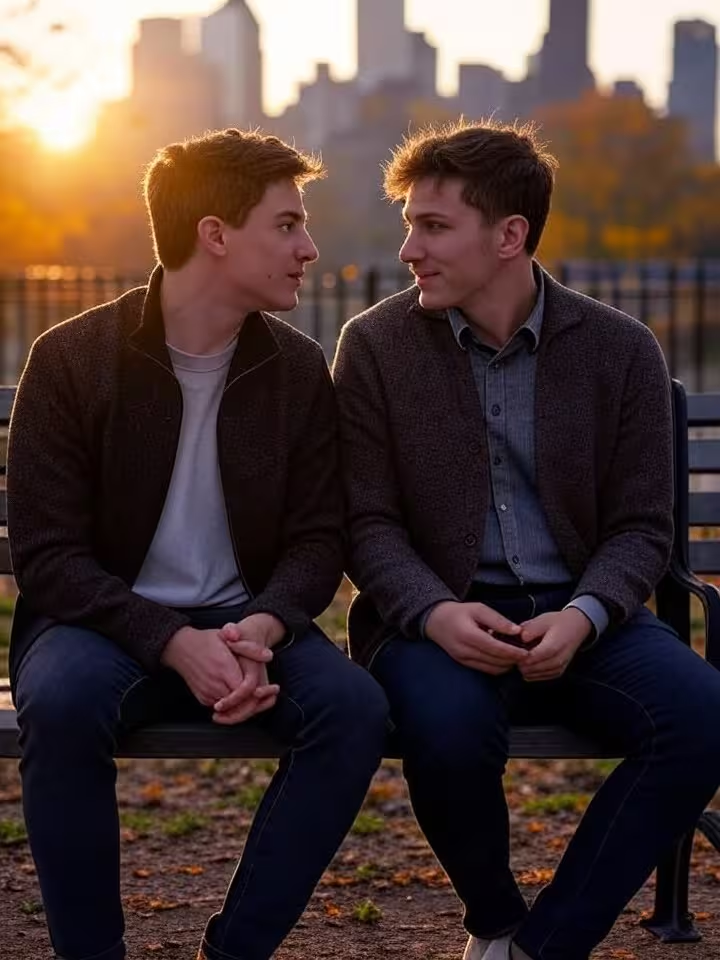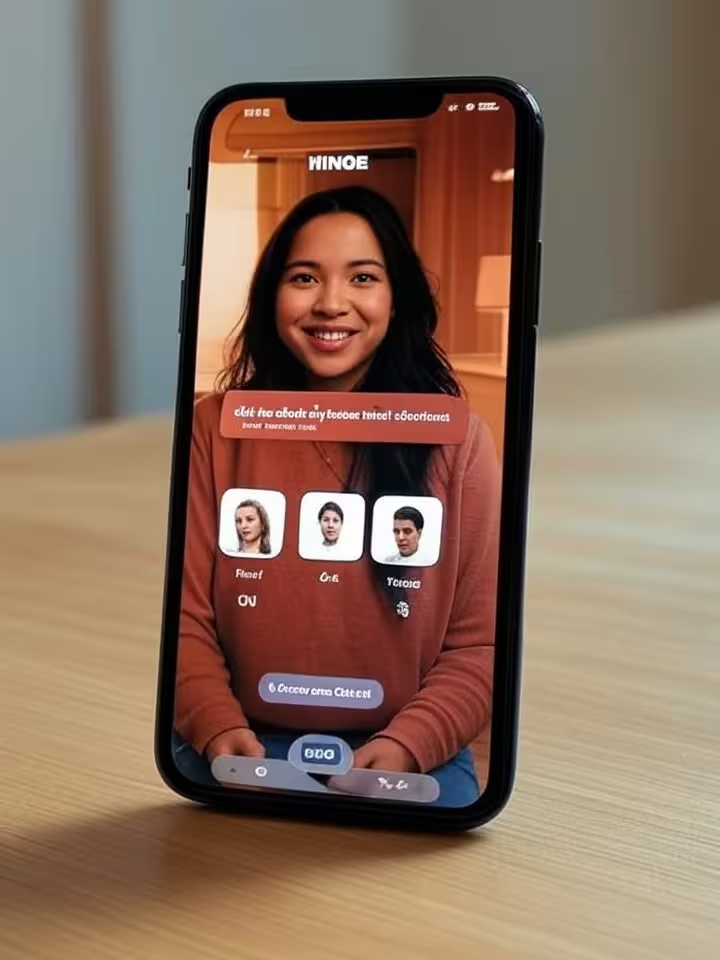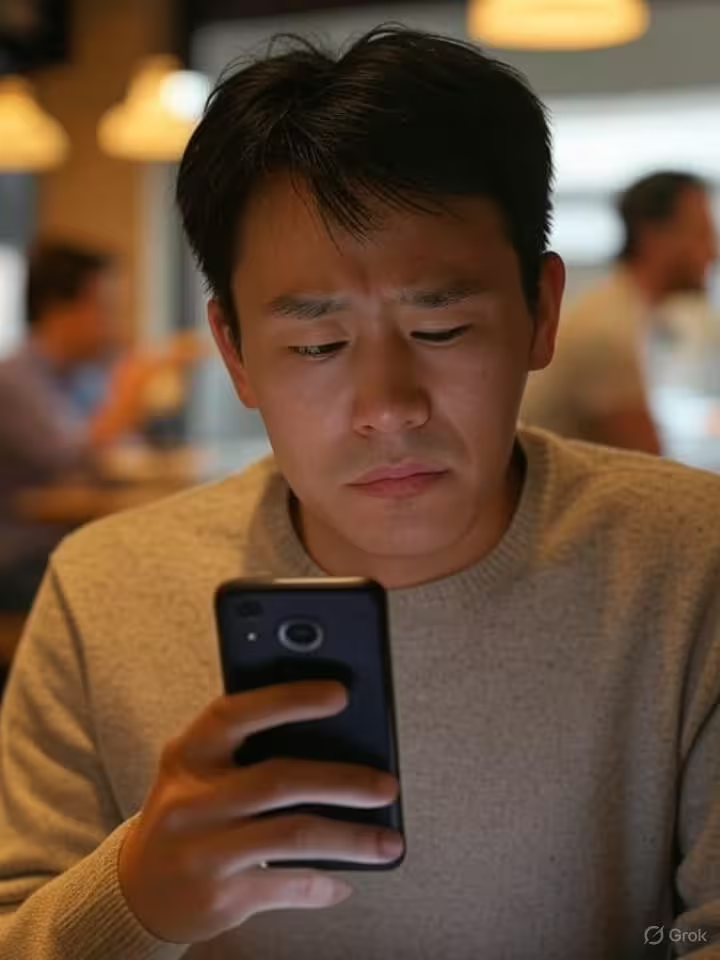
I distinctly remember that Sunday afternoon. I had arranged to meet someone I met at Hinge after two weeks of naturally flowing conversations. We talked about everything from our shared obsession with Friends to that inexplicable love of tacos al pastor at three in the morning. The chat chemistry was undeniable.
I arrived at the café twenty minutes early because my nerves betrayed me. When he showed up, the greeting was cordial but strangely distant. For the next hour I tried to salvage that connection we had built message after message, but it was like trying to light a wet fire. The next day, the message came: «I really like you, but I didn't feel that spark in person. I wish you the best.».
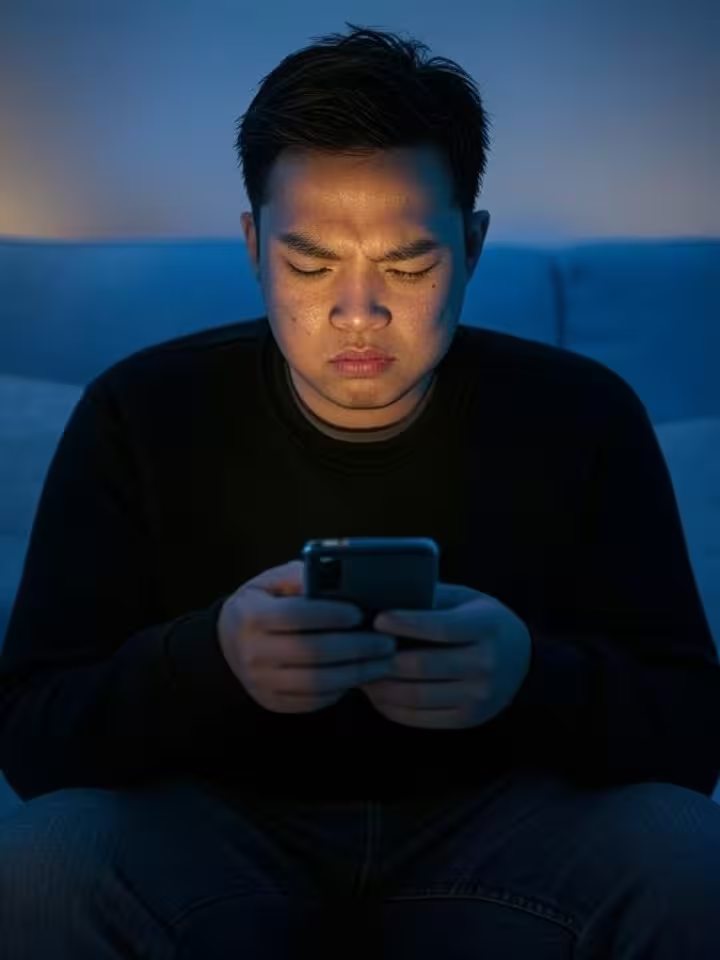
And there I was, looking at the screen and wondering what had gone wrong. Was it something I said? My clothes? My laugh? The truth is that rejection in the online dating world hurts in a particular way. It's not just that someone says no to you; it's that they do it after you invested time, emotional energy and hope in building something.

But after years of browsing Bumble, Tinder, OkCupid and pretty much every dating app out there, I can tell you one thing with absolute certainty: rejection is not the enemy. It's an inevitable part of the process, and learning to manage it can be the difference between giving up in frustration or actually finding what you're looking for.
Let's talk about this for what it is: an honest conversation between people who are on the same quest.
Why rejection on dating apps feels different
There is something particularly cruel about how digital rejection works. In real life, when someone isn't interested, there are usually gradual signs. But in apps, rejection can be instant and brutal: an unexplained unmatch, a message in seen for days, or simply disappearing in the middle of a conversation that seemed to be going well.
The truth is that dating apps amplify both opportunities and rejections. You used to be able to meet five new people in a month if you were very social. Now you can interact with fifty profiles in an afternoon. That means more possibilities, yes, but it also means that the «don'ts» multiply exponentially.
On platforms such as Tinder, where first impressions are everything, If you do not want to be rejected, the rejection may come before there is even a conversation. A swipe to the left, and that's it. You don't even know you were rejected. But when you get to the match and conversation stage, the rejection becomes more personal because there was already an initial «yes».

Notice that in apps like Happn or Badoo, where connections are based on physical proximity, rejection acquires another dimension. You know that person is close, maybe you passed them at the supermarket or on the subway. That makes the «no» feel more tangible, more real somehow.
And then there is the paradox of choice. With so many options available, people develop what I call the «perfect profile syndrome.» always thinking that maybe the next person will be even better. This is not to justify the rejection, but to understand that many times it has nothing to do with you and everything to do with how these platforms work.
Here's the trick: recognizing that this context is different helps you not to take it so personally. You're not competing against real versions of other people, but against carefully curated versions in optimized profiles.
Acknowledges pain (without dramatizing or minimizing)
Let's be clear on this: feeling bad about a rejection is completely normal and valid.. Don't give me that «you have to be strong» or «it doesn't matter, next». Of course it matters. You invested time choosing photos, writing a witty bio, sending thoughtful messages. When someone rejects you, it hurts. Period.
The key is to recognize that pain without letting it become your identity. It's like when you fall down running: tt hurts, you lie on the ground for a moment processing what happened, and then you get up. You don't ignore the scrape, but you don't just lie there convinced you'll never walk again.
I confess I've deleted apps more times than I can count. Those nights when you check Bumble before bed, see that your last message went unanswered three days ago, and just think «it's gone, it's not worth it». I've been there. I've felt that mix of frustration, sadness, and anger that comes after investing emotional energy into someone who disappears without explanation.
Validate your emotions
Don't minimize how you feel. Dating rejection hurts because it involves vulnerability and hope. Give yourself permission to feel frustration, sadness or disappointment without judgment. Process those emotions by talking to friends or writing in a journal. The important thing is not to get stuck in that emotional state for more than a couple of days.
Not (almost never) personal
Most app rejections have more to do with the other person's circumstances than with you. Perhaps they had just gotten out of a relationship, weren't ready for something serious, or there was simply incompatibility of goals. Understanding this frees you from destructive self-criticism and allows you to move on without carrying unnecessary guilt.
Avoid the toxic spiral
Don't obsessively check the profile of the person who rejected you or analyze every message looking for where you failed. Do not fall into the trap of checking their social networks to see if they are dating someone else. That spiral only prolongs the pain and does not contribute anything constructive. Block, delete the chat if necessary, and focus your energy elsewhere.
But here's the important thing: don't let that pain turn into cynicism. I've seen people who after a few rejections start to develop a bitter attitude towards online dating in general. «All apps are garbage», «No one is looking for anything serious», «It's impossible to find someone real». That speech only hurts you.
And you know what, sometimes rejection even does you a favor. Like that time someone started orbiting my networks after ghosted me: he saw every single one of my Instagram stories but didn't respond to messages. At first it bothered me, but then I understood that person had issues I didn't need in my life. The rejection protected me from investing more time in something that was going nowhere.
Concrete strategies for getting back on your feet after rejection
Well, we have validated the emotions and understood the context. Now comes the practical part: how do you actually recover? Because it's one thing to understand intellectually that rejection is part of the process, and quite another to feel good enough to try again.
Strategic pause (not dramatic abandonment)
My first recommendation is to take a break from apps. I'm not talking about deleting everything in an emotional outburst while thinking «I'm never coming back to this». That's reacting, not responding. I'm talking about a conscious, planned pause.
When you feel that online dating is wearing you down emotionally, give yourself permission to disconnect. It can be a weekend, a week, or even a month. During that time, don't check apps, don't think about profile strategies, don't analyze what went wrong. Just live your life without the pressure.
During my own breaks, I've noticed something curious: I often come back with a completely different perspective. Things that seemed super important to me (like getting X number of matches per week) lose relevance. And situations that would have frustrated me before (like conversations going off) I handle much more calmly.
Reconnect with your life outside the screen
This sounds obvious, but you'd be surprised how many people forget this: your life is not your dating profile. You are a whole person with interests, friendships, goals and experiences that exist independently of any app.
After a rejection that particularly affected me, I decided to sign up for Thai cooking classes. Did it have anything to do with dating? Not at all. But it reminded me that I'm interesting, that I can learn new things, that I enjoy meeting people in real contexts. And interestingly, that renewed confidence was later reflected in how I presented myself on apps.
Go to the gym, take up that hobby you gave up, organize an outing with friends you haven't seen in a while, read that book you had pending. Don't do it thinking about «improving yourself to get matches». Do it because you deserve to have a full life that does not depend on external validation.
Optimize your strategy (without obsessing)
Once you feel better emotionally, it is time to see if there are concrete things you can improve in your approach. Note that I said «once you feel better». Don't do this when you are still hurting because you will be making decisions from insecurity.
Review your profile with a critical but constructive eye. Do your photos really represent who you are now? That photo from three years ago where you had a different look probably isn't helping. Is your bio being too generic or negative? Phrases like «I don't like drama» or «If you're just looking for likes, pass on by» project bitterness.
On apps like Meetic or eDarling, where profile information is more detailed, make sure that what you write really filters down to the type of person you are looking for. If you want something serious, be specific about it. If you prefer to keep it casual, that's fine too, but make that clear.
Here's the secret that no one tells you: many times the problem isn't you, it's that you're on the wrong app for what you're looking for. If you want deeper connections based on compatibility, OkCupid or Hinge work better than Tinder. If you're looking for something more casual and direct, other platforms are a better fit.
Work on your emotional attachment
This changed my perspective completely: understanding attachment styles in the context of modern dating. You don't need to become a psychologist, but it is worth understanding if you tend to get attached too quickly (anxious style) or if you keep your emotional distance as a defense mechanism (avoidant style).
If you find that you fall in love with the idea of someone before you actually meet them, you're projecting fantasies instead of connecting with the real person. That makes rejections hurt more because you're not losing a real connection, you're losing a fantasy you built up.
On the other hand, if you always find fault with people to keep them at arm's length, you may be sabotaging genuine opportunities out of fear of vulnerability. Rejection hurts because it confirms your worst fears about not being enough.
The key is to develop what psychologists call secure attachmentThe ability to genuinely connect without losing your sense of identity, and to handle rejection without destroying your self-esteem.
Turn every «no» into learning (without self-flagellation).
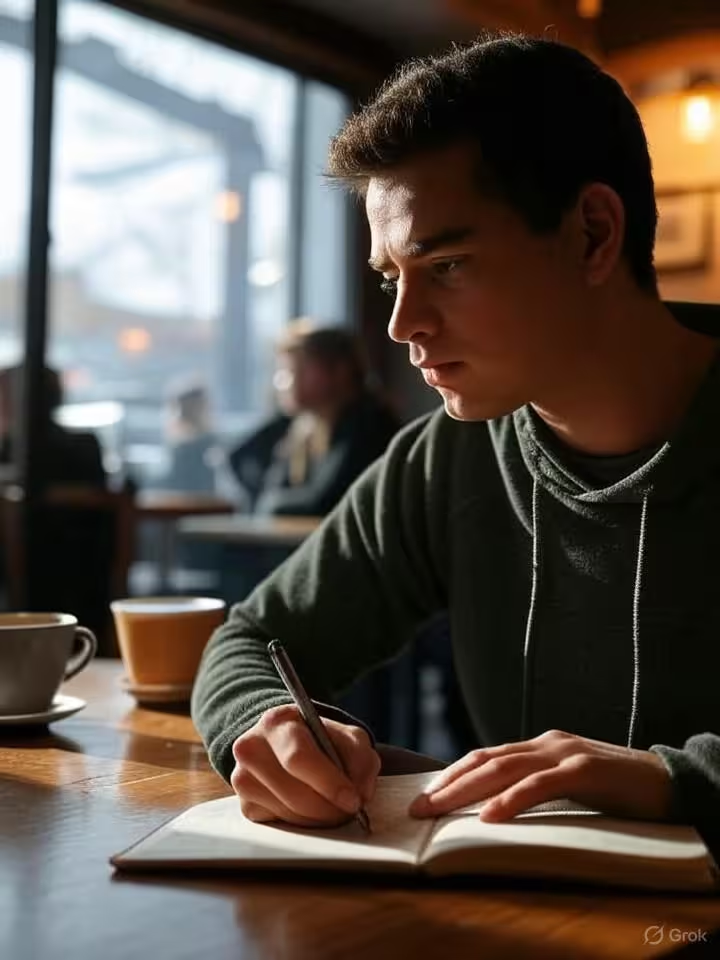
Here comes the part where I ask you something that sounds contradictory: reflect on what happened without blaming yourself for what happened. It's a delicate but super important balance.
Constructive post-mortem analysis
When an interaction doesn't work out, especially if you've reached the in-person dating stage, it's worth doing an honest analysis. But beware, this isn't to hammer you with «I should have said this» or «I shouldn't have done that.» It's to identify patterns and grow.
Do you notice that your conversations always stall after the initial opener? Maybe you need to work on asking more interesting questions or sharing more about yourself to balance the exchange. Do your first dates tend to feel forced? Maybe you're choosing very formal venues that create unnecessary pressure.
I have learned, for example, that I tend to talk too much when I am nervous. On my first few dates I used to monopolize the conversation without realizing it, And then I wondered why there was no second appointment. It wasn't until someone (very kindly) pointed it out to me that I was able to work on that.
But I've also learned to recognize when the problem wasn't mine at all. Like that time someone ghosted me after three dates that were great. Turns out that person was still hooking up with their ex. There was absolutely nothing I could have done differently.
Detects network flags that you ignored
Rejection is sometimes a blessing in disguise that protects you from problematic situations. Over time, I have developed a much finer radar to detect concerning behaviors that I used to ignore by giving «the benefit of the doubt» to everyone.
For example, if someone constantly cancels plans at the last minute but always has a «valid reason,» that's breadcrumbing: keeping you hooked with crumbs of attention with no real intention of moving forward. Or when someone comes on too strong at the beginning with super intense messages and declarations of deep connection-that can be love bombing, and it usually ends badly.
I also learned to identifying signs of fake profiles or people with dubious intentions. If something feels off, it probably is. Trust your intuition.
Between us, one of the most valuable lessons was learning to differentiate between green flags and just basic expectations. Someone who responds to messages consistently is not an extraordinary green flag, it's the bare minimum. Real green flags are things like: honest communication about intentions, respect for your boundaries, mutual effort to see each other, and actions that match words.
Adjust your expectations (without lowering your standards).
There is a huge difference between having realistic expectations and settling for less than you deserve. Rejection taught me where that line was.
Unrealistic expectations: thinking you're going to have instant and perfect chemistry with every match, expecting someone to be exactly what you imagined based on their profile, or believing that the right person will solve all your self-esteem problems.
Healthy standards: wanting someone who treats you with respect, who has relationship goals that are compatible with yours, who makes an effort to get to know you, and with whom you can be authentic without feeling like you have to perform.
The truth is that many rejections come simply from incompatibility, not from someone being mean or you not being enough. And that's perfectly fine. Better to find that out early than six months later.

Protect your mental health in the process
Look, this needs to be talked about with complete honesty: online dating can be brutal to your mental health if you don't set clear boundaries. It's not weak to recognize when you need help or a longer break.
Identify real dating fatigue
App burnout is real and goes beyond a bad day. Signs that you are experiencing real dating fatigue: you feel exhausted just thinking about checking matches, you have developed cynicism towards all interactions, you constantly compare your success with others, or you start to see negative patterns where there are probably none.
If you find yourself swiping without really looking at profiles, answering messages as if it were a tedious job, or feeling anxious every time you open an app, it's time to stop. Not to «hold on a little longer,» but to really stop.
During a particularly difficult stage, I realized that I was compulsively checking apps: at breakfast, at work, before bed. It wasn't enthusiasm, it was anxiety. I needed validation from matches to feel good about myself. That's not healthy.
I decided to take three full months without apps. It was uncomfortable at first, like any detox process. But after a few weeks, I started to feel more present in my real life. Conversations with friends were more genuine because I wasn't checking notifications every five minutes.
Build self-esteem outside of apps
Your value as a person can't depend on how many matches you get or how many dates you go on. It sounds obvious, but it's incredibly easy to fall into that trap when you're immersed in the world of online dating.
Invest time in things that make you feel good about yourself for reasons that have nothing to do with romance: advance your career, cultivate deep friendships, develop new skills, take care of your physical and mental health. When your sense of identity is strong regardless of your dating situation, rejections simply don't have the same power over you.
I've noticed that the times when I feel most confident - because I'm accomplishing things that are important to me outside of dating - are precisely when I'm most successful in apps. It's no coincidence. Genuine confidence is attractive and it shows even in how you write messages.
Consider professional support if needed
There is absolutely no shame in seeking therapy if you feel that rejection is affecting your self-esteem in a profound way. Especially if you notice repetitive patterns that you can't break on your own, or if the fear of rejection is paralyzing you from even trying.
I myself worked with a therapist for several months after a difficult breakup that left me very afraid to go back to dating. It was transformative to be able to process those emotions with someone objective and trained. She helped me identify patterns of self-sabotage that I didn't even know I had.
Honestly, we should all get therapy from time to time, whether we're in the dating world or not. But if you specifically feel like rejections are affecting you more than they should, or if you've developed unhealthy behaviors around apps, seeking professional help can make a huge difference.
Keep perspective: this is a marathon, not a sprint.
After years of doing this, I can tell you that successful online dating is not about getting the perfect match in the first week. It's about developing resilience, maintaining your authenticity, and understanding that every interaction - even the ones that end in rejection - is leading you closer to what you're really looking for.
Success stories are rarely linear
All those couples you know who met on apps and are now happy together, I guarantee you that they also experienced rejections, bad dates, and moments of frustration. The difference is that they did not give up and kept an open attitude.
I have friends who had to be on apps for two years before they found their person. Others found it in three weeks. There is no «right» timeline, and comparing yourself to others' experiences is only going to frustrate you.
What I can tell you is that people who eventually succeed in online dating share certain characteristics: they are resilient in the face of rejection, they maintain realistic but not cynical expectations, they are authentic in their profiles, and they don't take every «no» as a verdict on their worth as a person.
Celebrate small victories
It's not all about getting a successful relationship. Every match that leads to a good conversation, every date where you have a good time even if there is no second, every time you handle a rejection with grace, are victories. Recognize them. Progress in dating is measured in how you improve your ability to connect, not just in end results.
Keep your north clear
It's easy to lose sight of what you're really looking for after multiple rejections. Remind yourself regularly: do you want a serious relationship? Something casual? Just to meet interesting people? There is no right answer, but you do need clarity. That helps you filter better and not take every rejection as a failure when there was simply incompatibility of goals.
Cultivate realistic optimism
It is neither naively positive nor bitterly cynical. Realistic optimism recognizes that dating is difficult and there will be rejections, but it also maintains the belief that it is possible to find good connections. It's that balanced attitude that keeps you in the game without burning yourself out emotionally in the process.
Don't let fear of rejection paralyze you
Paradoxically, one of the most damaging consequences of rejection is when it makes you so cautious that you stop genuinely trying. You start sending generic openers because «why put in the effort if they probably won't respond». Or you avoid being vulnerable in conversations because «they'll probably ghosted me anyway».
That defensiveness is understandable, but it completely sabotages you. People sense when you're not really present or interested, and that just generates more rejection. It becomes a vicious cycle.
I have to admit that I went through such a phase. After several rejections in a row, I started sending the same copy-paste opener to all my matches. Shallow conversations that went nowhere. And then I complained that «no one on apps is looking for real connection». The problem was me, protecting myself so much that I wasn't giving something genuine a chance to happen.
The solution is not to recklessly expose yourself to more pain. It's to find that middle ground where you protect yourself intelligently (don't invest everything emotionally in someone you barely know) but remain open to the possibility of real connection.
Signs that you are healing and growing
How do you know you're actually overcoming rejection and not just repressing it? There are some clear signs that you are on the right track:
You can review apps without anxiety. You no longer feel that knot in your stomach every time you open Bumble or Hinge. It's just something you do without undue emotional charge.
Rejections affect you less time. Before, you would spend days analyzing what went wrong. Now you process the disappointment in a few hours and move on.
You can identify incompatibility without taking it personally. You understand that someone can be great and just not be your person, or you theirs. And that's okay.
Your standards have been clarified. You know better what you are looking for and what you are not willing to tolerate. Not out of bitterness, but out of self-knowledge.
You enjoy the process more than before. Even with its frustrations, you find aspects of dating genuinely interesting: meeting new people, having curious conversations, learning about yourself.
If you recognize these signs in yourself, you're on the right track. If not, don't worry. It's a process that takes time for each person.
There is no one-size-fits-all answer. Some people need just a weekend to process, while others benefit from breaks of several weeks or even months. The key is to recognize when online dating starts to negatively affect your self-esteem or when you feel anxiety when checking apps. A strategic pause is not giving up, it's taking care of your mental health. Come back when you feel genuinely ready, not when you feel external pressure to find a partner.
Yes, it's completely normal. Digital rejection can feel more intense because it is often more abrupt and unexplained. A sudden unmatch or being ghosted after good conversations leaves many questions unanswered. In addition, the frequency of rejection in apps is much higher than in face-to-face interactions, which can create a cumulative effect on your self-esteem. The paradox of choice also plays a role: with so many options, people tend to be more selective or even superficial, generating more rejections based on criteria that don't reflect your true value.
If you consistently get too few matches or conversations die quickly, it's worth checking your profile. Ask for honest feedback from friends, make sure your photos are recent and of good quality, and check that your bio genuinely reflects who you are without sounding negative. However, also consider external factors: some apps work better based on your age, location and what you're looking for. If you've optimized your profile and are still not getting results after a reasonable amount of time, you may need to switch platforms. Success in dating apps is a combination of presentation, strategy and, yes, some lucky timing.
In general, it is not recommended. Most people will be uncomfortable with such a question and will probably give you a generic or polite answer that does not reflect the truth. In addition, it puts pressure on the other person and may come across as desperation or lack of boundaries. The exception would be if you went on several dates with someone who seemed honest and forthcoming, and specifically offers you feedback. In that case, you can accept it with openness. But if someone simply stopped responding or ghosted you, seeking answers will only prolong your healing process. Focus on constructive internal analysis rather than seeking external validation.
Consider seeking professional help if you notice that: fear of rejection paralyzes you from trying to meet people, your self-esteem is significantly affected and does not improve over time, you develop obsessive or anxious app-related behaviors, you identify repetitive patterns of unhealthy relationships that you can't break on your own, or if rejection triggers deeper self-esteem issues that stem from past experiences. Therapy is not just for extreme situations; many people benefit greatly from working through their relationship with dating in a professional space. A therapist can help you develop emotional resilience and healthy coping strategies.
Cynicism is a natural protective response, but it hurts you more than anyone else. To avoid it: take regular breaks from apps before you feel burned out, maintain a rich life outside of dating that reinforces your sense of self, surround yourself with positive people who remind you of real success stories, practice gratitude for the positive experiences you have had, and remember that everyone is different-don't project someone's negative behaviors onto your next match. It also helps a lot to diversify how you meet people: social events, hobbies, interest groups. When online dating isn't your only avenue, it's easier to maintain a healthy perspective.
A final message: you are more than your dating experiences.
After sharing all this with you, I want to leave you with something very clear: your value as a person does not depend on your success in dating apps. It doesn't depend on how many matches you get, or how many dates you go on, or whether you find a partner this month, this year, or five years from now.
You are a complete, interesting and valuable person regardless of your romantic situation. Online dating is just a tool to meet people, not a judgment on your human dignity.
Rejection hurts, yes. It's uncomfortable, frustrating, and sometimes seems unfair. But it's also a natural part of seeking genuine connection. Every «no» you get is getting you closer to a «yes» that's actually worth it. It's protecting you from investing time in something that wasn't going to work out anyway. It's teaching you about yourself and refining what you're really looking for.
I have gone through everything I described in this article. The rejections that made me question everything, the strategic pauses that I thought would be permanent, the moments of absolute frustration with the process. But I've also had incredible connections, fascinating conversations, and learned more about myself in the process than I ever imagined.
Am I still in the dating world? Yes. Is it perfect? Not at all. Is it worth it? Absolutely, when you keep the right perspective and take care of your emotional health in the process.
So if you're dealing with rejection right now, give yourself permission to feel bad for a moment. Process those emotions without repressing them. And then, when you're ready, pick yourself up and move on. There are amazing people waiting to meet you, and every step you take-even the stumbles-is bringing you closer to them.
See you out there, in the apps, in the process, learning and growing together. And if you're ever tempted to give up, read this again. Sometimes we just need to remember that we are not alone in this experience.
Ready to give dating another try? Me too. Always.