The truth is that after years of navigating the world of online dating-from Tinder and Bumble to more specific apps like Feeld-I've learned something fundamental: being a content creator and using dating apps at the same time requires a sound privacy strategy. Imagine this situation: you are creating content on networks, sharing your daily life or your reflections on modern love, and suddenly someone recognizes you on your dating profile. It's not just awkward. It can become dangerous.

I have a personal confession to make. I once had a match on Hinge who turned out to be an obsessive follower of my blog. He wrote me messages that showed he had researched every detail of my life before I even accepted his request. That experience taught me that the line between being authentic and exposing yourself too much is thin, And today I want to share with you everything I've learned about how to navigate this balance without sacrificing your safety or your chances of finding real connections.
As creators, our digital presence is our livelihood. But that doesn't mean we should give up on love or dating. The truth is that with the right precautions, you can enjoy online dating while keeping your identity protected. Here I tell you how to do it from my direct experience and some mistakes that, honestly, I don't want you to repeat.
Choose your dating platform wisely: not all apps protect your privacy in the same way
Well, let's start with the basics that many of us overlook. Not all dating applications offer the same level of privacy, and this is crucial when you have a public presence. Apps like The League or Inner Circle require verification and work on more closed systems, which means you have more control over who sees your profile from the start. These platforms filter out inbound users, reducing the risk of running into people who are just looking to stalk or have unclear intentions.
On the other hand, massive platforms such as Tinder or Badoo have huge audiences and algorithms designed for maximum exposure. That can be great for getting a lot of matches, but also means greater visibility, something that as a creator may not suit you. Look at the privacy options of each app: some allow you to limit who sees you based on mutual interests, adjustable location or even hide you from contacts in your phonebook.

A trick I always use: check the visibility settings before even uploading your first picture. In apps like Bumble, you can enable incognito mode (available in the premium version) so that only people you have liked first see your profile. This gives you total control over your exposure. On OkCupid, adjust who can see your answers to questions and limit the information publicly visible.
Also, consider more niche apps if you're looking for something specific. Hinge positions itself as «the app designed to be deleted» and attracts profiles looking for serious relationships, which can mean matches that are more respectful of your boundaries. Feeld is great for non-traditional relationships but requires you to be even more careful about your anonymity given the more intimate nature of the community. What I want you to understand is this: your choice of platform is your first layer of protection.
Build a strategic profile that appeals without revealing your public identity
Here comes the part where many of us creators get it wrong at first. We want to be authentic-and that's okay, authenticity is what generates real connection-but we want to be authentic. being authentic doesn't mean sharing every identifiable detail of your life from your bio.. Your dating profile should function as an intriguing teaser, not as your complete media kit.
Start with the obvious: avoid mentioning your social media handle, the name of your channel or any personal brand in your bio or prompts. No «Follow me on Instagram» or «Listen to my podcast». I've made that mistake and ended up with messages from people asking for collaborations in the middle of what should have been a romantic conversation. Instead, describe your interests in a vague but engaging way: «I tell stories for a living» instead of «I'm a YouTuber with 100K subscribers.».
Unique photos for each platform
Use unique images for your dating profile that you haven't posted on any social network. A simple reverse image search on Google can connect your Tinder profile with your public Instagram in seconds. Take new photos specifically for the app, show your personality but keep your digital anonymity intact.
Intriguing but vague bios
Write your bio to generate interest without revealing your exact profession. Instead of «Travel Tiktoker», try «I collect stories around the world». Answer Hinge prompts creatively but without identifying information. The goal is to show authentic personality while maintaining a layer of protection over your public identity.
Deactivate automatic synchronizations
Check the privacy settings in each app. Disable syncing with Facebook, avoid linking your Instagram or Spotify if they are public, and disable the option to appear in Google search results. Many apps have hidden settings that share more information than you think. Check them all before you start swiping.
Now, here comes something critical that many ignore: photos are your greatest vulnerability. If you use the same images you have on Instagram, anyone can do a reverse image search with tools like. TinEye or Google Images and find all your public content in seconds. That's why, never reuse photos from your social networks on your dating profile. Take new, exclusive images for the app. Yes, it means extra effort, but trust me, it's worth every minute.
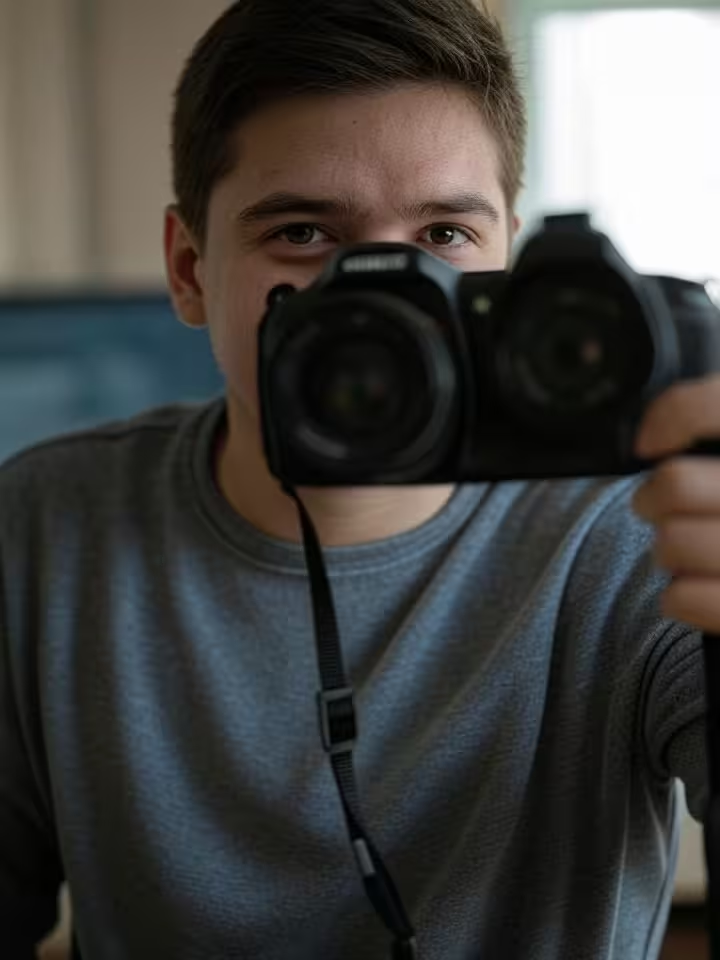
Another technicality: disable geotagging on the photos you upload. Some smartphones store location metadata that can reveal where you live or work. Use apps such as SeeExif to verify and remove such data before posting any images. Also, avoid photos that show recognizable places near your home or recording studio. That coffee shop where you always record your stories could give away your usual location.
That said, don't get paranoid to the point of uploading horrible photos just for safety. Quality photos are still essential to get good matches. Find that balance: attractive images that show your personality, but without identifying elements.
Conversations that protect: detects network flags and handles information intelligently
Look, the chats on apps like Happn or even on deeper conversations in Bumble can escalate very quickly, especially if you have good chemistry. But this is where a lot of us creators let our guard down and start sharing too much. The way someone asks about your life says a lot about their intentions..
If from the first message they ask for your full last name, what exact city you live in, where you work or study, or any specifics that would allow them to locate you, that's a red flag the size of a building. Genuine questions sound different: «What kind of content do you like to create?» is healthy curiosity. «What is the exact name of your channel to look you up?» is invasive and suspicious.
I have to admit that I've made mistakes here. Once, excited about a good conversation, I casually mentioned the name of my podcast in the third post. Big mistake. The guy immediately researched everything about me, showed up in my networks, and when I told him that made me uncomfortable, he took offense, saying he «just wanted to get to know me better.» That's not getting to know, that's stalking by another name.
Then there's the phenomenon of orbiting: when someone doesn't respond to you on the app but starts following you and seeing all your stories on Instagram. It's that uncomfortable gray area where there's no direct interaction but you feel like you're being watched. If you detect this pattern-match who doesn't talk but appears in your networks-block without remorse. You don't owe anyone an explanation.
Information you should never share in first conversations
There are certain pieces of information that should remain private until you build real trust, and when I say real I mean after several substantive conversations and preferably one or two face-to-face appointments. Never share this in initial messages:
- Your exact address or even your specific neighborhood («zona norte» is fine, «Calle Serrano 42» is not).
- The name of your company or personal brand
- Your real phone number (use virtual numbers such as Google Voice or Hushed)
- Your main email (create an alternative one for dating)
- Specific schedules of your routine («I go to the gym every morning at 7 a.m.» can become dangerous information)
- Places where you usually work or record content
- Details about planned trips or your public agenda
Instead, be vague but authentic. «I work from home» does not reveal your exact profession. «I usually work out in the mornings» doesn't specify where or when. The idea is keeping the mystery without lying. If someone pushes for more details ahead of time, that pressure itself is a red flag.
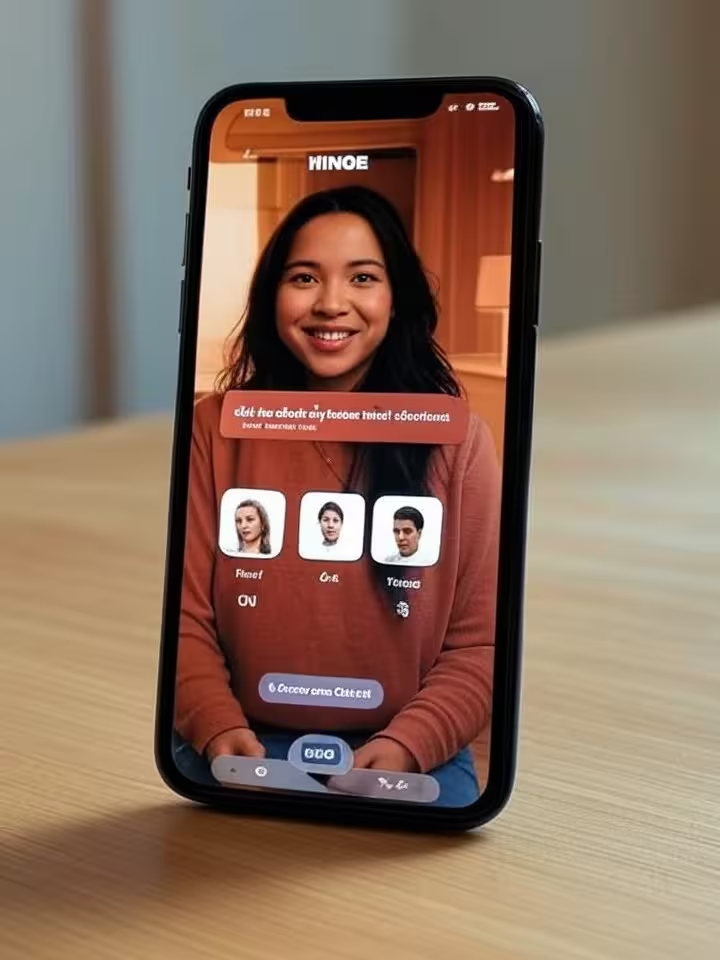
And you know what, there's also the issue of pre-appointment video calls. Many people now ask to video call before meeting in person to verify that you are real (and avoid catfishing). This is fine and even recommended, but be careful about the background of your video call. Don't make the call from your recording studio with your full creator setup visible behind it. Use a neutral background, or turn on background blur if your app allows it. Small details can reveal a lot.

From app to real life: the safe transition to face-to-face dating
Well, let's say you've made it past the matching phase, you've had interesting conversations that flow naturally, and now you want to take the step of meeting that person in real life. This is one of the most vulnerable moments for anyone using dating apps, but especially for content creators. The first appointment should be designed with safety as a priority., without sacrificing the possibility of genuine connection.
First of all: always, but always, in a crowded public place. No «come over to my house to watch Netflix» or «I'll pick you up in a car». Coffee shop, bar with people, stroll through a popular park during the day. Places with witnesses, easy exits, where you're not trapped if the situation gets uncomfortable. I personally prefer coffee shops with wifi because I can send discreet messages to my emergency group of girlfriends without arousing suspicion.
Second crucial point: always notify someone you trust. Send the location in real time via WhatsApp or Google Maps, share the name and profile of the person you are going out with, and set a check-in schedule. My system is simple: message my best friend before the date with all the details, discreet check-in in the middle of the date («I'm going to the bathroom» and take the opportunity to send an «all good»), and final message when I get home. If more than 30 minutes go by without hearing from me, she is instructed to call me.
What to do if you are recognized on the first date
Here comes something that has happened to me that is super awkward. Imagine you're on the date, everything is going well, and all of a sudden the person says, «Hey, wait... aren't you the one from [name of your channel]?». Moment of panic. But I have to admit that I have developed a strategy to handle this without it getting weird or dangerous.
First option: confirm it naturally but set immediate limits. «Yes, that's me. I actually prefer to keep my personal life separate from my content, so I'd appreciate it if this stays between us.» Most reasonable people will respect this. If the person starts asking you a thousand questions about your channel, numbers, collaborations, take it as red flag. You're on a romantic date, not a business interview.
Second option if you don't feel confident: politely deny it. «Ah, I get that sometimes but it's not me.» You are not obligated to confirm your identity if your instinct tells you something doesn't add up. Your safety is more important than honesty at that specific moment. There will be time for transparency if the relationship moves forward and you build real trust.
The truth is, if you make it to a second or third date and all goes well, eventually you will have to decide when to reveal your full public identity.. I recommend doing it when you've already seen clear signs of respect for your boundaries, when the person has shown genuine interest in you as a person (not as a creator), and when your gut tells you it's safe. There's no perfect timing, but it's definitely not at the first coffee.
Technological tools and habits that shield your digital privacy
Honestly, protecting your identity as a creator in the dating world goes beyond what you do within the apps. You need to build a digital security ecosystem that protects you at multiple layers.. Here are the tools I use that have made a difference in my experience.
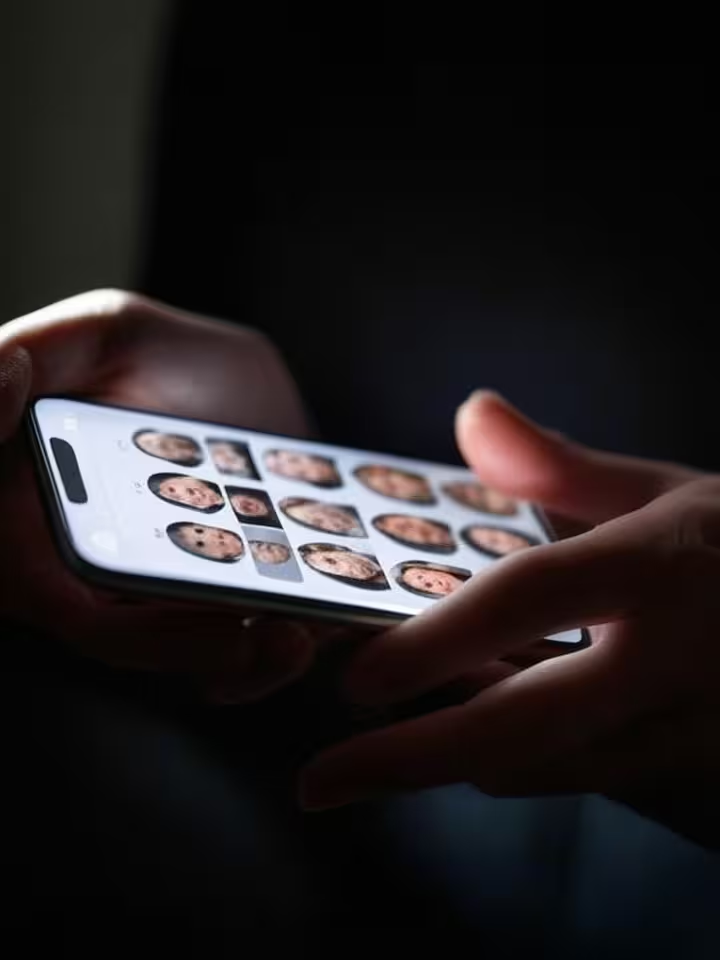
Use virtual numbers and alternative emails
When the conversation evolves and they want to move the chat to WhatsApp or SMS, never give out your real number right away. Services like Google Voice, Burner or Hushed allow you to create temporary numbers that you can discard if something goes wrong. Yes, it's an extra step, but believe me it's worth it when that match that seemed normal turns out to be obsessive and you don't have to change your main number.
The same applies for email. Create a specific email address for dating, separate from your professional and personal email. Gmail allows you to create aliases easily. This way, if someone starts stalking you or trying to find out more about you, they don't have access to your main account where all your professional services are probably linked.
VPN to hide your real location
Many dating apps use geolocation to show you matches nearby. The problem is that apps like Happn or Grindr can reveal your location with almost exact precision. If you are a creative and travel a lot, or if you just don't want anyone to know where you really live, using a quality VPN is essential.
Services like NordVPN or ExpressVPN allow you to appear as if you are in another city or country. This is especially useful if you want to explore dating in a city before moving there, or if you want to keep your real location completely private. Keep in mind, however, that some apps detect VPNs and may restrict functions, so experiment with different servers.
Monitor your fingerprint regularly
Something I do every month without fail: Google my name, aliases, and snippets of my bios to see what comes up. Actively manage your digital presence instead of assuming it is under control. Use quotation marks for exact results: «[your name] + dating» or «[your alias]».
Also set up Google Alerts with variations of your name and personal brand. If someone is sharing your dating information on forums or networks, you want to know immediately so you can take action. I've discovered posts on Reddit where they were sharing creators' profiles without their consent thanks to these alerts.
Adjust privacy settings on all your social networks
Check privacy settings on Instagram, TikTok, Twitter, YouTube, all of them. Who can see your list of followers? Who can see who you follow? Can you be found by phone number or email? These settings are usually active by default, but you can (and should) restrict them.
On Instagram specifically, consider having two accounts: your professional public account and a personal private one that you only share with people you really know. Never link your public account to your dating profile. If someone deserves to see your content, you can manually share it later when there's trust.
Two-factor authentication throughout
Enable 2FA on all your dating apps, social networks and email services. If someone gets your password, this extra layer of security can prevent unauthorized access to your accounts. Use apps like Google Authenticator or Authy instead of SMS, which are more vulnerable to attacks.
Disable compromising notifications
Prevent dating app notifications from appearing on your lock screen with names or photos of matches. If you are recording content or in a meeting, the last thing you want is a «John sent you a message» notification visible to everyone. Set private notifications or turn them off completely.
Clean your digital trail periodically
From time to time, delete old dating app conversations, unsuccessful matches, and any unnecessary data. Many apps save chat history indefinitely. If you are no longer interested in someone, delete the conversation completely. Less information stored means less vulnerability to potential security breaches.
When things go wrong: how to deal with harassment, doxxing or risky situations
The truth is that, no matter how many precautions you take, sometimes things get complicated. Harassment in dating apps is real, and as a content creator you are a more attractive target for people with bad intentions.. You need to know exactly what to do if you find yourself in a risky situation, because the speed of your response can make all the difference.
Recognizes signs of dangerous behavior early
Before it escalates into something serious, learn to identify problematic patterns. Breadcrumbing (sending you sporadic messages just to keep you hooked), love bombing (excessive and intense attention from the start), or benching (keeping you on hold while they explore other options) may seem annoying but relatively harmless. However, they may be indicators of more toxic behaviors.
More serious signs include: insistence after you said no, obsessive questions about your location or routine, attempts to isolate your app conversations to less monitored platforms, requests for intimate photos early, veiled threats if you don't respond quickly, or information about you that they shouldn't have. If you see any of these, act immediately.
Harassment response protocol
If someone crosses the line of respect, this is your step-by-step action plan:
- Document everythingTake screenshots of messages, profiles, any interaction. Save them in a safe place (private cloud, external hard drive). Include dates and times.
- Block and report in the appAll platforms have reporting functions. Use them. Even if you feel it's «no use», create an official record.
- Blocks on all platformsIf you were found on social networks, block immediately on Instagram, TikTok, Twitter, etc.
- Change privacy settingsMake your accounts temporarily private, restrict who can contact you, deactivate messages from people you don't follow.
- Do not respond to the harasserNo matter how tempting it may be to defend yourself or explain, any answer is attention. Total silence is your best weapon.
- Inform your close circleFriends, family, even your manager if you have one. Let them know what's going on in case it scales.
- Consider legal assistanceIf the harassment is persistent or threatening, consult a cyberbullying lawyer. Many countries have laws against digital stalking.
I have to admit that I went through such a situation two years ago. A match I politely declined started showing up in all my posts, sending increasingly aggressive messages. I documented everything, contacted the local police (who unfortunately didn't do much at first), but the registry helped when I finally got a restraining order. Don't wait for it to get worse. Act quickly and decisively.
Balancing authenticity and protection: don't let fear ruin your experience
After all this, you may be thinking, «Is it worth all this effort?». And look, I totally get it. Online dating is exhausting enough without adding layers of digital security. But the truth is that it is worth it, because you deserve both protection and the chance to find real connections..
What I've learned over the years navigating this is that balance is possible. You don't have to live paranoid or completely give up on showing who you are. It's about being strategic: sharing your essence without exposing your vulnerability, being authentic within intelligent boundaries.
Think of it as if you were an actress. On screen you show real emotions, but your personal life remains separate. In dating, you can show yourself genuine, vulnerable, interesting, without revealing your exact address or your bank account (literally and metaphorically). Authenticity does not require total transparency from minute one.
And you know what, there are beautiful wins in all of this too. I've met some amazing people through apps, including my current relationship that started on Hinge. I never told him my exact profession until our fourth date, and when I finally did, his reaction was perfect: genuine but respectful interest, not trying to stalk me or use my job as the main topic of conversation. Those are the green flags you're looking for: respect for your time and boundaries.
Recommended resources and tools for creators using dating apps
In closing, I want to leave you with a practical list of resources that I actually use and recommend. No sponsorships or affiliates, just tools that have made my experience safer:
Apps and privacy services
- Google Voice or HushedVirtual numbers to share without exposing your real phone number
- ProtonMailEncrypted email for sensitive communications
- NordVPN or ExpressVPN: Hide your real location in geolocation apps
- TinEye or Google Reverse Image Search: Check if your photos are being used in other places
- Google Alerts: Monitor mentions of your name or your personal brand
- Have I Been Pwned: Check if your emails have been compromised in data breaches
Dating apps with better privacy features
- The LeagueStrict verification, visibility control
- Bumble (with premium)Incognito mode, advanced controls
- HingeMore detailed profiles allow better initial screening
- Inner Circle: Verified community, secure face-to-face events
Educational resources and support
- Cyber Civil Rights InitiativeRevenge Porn and Digital Harassment Resources
- Electronic Frontier FoundationDigital security and online privacy guides
- Sin Violencia Digital (for Spanish speakers)Digital gender violence: Specific support on digital gender violence
That said, remember that no tool replaces your instinct. If something feels wrong, it probably is. Trust that feeling and act accordingly. You don't owe second chances to anyone who makes you feel insecure.
Frequently asked questions about privacy for creators in dating apps
Not necessarily. You can use your first name if it is common, or a diminutive/variation that is authentic but not immediately identifiable. Avoid using your full last name or any stage name that links directly to your personal brand. The idea is that someone can't just Google you with your profile name and find all your content. Keep that initial separation until you build trust with someone.
First, document everything: screenshots of messages, profile, any interaction. Block immediately in the app and report the behavior. If he finds you on social networks, block there too and increase your privacy settings temporarily. Don't respond to any messages, no matter how tempting it is to defend yourself-any response fuels the behavior. If the harassment persists or includes threats, contact local authorities and consider consulting with a cyberbullying attorney. Your safety is a top priority.
It depends on your situation. If your Instagram is your public professional account with your personal brand, definitely NOT. If you have a private personal account separate from your public content, it may be safer, but still use caution. Consider creating a third account specifically for dating: private, with photos that are not on your professional account, with no identifying information in the bio. Use it exclusively to share with matches you already know a little better. Many apps display your latest Instagram posts publicly on your profile, so think carefully about what you are exposing.
There is no hard and fast rule, but I generally recommend waiting until after the second or third date, when you've seen clear signs of respect and authenticity. Watch how the person reacts when you set boundaries on other topics-that will tell you how he or she will handle your public identity. If someone respects your initial privacy and shows genuine interest in you as a person (not just your professional appearance), that's a good sign. Trust your instincts: if something tells you it's not time yet, wait. You don't have to justify your timing to anyone.
Generally yes. Premium subscriptions on apps like Bumble (with Bumble Premium or Boost), Tinder (Gold/Platinum), or Hinge (Preferred) usually include features like incognito mode, which allows you to be visible only to people you like. They also offer advanced controls over who can see your profile and additional filters. For privacy-conscious content creators, these features may be worth the monthly investment. Check specifically what privacy features each premium level includes before subscribing.