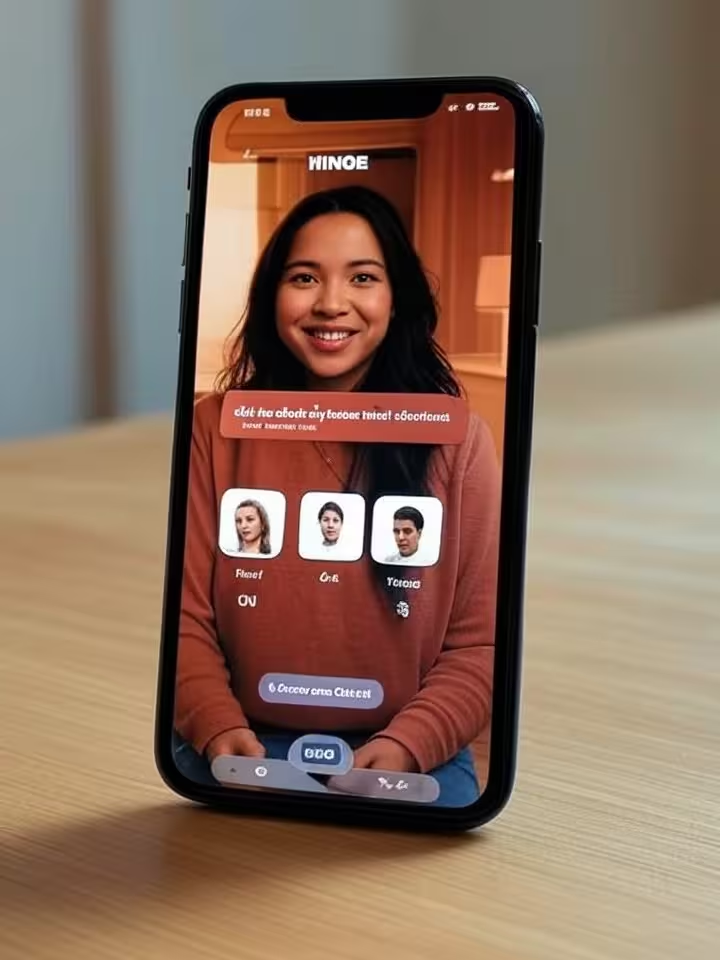
Imagine the scene: you're walking through your usual neighborhood, you pass someone who catches your eye for two fleeting seconds, and minutes later your phone vibrates. It's Happn telling you that you just crossed paths with that exact person. That moment where you think «is it possible?» is precisely the magic of this app. We're not talking about Tinder's infinite swipe where everyone seems to be miles away from your everyday reality.
Happn is all about real connections, those everyday moments that could turn into something more if you act right. I've tried this app in cities like Madrid and Buenos Aires, and I confess I've had crushes that started in a random park and ended in memorable dates. But I've also seen them fade away in a matter of hours if you don't react in time. Geographic proximity is a double-edged sword: it can accelerate the connection or expose you to the most frustrating «what if» of your life.
Let's talk about concrete strategies to manage those crushes without turning them into missed opportunities. Because yes, in Happn timing is not everything, but almost.
Understanding crush on Happn: more than just a match
First things first. On Happn, a crush occurs when two people send each other a like, but with one crucial detail: you have physically crossed paths at some point in time. It's not just an algorithm working its magic from a distance. It's as if the universe is giving you a second chance to get closer to someone who was already close.
This dynamic adds a layer of excitement that you don't find in other apps. You know that person walks the same streets, maybe frequents the same coffee shop or goes to the same gym. I've had crushes that came from crossing paths at the neighborhood grocery store, and that makes the conversation flow more naturally because there's already a shared context. You're not talking to an abstract Badoo profile; you're connecting with someone who breathes the same urban air as you.

However, not all crushes are the same. Some start intense from the first message, with that opener that brings an immediate smile to your face. Others are built slowly, like a slow burn that gradually gains temperature. What no one tells you is that timing is absolutely everythingIf you take too long to reply to that first message, the crush could cool down faster than a forgotten coffee on the table.
Honestly, I've made that mistake more than once. Watching a promising crush fade away because I responded two days late, when I had already lost the momentum of the recent crossover.
Compare this with Bumble where the woman initiates the chat in 24 hours, or Hinge with its detailed prompts that lead to more elaborate conversations. On Happn, the focus on physical proximity completely changes the game. It forces you to be more authentic because, let's face it, you could run into that person again tomorrow on the subway. That pressure can be good; it pushes you to show your real side from the start instead of hiding behind generic answers.
The psychology of crossover: why it matters so much
There is something in knowing that you have already come across that activates our brain in a special way. It is the same principle as the psychological familiarityOur brain tends to feel more comfortable with what it recognizes, even if subconsciously. When you see that you cross paths with someone on your route to work, there is a sense of «destination» that purely algorithmic apps cannot replicate.
The truth is that Happn capitalizes brilliantly on this cognitive bias. You're not choosing from thousands of random profiles; you're looking at people who already share your physical space. That reduces the paradox of choice that is so exhausting in apps like Tinder where the options seem endless.
The power of geographic crossover
Unlike apps where the location is just a generic filter of kilometers, in Happn each crossing has a specific context. The timeline map shows you exactly where you coincided, turning a digital interaction into something tangible. This geographic specificity creates more natural conversations because you can talk about specific places you both know, breaking the ice organically.
Critical timing on Happn
The momentum of the recent crossover is your best ally. Responding within the first few hours after the match maximizes your chances of capturing attention while the crossover is still fresh in the other person's memory. Letting days go by causes the context of the encounter to fade, turning your crush into just another match in a pile competing with dozens of active conversations.
Authenticity by proximity
The real possibility of meeting that person again in your daily routine pushes you toward authenticity. You can't hide behind an exaggerated version of yourself as you might try on nationwide apps. This implicit social pressure means that Happn profiles tend to be more honest and conversations more genuine from the start.
The perfect opener on Happn: take advantage of the crossover context
Look, the opener on Happn has an advantage that you should not waste: the specific geographical context. If you send a generic «hi, how are you?» you're completely missing the unique mechanics of the app. That kind of message works just as poorly here as it does on OkCupid or any other platform.
Instead, directly reference the place where you crossed paths. If it was in a specific park, say something like «I saw that you also pass by the Retiro in the mornings, do you have a favorite route?». That starts a conversation with real substance, not empty filler. I confess I've tried dozens of variations of openers in my years navigating online dating, and the ones that connect with something personal always, always get a better response rate.
Even if the person's profile mentions a visible hobby in their photos, use it to link to the crossover: «Crossing paths just in that bookstore in Malasaña, I bet you were looking for something sci-fi like me». This type of message does two things simultaneously: it shows that you paid attention to their profile and anchors the conversation in that geographical coincidence that unites you.
Common mistakes that kill the crush before it begins
Don't complicate things. Be direct but not boring. I have seen these mistakes repeated over and over again:
Aggressive questioning: Don't bombard with five questions in a row. Let the conversation breathe. I've seen friends fall into the trap of sounding like an immigration questionnaire, sending question after question without sharing anything about themselves. That's not a conversation; it's an interrogation.
Accidental love bombing: Excessive messages that scare the other. On Happn, where the vibe is about casual and spontaneous encounters, keep a relaxed pace. Don't send three messages in a row if they haven't responded to the first one. It seems obvious, but anxiety makes us do weird things.
Ignoring the signs: Notice green flags such as quick responses with elaborate details; that indicates genuine interest. On the other hand, if you notice patterns of orbiting - looking at your stories or profile without actually interacting - it might be time to invest your energy in another crush. Passive rejection is just as valid than the asset.
Use the map strategically
Here comes something that few take advantage of: Happn's timeline map shows you crossover patterns. If you see that you often run into each other in the same place at similar times, mention it matter-of-factly: «I see you're also one of those who hang out here on Wednesday afternoons.» This does two things: it shows you paid attention without being creepy, and it creates a sense of synchronicity that strengthens the connection.
Once, a crush of mine turned into a great date because I mentioned a cafe we both frequented. She proposed to meet right there because it was already familiar territory for both of us. Simple, effective, and it eliminated all the awkwardness of «where shall we meet?».
From the conversation to the appointment: don't chat forever
The truth is that Happn is specifically designed to take things offline fast. It's not like other apps where people are content to chat forever with no real intention of meeting. Here, the fact that you have physically crossed paths with each other removes some of the psychological barrier of meeting in person.
After you've exchanged a few solid messages - say 8-12 messages where the conversation flows well - it's time to propose something concrete. Say something direct like, «Hey, since we run into each other so much in this area, how about grabbing a real coffee at that place in the neighborhood? Is Saturday afternoon okay for you?» Specific, casual, no pressure.
I have to admit that the anxiety of taking that step is real. I've felt it, especially after promising matches that seemed to go well. But on Happn, the geographic proximity makes it less intimidating. You're not proposing an epic trip across town; you're suggesting meeting in a place you both probably already know.
Online chemistry does not always translate offline
What no one tells you enough is this: chemistry in chat does not guarantee anything in person. I've been on dates where the spark glowed brightly on message but fizzled out on the first date like a faulty firework. And it's no one's fault; that's simply how human attraction works. So don't mentally marry a crush before you meet them in person.
Controlled vulnerability works well here. Share something genuinely personal without overdoing it, like a funny anecdote from your day or an honest opinion about something you're discussing. This counteracts dating fatigue, that feeling of burnout after repetitive and superficial conversations.
Safety first, always
On the other hand, never neglect basic precaution. Check profiles when you have doubts about something -a reverse image search takes literally 30 seconds. Always choose public places for the first date, preferably at times with people around. Fake profiles exist even in proximity apps such as Happn, although in a smaller proportion than in larger apps.
I've counseled enough people about red flags like premature requests for money or elaborate stories of emergencies-typical romance scams-to know that it pays to be cautious. Still, don't let fear paralyze you completely. Dating is all about finding that balance between sensible caution and emotional openness.
Subtly define expectations
If things go well on the first few dates, it's helpful to feel out what the other person is looking for without turning it into a heavy conversation. You can do this naturally during the chat: «What made you try Happn?» or «How are you doing with this app dating thing?». The answers will give you clues as to whether they're looking for something serious, casual, or just exploring.
Forcing premature exclusivity leads to those confusing situationships where no one really knows what's going on. Better to go slow and allow things to define themselves organically based on the real connection you develop.
When the crush gets complicated: navigating common pitfalls
Between us, not everything is rosy in the Happn world. What happens when you get ghosting after a crush that seemed promising? It hurts, I know it perfectly well because it has happened to me not only in Happn but in practically all the apps I've tried.
The healthiest mental strategy is not to take it personally. Maybe they were dealing with dating fatigue and decided to disconnect. Maybe they picked up with an ex. Maybe they simply changed their mind. A thousand possible reasons, and almost none of them have to do with you specifically.
Constantly improve your profile
Instead of obsessing over that faded crush, focus your energy on improving your profile. Recent and quality photos are essential - no blurry selfies from 2019. A bio that shows your real personality, not just clichés like «I like to travel and good food» that literally anyone could write.
The truth is that an optimized profile exponentially increases your match rate. It is similar to the concept of the ELO score on Tinder: algorithms reward complete and active profiles. On Happn specifically, having your profile verified and having varied photos that show different facets of your life makes a noticeable difference.
The FOMO in dating apps
If you feel FOMO when you see crushes that don't respond or conversations that die, remember that the paradox of choice in apps can be overwhelming for everyone. The person on the other end is probably handling multiple conversations simultaneously, just like you.
Limit your time on the app to avoid burnout. I confess I do it: I only check Happn two or three times a day maximum. This keeps the experience fresh and avoids that feeling of being constantly «available» that generates anxiety. Also, ironically, being less vigilant tends to improve your interactions because you respond from a more relaxed place.
When to use premium features
Happn offers features like FlashNote (send a message before the match) or HelloLike (highlight your like). They can be useful strategically for specific crushes that really catch your attention, but don't rely on them as a crutch. A good profile and solid conversations will always outperform paid features.
I have tried premium versions of multiple apps, and my conclusion is that they help marginally but are not magic. If your profile is mediocre or your openers are generic, paying won't solve the root problem.
Beyond the first crush: building real connections
Let's say you made it through the initial phase. You've got several active crushes, some conversations are going well, maybe you've had a first date or two. Now what? This is where a lot of people get lost because modern dating doesn't come with an instruction manual.
The key is consistency without being smothering. If you met someone and the date went well, send a message the next day saying you had a good time. Simple, direct, no «wait three days» mind games that only generate confusion. The second date is where you really start to get to know someone. beyond first impressions.
Manage multiple crushes without going crazy
It's perfectly normal to be meeting several people simultaneously in the early stages. You're not being dishonest; you're being realistic about how modern dating works. That said, be honest if someone asks directly, and once things get more serious with someone specific, have the decency to close other conversations cleanly.
Keeping a mental (or real, if it helps) record of who you talked to about what avoids those embarrassing moments where you confuse conversations. Believe me, going through that is uncomfortable for everyone.
Detect patterns in your crushes
If you notice that you are always attracted to similar profiles that end up in the same frustrating way, it may be time to reflect. Are you repeating patterns? Are there network flags that you consistently ignore because someone is attractive or says the right words initially?
This kind of self-knowledge is pure gold in dating. It saves you from repeating the same mistakes over and over again while wondering why you get the same disappointing results.
Contextualized openers
Initial messages on Happn should take advantage of the specific geographic information of the crossing. Mention the exact location where you matched, relate it to visible interests in their profile, and create a tangible connection from the first message. A generic opener wastes the unique advantage the app offers and puts you on the same level as any other match without context.
Momentum of recent crossover
The time factor is critical in Happn in a unique way. The recent physical crossover acts as an emotional hook that weakens hour by hour. Responding within the same day of the match, or ideally within the first few hours, keeps that sense of synchronicity alive. Waiting days turns your crush into just another cold match competing with dozens of other active conversations.
Natural transition to dating
Geographic proximity on Happn makes it much easier to propose dates. After 8-12 messages with good chemistry, proposing to meet in a place you both know removes the «where do I meet you?» barrier. The transition from digital to face-to-face is smoother because you already share common territory, making the date feel like a natural continuation of the initial crossover rather than a leap into the void.
Final thoughts: crushes that pay off
Well, we've covered quite a bit of ground from understanding what makes a crush on Happn special to navigating the pitfalls that inevitably arise. The bottom line is this: Happn offers unique connection mechanics based on real proximity, and with the right strategies you can transform those casual crossings into genuine connections.
It's not about blind luck. It's about understanding how the app works, taking advantage of the geographic context in your openers, acting with smart timing, and not being paralyzed by over-analysis. Most crushes are missed not because they were impossible, but because someone hesitated too long or didn't take the next logical step.
At the same time, keep expectations realistic. Not every crush is going to work, and that's okay. Modern dating, whether it's on Happn, Tinder, or any other platform, involves a good deal of trial and error. The important thing is to enjoy the process, learn from each interaction, and don't let the occasional rejection discourage you completely.
I'm still at it, with its frustrating highs and exciting lows, because I believe that finding real connections is worth the effort. I encourage you to give it a shot with confidence and authenticity. Who knows, your next significant crush could literally be just around the corner, waiting for that fortuitous crossover that Happn will turn into opportunity.
On Happn, timing is especially critical due to the context of the recent crossover. The ideal is to respond within the first hours after the match, maximum the same day. The physical crossover acts as an emotional hook that progressively weakens over time. If you wait days, that crush loses momentum and becomes just another match in a pile competing with other active conversations. I'm not saying that you should always respond instantly, but don't let more than 24 hours go by if you are really interested in the person.
Not all crossings occur in inspiring places. If you crossed paths in a generic subway station or on a random street with no special context, don't force an artificial opener on the location. Instead, combine the fact of the crossing with something from your profile. For example, «I saw that we crossed paths near Plaza Mayor, but what really caught my eye was the climbing thing in your bio, have you been around long?» That way you keep the geographic reference light while pivoting to a more substantive conversation based on their actual interests.
FlashNote allows you to send a message before the mutual match, which can work strategically for specific crushes that really stand out. If you see a profile that fascinates you and the crush occurred in an interesting context, a well-written FlashNote can set you apart from the crowd. But here's the key: don't abuse this feature or use it as a replacement for a good profile. If your message is generic or your profile is mediocre, FlashNote won't save the day. Use it selectively when you have something genuinely specific and relevant to say based on the person's crossover or profile.
On Happn, geographic proximity justifies proposing dates faster than on other apps. Between 8 and 12 quality messages are usually enough if the conversation flows well and there is obvious chemistry. You don't need to know someone's entire life story before having a 30-minute coffee. The goal is to see if the online connection translates to something real in person. Waiting too long can lead to the crush losing interest or the conversation falling into that awkward limbo where you no longer know what to talk about. Read the signs: if there is shared humor, elaborated answers and natural momentum, propose something concrete.
Repeated crosses indicate that you share frequent routines or locations, which is pure gold for conversation starters. It could mean you work in the same area, frequent the same gym or coffee shop, or simply live nearby. This is not random coincidence; it's actual geographic pattern. Use this information strategically in your opener: «I see we pass the same place every morning, clearly we have good taste in routes» or similar. Multiple crossings also reduce the feeling of talking to a complete stranger, because subconsciously there is already a familiarity from sharing physical spaces on a regular basis.