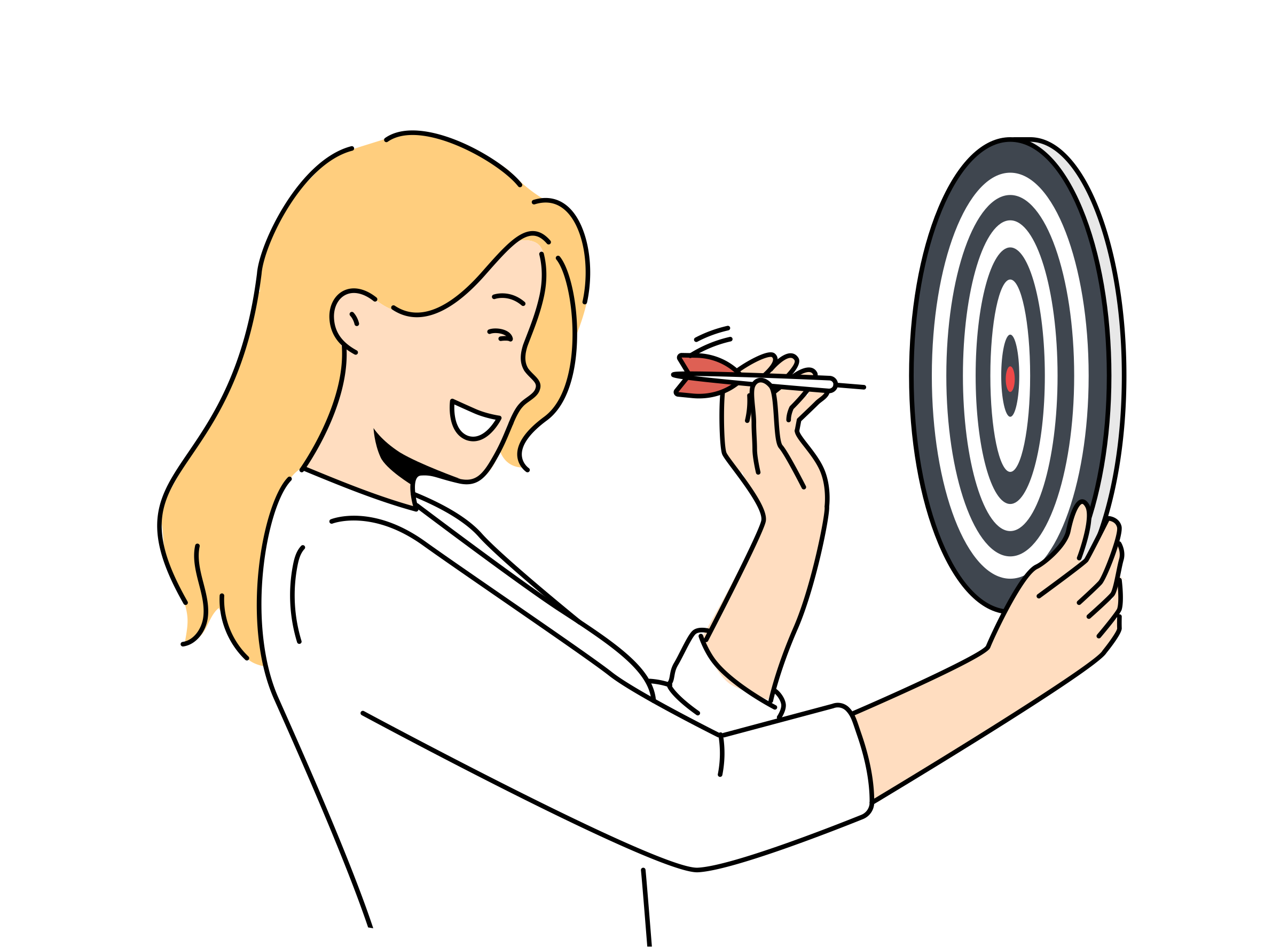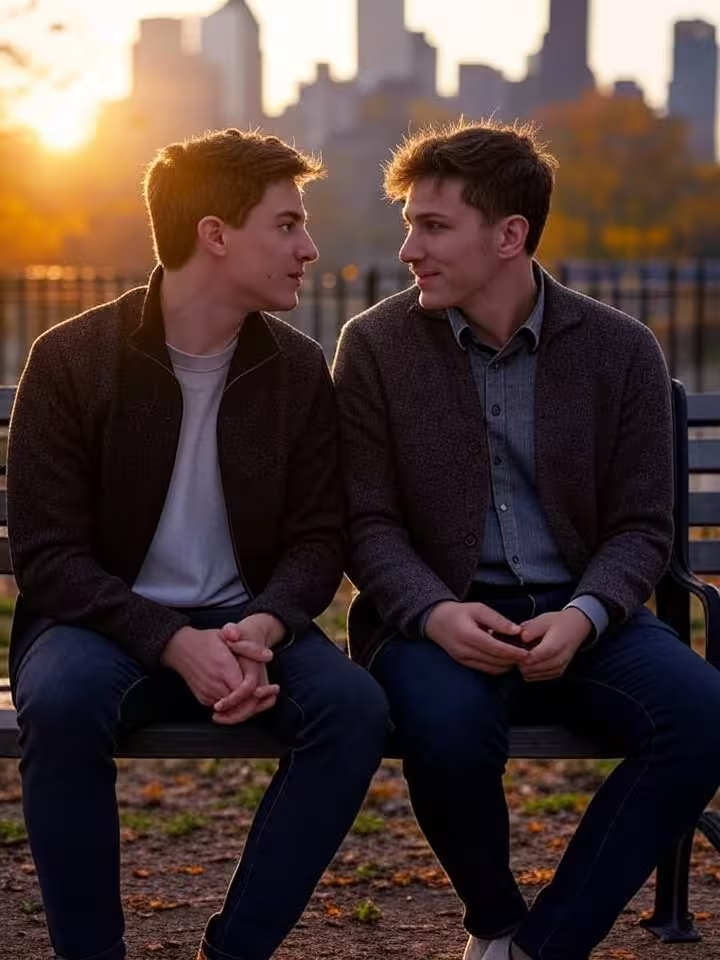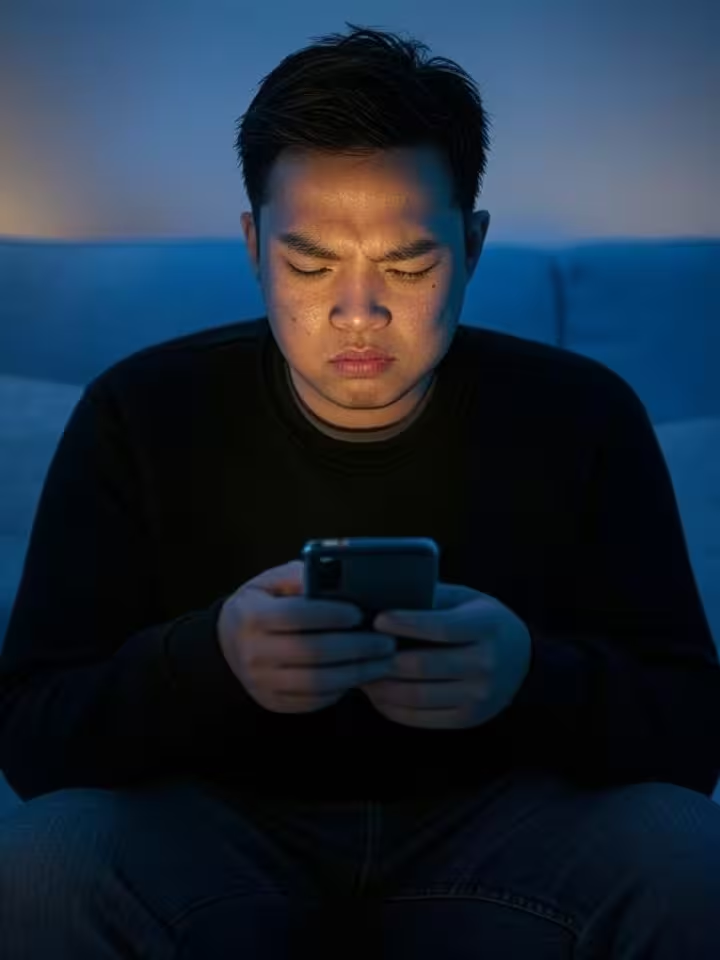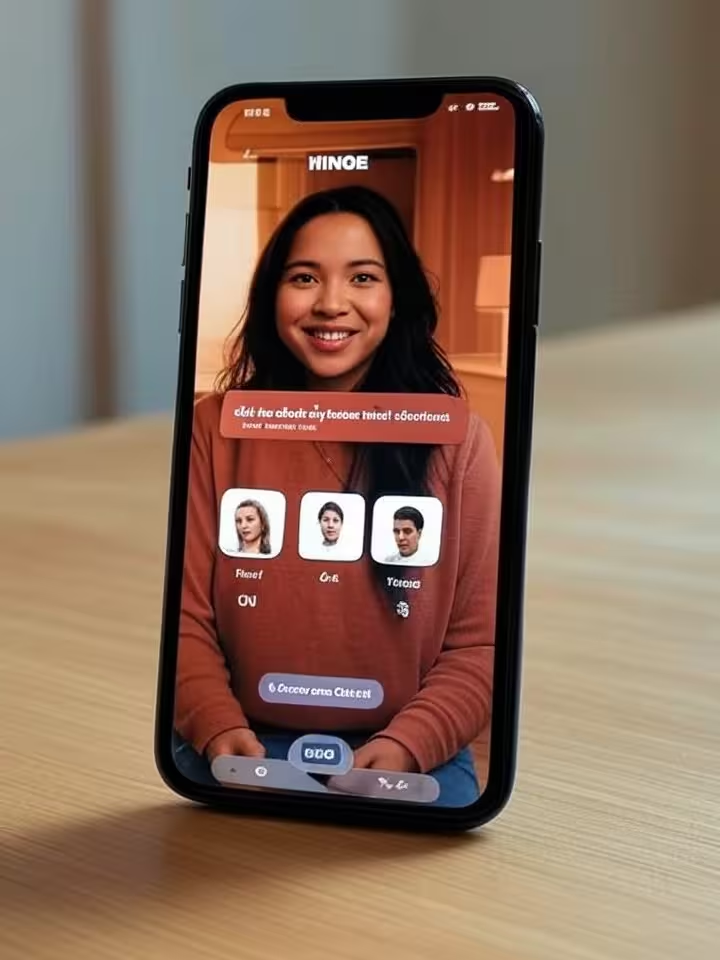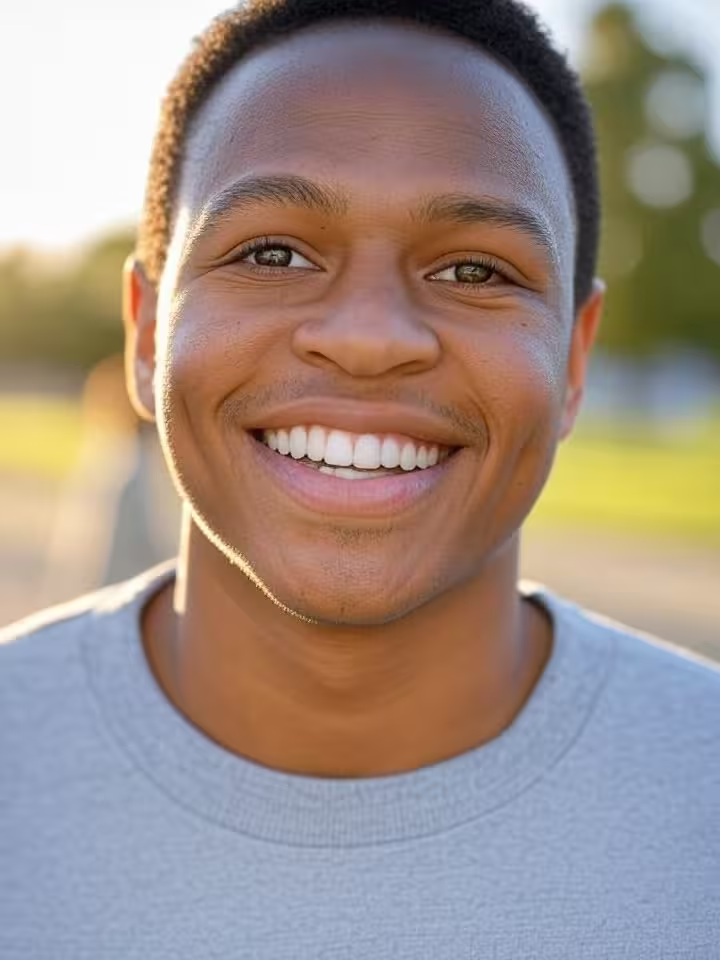
The first time I uploaded a photo to my Tinder profile, I stood there staring at the screen for half an hour, analyzing every angle, every imperfection, every detail that could be a reason for rejection. I analyzed every angle, every imperfection, every detail that could be a reason for rejection. What if no one swiped right? What if that photo confirmed all my insecurities? It's been years since then, hundreds of matches, dozens of conversations and more than a few memorable dates (for better and for worse). What I've learned in all that time is that body insecurity in online dating is like that inner critic that never shuts up, but that you can learn to manage.
Here's the uncomfortable truth: in the world of dating apps, where everything starts with a picture and a three-second swipe, feeling exposed is completely normal. What no one tells you is that virtually everyone experiences this on some level, regardless of how they look objectively. And the best part: you can work on it without radical transformations or manipulation tricks. It simply requires honesty with yourself, some practice, and a better understanding of how this digital romance ecosystem works.
Why apps amplify our body insecurities
Open any dating app and you'll be faced with a visual bombardment of seemingly perfect profiles. Photos with impeccable lighting, studied angles, filters that soften imperfections, poses that look like they were taken from professional sessions. It's like being in a showcase where everyone looks like a model and you... well, you are you. The comparison is immediate and brutal.
For years testing from Tinder to Hinge, to more specific apps such as Feeld or The League, I have observed a universal pattern: body insecurity does not discriminate. It affects people of all genders, orientations, ages and body types. I have seen objectively attractive people paralyzed by doubts about their nose, their height, their weight or their wrinkles. And others who, by conventional standards would not fit into the «model» category, perform with magnetic confidence.
The paradox of choice that characterizes these platforms compounds everything exponentially. With literally hundreds of profiles available a swipe away, the feeling arises that you need to be «perfect» to stand out from the crowd. You constantly ask yourself: why would anyone choose me when they have so many seemingly better options?
The truth is that this pressure does not come out of nowhere. Social media and today's visual culture have been bombarding us for years with unattainable and homogenous ideals of beauty. In the context of online dating, this is intensified by the fact that your visual presentation is literally the first filter people use to decide if they want to get to know you. There is not the context of seeing you smile in person, hearing your laugh, sensing your energy or enjoying your sense of humor before forming a first impression.
Acknowledging all of this is the first real step. It's not about minimizing your insecurities by saying «they don't matter» or «you're perfect like this,» because let's be honest, those kinds of empty phrases don't help when you're looking at your profile without matches at 11 p.m. on a Tuesday night. It's about understanding that these insecurities are a logical response to a system designed to judge visually first and meet later.
I'll confess something: after a match on Happn that looked promising but never made it past two messages, I realized that I had been projecting all my insecurities onto that conversation. I assumed my looks were the problem, when in reality that person was probably just chatting with three other people or lost interest for a thousand reasons that had nothing to do with me. Most people on apps are dealing with their own self-doubt, their own insecurities, their own bombardment of options and their own mental noise.
This insecurity manifests itself in subtle but limiting ways: avoiding uploading full-body photos, using only extreme close-ups, canceling appointments at the last minute because you don't feel good about your appearance that day, or not daring to create a profile in the first place. It's exhausting to maintain that level of constant self-criticism.
Build an authentic profile that reduces anxiety
Here is the practical approach: your profile must represent you honestly, but from your best version of authenticity. It's not about magic angles or extreme editing until you don't recognize yourself (in fact, that's counterproductive and generates more anxiety because you know you'll eventually have to appear in person).
Start by choosing photos where you genuinely feel good. Not necessarily where you «look your best» by other people's standards, but where you remember feeling comfortable, relaxed, happy. Those photos convey a different energy. Include variety: a clear main photo of your smiling face, a full body shot of you doing something you enjoy, perhaps an image in a social situation that shows your context. Avoid the extreme of using only selfies with the same expression or, conversely, photos so far away that your face is indistinguishable.
When I updated my Badoo bio a while back to include something honest about my love of hiking (despite being far from having an athlete's body), something changed. The matches that started coming in were with people who valued that activity, who shared the interest, who responded to that authenticity rather than a catalog appearance. The quality of the conversations improved dramatically.
In apps like Hinge, where prompts are the protagonist, take the opportunity to show your personality beyond the physical. Respond with humor, sincerity, with details that generate curiosity. Avoid at all costs the bios that sound like an apology in advance: «I'm not a model, but...», «I may not be the best looking, but...» or any other self-deprecating variation. Instead, focus on what makes you unique, interesting, enjoyable company.
I worked with a reader who wrote to me about this issue: he was using Match with photos from three years ago where he weighed less, and every potential date made him panic. I suggested updating his profile with current, real photos, taken in everyday situations where he felt comfortable. His response rate went up, but more importantly, his anxiety dropped drastically because I no longer felt that I was hiding something that would eventually come to light.
If you feel that insecurity paralyzes you when choosing photos, try a gradual approach. Start with a single photo that makes you feel relatively comfortable and observe the responses. Ask for feedback from trusted friends (not the ones who will always tell you everything is perfect, but the ones who will give you honest and constructive opinions). On platforms like Coffee Meets Bagel, where matches are more curated and limited, you'll see that authenticity generates better connections in the long term.
One detail that many people don't consider: verifying your profile. Most apps now offer identity verification through selfies or video. Doing so not only increases the trust of other users, but also forces you to accept your real image, which can be a small exercise in therapeutic exposure for your insecurity.
Manage conversations without insecurity sabotaging the connection
You got a match. Now begins another phase where insecurities can show up in unexpected ways. Imagine: you're chatting on Bumble and the conversation is flowing well, but suddenly the other person mentions something about working out or comments on beach photos. Your brain immediately interprets this as a judgment of your body, when it was probably just a casual observation or an attempt to find common ground.
The fundamental advice here: redirects conversations to shared interests, personality and experiences rather than getting bogged down in the physical. If someone makes an ambiguous comment about appearance, respond with light humor and naturally shift to more substantive topics. For example, «Haha, well, my relationship with the gym is complicated, but I love rock climbing-have you ever tried rock climbing?»
Over the years of doing this on apps from Hinge to OkCupid, I've confirmed that genuine connections are built on compatibility of values, interests and moods, not about body measurements. Conversations that start out obsessed with the physical rarely lead to meaningful dates.
Notice the signals the other person gives. If someone seems overly focused on your physical appearance, asks invasive questions about your body or constantly compares you to other profiles, those are clear red flags. You don't need validation from people who reduce dating to a superficial catalog. On the other hand, when someone asks about your passions, laughs at your jokes, delves into your answers and shows genuine curiosity about you, you're looking at a green flag.
Here comes something that took me years to understand: practicing strategic vulnerability can be incredibly powerful. I don't mean dumping all your insecurities in the first message, but allowing moments of human honesty when they naturally arise. Once, in a conversation that was getting more personal, I casually mentioned, «I have to admit, sometimes I feel weird about my height, but hey, that's how I come packaged.» The response was surprisingly positive: the other person shared his own insecurity about his smile and suddenly the conversation became much more real, less performative.
This is not weakness; it is authenticity. And what no one tells you is that this selective honesty functions as a natural filterIt drives away those who seek unrealistic perfection and attracts people capable of genuine, empathetic connection.
As for the transition to the first date, body insecurity may cause you to indefinitely postpone that step or cancel at the last minute. If you feel that anxiety escalating, remember that the person already saw your photos and decided they wanted to meet you. 99% of the time, people who accept a date are focused on getting to know your personality., not in examining your body with a magnifying glass.
The first date: reducing the pressure on your appearance
The moment of truth. After days or weeks of messaging, the in-person date arrives and with it, the full weight of body insecurities can come crashing down on you like an avalanche. What if they see me in person and are disappointed? What if my body isn't what they expected? What if...?
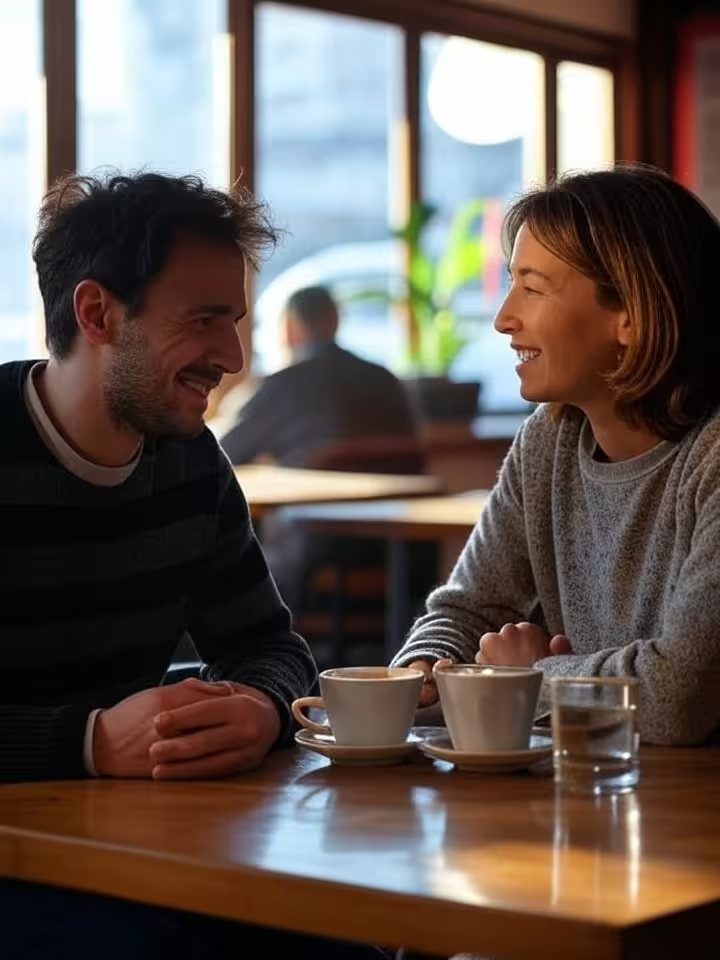
Breathe. First things first: chooses places that reduce pressure on physical appearance. A quiet coffee during the day, a walk in a park, an activity such as visiting a bookstore or a market. Avoid situations where you feel exposed and judged, such as formal dinners with intense lighting or beaches if that creates anxiety. The right environment allows you to focus on conversation and connection rather than being hyper-aware of your body.
Wear something that makes you feel comfortable and confident. Not necessarily the most formal or what you «should» wear according to some dating manual, but what you feel yourself in. When you feel good in what you wear, your body language changes: you are more relaxed, more present, more able to enjoy the moment.
During the appointment, remember that the other person is also nervous and probably also insecure about something. That thought has helped me enormously: you're not the only one in that café feeling butterflies and self-doubt. The vast majority of people are too preoccupied with their own performance to engage in critical judgment of your appearance.
On a memorable date I had a while back, the person admitted mid-conversation that she had been super nervous because she felt her photos didn't represent her well and she was afraid of disappointing. That confession broke all the artificial tension and made room for an authentic connection. We were both able to relax and just enjoy getting to know each other. We ended up going on a second date a week later, and to this day I remember that conversation as a perfect example of how mutual vulnerability creates intimacy.
Look for signs of real interest: sustained eye contact, genuine smiles, open body language (leaning toward you, not crossing arms), asking follow-up questions about what you share. These signals indicate connection and chemistry, which carry far more weight than any superficial assessment of your body. Conversely, if someone seems distant, constantly checking their cell phone or giving monosyllabic answers, there's probably no connection, and that has nothing to do with your physical appearance.
At the end of the date, resist the temptation to ask for direct validation («Do I look like my photos?», «Did I disappoint you?»). Instead, if you had a good time, express it naturally: «I really enjoyed chatting with you, we should do it again.» And then observe the response without overanalyzing every word.
Work on your relationship with your body beyond dating
Here we enter into deeper territory, because honestly, body insecurity in dating is just a symptom of a more complex relationship with your self-image. You can optimize your profile, have great conversations and get dates, but if deep down you still view yourself with contempt, the anxiety will return.
I have gone through seasons of intense dating fatigue, where every rejection (or even ghosting) was interpreted as confirmation that my body was not enough. After exploring my own attachment patterns and how they affected my dating, I realized that many of those insecurities came from long before I downloaded my first app. Online dating simply exposed and amplified them.
The empowering thing is that you can actively work on this. Some strategies that have worked for me and for people I've talked to on this topic:
Practice journaling about positive moments. When you receive a genuine compliment in conversation (not just «you're cute,» but something more specific like «I love your smile in that travel photo»), write it down. When someone shows real interest in getting to know you, document it. These small victories help counteract the internal negative narrative.
Actively reduces comparison with other profiles. This means limiting the time you spend scrolling without purpose. Use apps with intention: check profiles, send messages, close the app. Endless scrolling only feeds the cycle of comparison and self-punishment. Studies show that excessive use of dating apps correlates with lower self-esteem, especially with respect to body image.
Focus on offline activities that make you feel good about your body., not necessarily to change it, but to appreciate it. It can be yoga, dance, hiking, swimming, anything where your body is a tool for pleasure and experience, not an object of judgment. A friend I worked with on her JDate profile stopped obsessing about her weight when she started salsa classes; she started appreciating her body for what it could do, not just how it looked. Interestingly, that was reflected in her dating presence and she started attracting better quality matches.
If body insecurity is particularly intense or affects multiple areas of your life, consider seeking therapeutic support. It's not an exaggeration or a weakness; it's strategic self-care. I myself went through therapy at a time when dating rejection felt crippling, and it completely changed my relationship not only with apps but with my own image. A therapist specializing in body image or dating-related issues can offer you specific tools.
Apps and communities where body diversity is the norm
It's worth mentioning that not all platforms are equal in terms of pressure on appearance. While highly visual apps like Tinder or Bumble can intensify insecurities, there are spaces specifically designed to prioritize other dimensions or to celebrate bodily diversity.
WooPlus, for example, is designed specifically for plus-size people and those who admire them, eliminating much of the judgment that exists on mainstream platforms. Apps like OkCupid place much more emphasis on compatibility based on detailed questions about values and personality. eHarmony and EliteSingles use algorithms focused on deep compatibility rather than superficial swipes.
In LGBTQ+ communities, apps like Lex (text-based, literally no mandatory photos) or Feeld (focused on sexual and relationship openness) tend to have more inclusive cultures regarding diverse body types. This doesn't mean that insecurity magically disappears, but it does mean that the environment can be less hostile.
If you feel that the swipe model is severely affecting you, experiment with apps that work differently. Coffee Meets Bagel limits daily matches, reducing the feeling of endless options comparing themselves to you. Hinge, with its focus on commenting on prompts and specific photos, allows you to initiate more personalized conversations that go beyond «I liked your face.».
Detects and avoids situations that aggravate insecurity
Not everything in the world of online dating is constructive to your emotional well-being. There are situations and behaviors that can significantly aggravate your body insecurities, and part of taking care of yourself is recognizing them and setting boundaries.
People who make unsolicited comments about your body, even if they are «compliments. If someone opens the conversation with something overly sexual or comments about specific parts of your body that make you uncomfortable, you are not obligated to respond or continue. Healthy dating is built on mutual respect.
Situationships where you constantly feel you are not enough. If someone keeps you in emotional limbo, never formalizes anything but never lets you go, and you feel that your appearance is part of the problem, get out. These breadcrumbing or benching dynamics destroy self-esteem without offering anything constructive in return.
Conversations that focus obsessively on fitness, dieting or physical appearance. It's fine for someone to have the gym as a hobby, but if every conversation revolves around macros, routines or body comments, it may not be the right match if it triggers your insecurities.
Constant requests for more photos. If someone continually asks for «one more photo», «another full body photo», «a more recent one», this may indicate that they are filtering excessively for appearance or even that they are not who they say they are (some catfishers use this tactic). Learn to detect these signs and protect yourself emotionally.
Also, give yourself permission to take breaks from apps when you need to. Dating burnout is real, and there is no medal for keeping your profile active 365 days a year. If you feel that every swipe session leaves you feeling worse about yourself, temporarily deactivate your profile, focus on other areas of your life, and come back when you're in a better mental space.
Photographic authenticity reduces anxiety
Using current, non-extremely edited photos is not only more honest, but it dramatically decreases pre-date anxiety. When your profile pictures genuinely represent how you look, there's no «they're going to find out I'm not what they expected» feeling. The matches you get will be interested in the real version of you, not an illusion, which lays a much stronger foundation for any connection. Also, updating your photos with some regularity forces you to practice accepting your current image.
Redirect conversations to real connection
When you learn to divert physically obsessed conversations towards personality, shared interests and experiences, you completely change the dynamics of dating. This skill protects you from superficial people and attracts those who are looking for authentic connection. In addition, practicing this redirection helps you remember that your value goes far beyond your appearance. The best conversations in apps rarely start with talking about the gym or measurements; they start with genuine curiosity about who the other person is.
Dating sites that minimize body pressure
Strategically choosing where to have your first dates can make a huge difference in your comfort level. Relaxed cafes, walks in parks, farmers markets or bookstores allow you to focus on conversation without feeling exposed under scrutiny. Avoiding situations like beaches, pools or gyms on first dates if it triggers your insecurity is smart self-care, not cowardice. As you build trust with someone, you'll naturally feel more comfortable in all kinds of situations, but there's no need to force extreme exposure from the first meeting.
Celebrate progress, not perfection
After all that we have explored, I want you to understand something fundamental: overcoming body insecurity in online dating does not mean getting to a point where you never feel it.. It means developing tools to manage it, reduce its impact on your decisions and build resilience in the face of the inevitable rejection that is part of dating.
There will be days where you feel amazing and others where looking at your profile makes you anxious. That's completely normal and human. Progress is not linear. What matters is the overall trend: Do you feel a little more comfortable than you did six months ago? Have you had any conversations or dates where you weren't obsessing about your appearance? Have you managed to keep your profile active despite insecurities? Those are real victories.
Remember that every person in every profile you see is also dealing with his or her own doubts. That match you found incredibly attractive probably has his or her own insecurities about something. Vulnerability is universal in modern dating, though we all try to hide it behind our best photos and wittiest bios.
Online dating is a tool, not a judgment about your worth as a person. Your body is the vehicle that allows you to experience life, connect with others, enjoy amazing moments. It deserves respect and appreciation, not constant criticism. And people worth knowing will see far beyond measurements or perceived imperfections.
After years of navigating this digital world of romance, I can tell you that the best connections have always come when I've been authentic., when I have stopped trying to be the «perfect» version I thought others wanted and just been me. It is an ongoing process, not a destination, but every step forward counts.
So yes, you can do this. You can create that profile, send that message, accept that date, even when insecurity whispers doubt. And who knows, maybe that next conversation will be with someone who appreciates exactly who you are, just as you are. Or maybe not, and you'll keep looking, but with a little more confidence each time. Both scenarios are valid and part of the journey. The important thing is that you're on it, actively participating in your own love life rather than letting fear paralyze you on the bench.
Not as an early presentation strategy. Your profile and first messages should focus on showing you in an authentic and positive light, not on apologizing for aspects of your appearance. However, strategic vulnerability in established conversations can be powerful. If it comes up naturally in a conversation that already has some trust, mentioning something light and humorous about an insecurity can humanize you and create connection. The key is context and tone: never from self-deprecation or seeking constant validation, but from the human honesty of recognizing that no one is perfect. This tends to generate empathy and filters out people incapable of handling genuine vulnerability.
This is a serious network flag that deserves immediate response. In app conversations, you can simply stop responding and unmatch without explanation; you don't owe an emotional education to someone who disrespects you. If it happens on a face-to-face date and you feel safe doing so, set a clear boundary: «That comment is not appropriate and doesn't make me feel comfortable.» Their reaction will tell you everything you need to know. If he genuinely apologizes, perhaps it was an awkward communication error. If he gets defensive, minimizes your feelings or repeats it, end the date politely but firmly. No one worth knowing will make negative comments about your body, especially on first encounters. Protecting your emotional well-being should always take priority over being polite to someone who crosses boundaries.
It depends entirely on your goals and emotional tolerance. Niche apps designed for specific body types (such as WooPlus for large bodies) or particular communities may offer less hostile environments where your body insecurity has less room to grow. However, they also limit your pool of potential matches. Mainstream apps have more users but also more variability in attitudes towards body diversity. A balanced strategy might be to use both: maintain a presence in a mainstream app where you feel relatively comfortable, but also explore specific niches where you know the community is more welcoming. Monitor your mental health: if a platform constantly makes you feel bad about yourself, it's okay to leave without guilt.
There is no single answer, but there are important considerations. Waiting too long (weeks or months) can increase pressure and expectations, causing insecurity to grow rather than diminish. You also risk creating an idealized version of the other person that does not match reality. On the other hand, rushing when you genuinely don't feel ready can result in dates where your anxiety prevents you from connecting authentically. A healthy midpoint is usually between 5-10 days of smooth conversation, enough to establish some comfort but not so much that anticipatory anxiety becomes paralyzing. Consider a video call beforehand as a stepping stone; this can reduce the anxiety of the first physical encounter while maintaining some level of protective filter. And remember: the person already saw your photos and chose to meet you, so some of your insecurity is mental narrative, not objective reality.
This is a profound question and the answer requires honest introspection. Ask yourself: does this insecurity affect multiple areas of my life or does it only show up in dating contexts? If it limits your overall quality of life, it may be something to work on with professional support. Does this concern stem from my own discomfort or from fear of others' judgment? If it is primarily fear of rejection, you are giving too much power to outside opinions. Do I constantly compare myself to highly edited standards or celebrities? If your reference point is unrealistic images, you are chasing fantasy, not self-improvement. The key is to develop your own definition of body wellness based on health, functionality and self-acceptance, not external validation. You can work on feeling better about yourself (exercise because it makes you feel energized, clothes that make you feel comfortable) while simultaneously rejecting the idea that you need to fit a specific mold to deserve love and connection. Both can coexist: self-care without self-punishment.