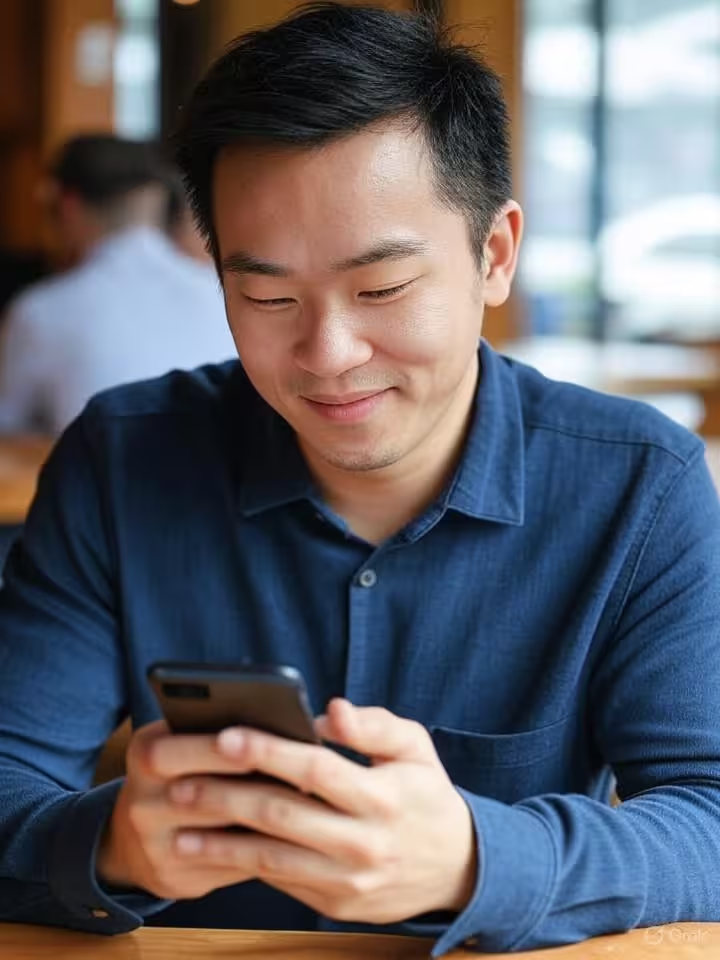
Imagine this: you're on a date, the coffee's gone cold, and suddenly you realize that what used to excite you now seems... dispensable. That's exactly what happened to me the first time I went back to apps after turning 30. I've been involved in online dating for years, trying it out since the mechanics of Tinder to niche apps like The League, and I confess that the change isn't just in age. It's in everything you expect from a connection, in how you measure time spent, in what you're willing to tolerate.
It's not that the 20s were a total disaster (although they sometimes seemed that way). But the 30s bring a brutal clarity about who you are and what you're looking for. You no longer have patience for conversations that go nowhere or for people who don't know what they want. You've lived through enough vague situationships, you've experienced ghosting more than once, and you've learned that your emotional energy is a limited resource that deserves protection.
And you know what, that's not cynicism. That's maturity. Let's chat about these changes like we're over coffee and I'm telling you about my battles won, lost, and the lessons that are only learned after hundreds of conversations and dozens of first dates.

Swipe is no longer a game but a strategy
I distinctly remember in my 20s swiping left and right on Bumble, just for the rush of a quick match. It was like a video game: racking up numbers, collecting conversations, feeling that instant validation every time the «It's a Match!» notification popped up. But now, in the 30s, that gets tiring.
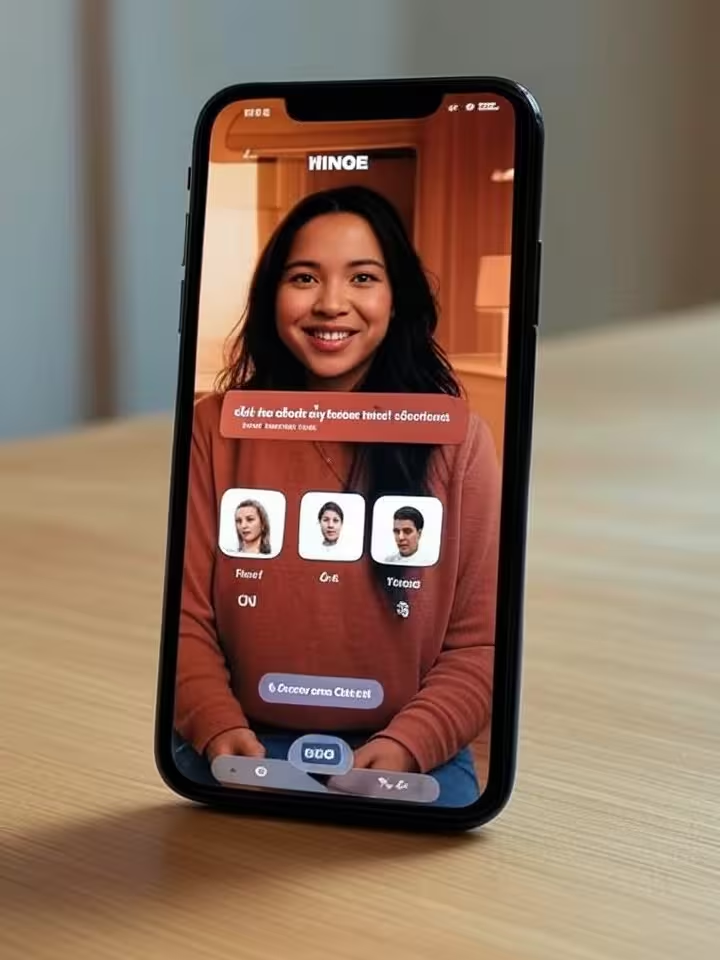
The truth is that you are looking for something more substantial, not just a fun night out or an entertaining chat that evaporates in 48 hours. I've seen in my own conversations how people in this decade are starting to value profiles with detailed bios, not just pictures on the beach. For example, on Hinge, where prompts invite you to tell something real about yourself («The best way to start a conversation with me is...» or «Together we could...»), I notice that matches last longer because there is a conversational basis from the start.
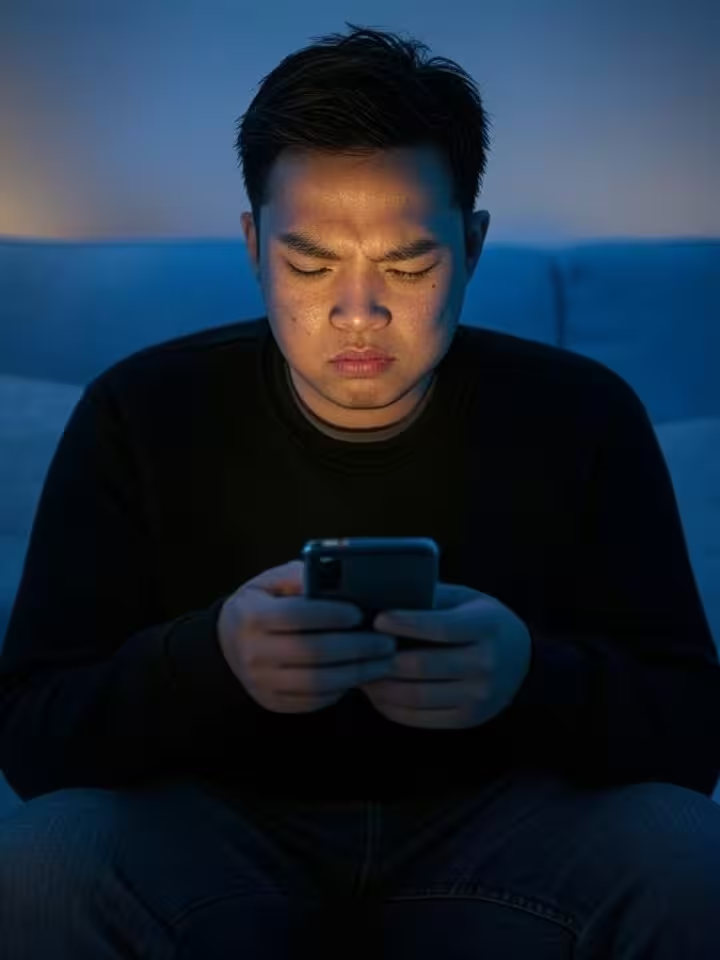
It's not that you avoid fun altogether. But you prioritize. And that prioritization reduces app burnout, that fatigue that makes you delete everything after a particularly bad week where you feel like you just pile up disappointment after disappointment.

Even so, not everything is perfect or simple.
The truth is that, with experience, detect network flags faster. A profile with blurry photos or evasive chat responses, and you know it's likely a catfishing or someone not ready for something serious. I've helped friends navigate this, and I always tell them: in your 30s, your time is money. Don't waste it on orbiting, that behavior where they look at your stories but never respond to messages. I fell into that myself once with a guy on OkCupid, and it was a hard lesson: after two weeks of unanswered views, I understood that I was being his plan B.
According to a Pew Research Center study, people over 30 tend to be more selective on dating apps, prioritizing compatibility over number of matches.

Chemistry is no longer just that initial spark that makes you tremble.
In your 20s, that immediate spark was enough, that chemistry that makes you laugh on the first date and keeps you awake thinking about the next message. But notice that in your 30s, you're looking for long-term compatibility. I've been on dates on Meetic where the conversation flows about life goals, career plans, family values... not just Netflix series or the latest viral meme.
It is a subtle but important change: you go from vague situationships to wanting to define the relationship sooner. It's not because of social pressure or the famous biological clock (which, yes, exists, but it doesn't define your value). It's because you've lived long enough to know that the slow fade hurts less if you cut it off in time, before investing months in something with no future.
That second date dilemma becomes crucial. Sometimes yes, sometimes no. And you decide faster.
Also, the emotional aspect weighs more. I'm talking about attachment styles; if you're a commitment avoider or have an anxious style, in your 30s that comes out in apps like eDarling, which focus on serious profiles with detailed personality tests. I confess that I myself had to work on my fear of missing out, that FOMO that makes you swipe eternally in case there's something better waiting for you in the next profile.
Now, I value the real vulnerability, that authentic connection that comes when you share something personal in the chat, not just funny memes or superficial comments. On the other hand, the paradox of choice is still there: with so many options on POF or Happn, it's easy to compare yourself to others or compare your current match to profiles you saw yesterday. But at this age you learn to focus on what you really want, not on what shines the brightest on the screen.
And let's not forget the small victories, like when a conversation goes from shallow to deep effortlessly, when you both let your guard down and talk about real fears, about dreams you still pursue.
Strategic selectivity
In your 30s, every swipe matters. You're no longer looking to accumulate matches like trophies, but to find people who truly share your values and life goals. This conscious selectivity reduces emotional fatigue and significantly increases the quality of your connections. You learn to identify incompatibilities before you even start the conversation.
Applied emotional intelligence
With accumulated experience, you recognize patterns of behavior that previously went unnoticed. You identify love bombing before it gets you, detect breadcrumbing at the second vague message, and know when someone is genuinely interested versus when they're just looking for validation. This skill protects your emotional energy and allows you to invest it in genuine connections.
Life-dating balance
Dating apps stop being the center of your universe and become just another tool in your balanced life. You prioritize your career, friendships, personal development and hobbies, integrating dating in a healthy way. This balance not only makes you more attractive, but also protects your mental well-being from the inevitable emotional toll of modern online dating.
First appointments become a conscious evaluation
What no one tells you is how dating in your 30s makes you more selective about first dates. You no longer go to just any bar with anyone who will make you laugh on message. You choose public places for safety (a reverse image search on profile pictures never hurts, trust me). I've lived that anxiety of the first few seconds, when the person arrives and you see if they match the expectations you've built up over days of messaging.
In my experiences with Coffee Meets Bagel, which limits daily matches, that helps reduce fatigue and focus on quality over quantity. Honestly, that artificial limitation works better in the 30s than in the 20s, when you wanted infinite options.
During the date, your radar is more finely tuned. You notice signs of genuine interest: if he puts his cell phone away without you asking, if he asks real questions about your life, if his body language is open. You also spot fundamental incompatibilities faster: differences in life plans, irreconcilable values, or just that gut feeling that something doesn't fit.
And here's the catch: you no longer feign interest in education. In your 20s, you might accept a second date because you don't want to seem rude or because «well, maybe it will get better. In the 30s, if there's no connection, you communicate that with honesty and kindness. I've sent messages after first dates saying »I like you, but I don't feel the romantic chemistry I'm looking for,« and most appreciate it. It's better than ghosting or dragging out something with no future.
The truth is that you also enjoy dating more when it does work out. You don't idealize them as much as before, but you value them more deeply. That conversation that flows for three hours without looking at the clock, that shared laugh over something absurd, that moment of mutual vulnerability... it all takes on more meaning when you know it's not easy to find.
Why does rejection hurt less but matter more?
Interesting paradox: in the 30s, rejection hurts less on a personal level but affects you more strategically. Let me explain. I've gone through rejections that in the 20s would completely break me down, questioning my attractiveness, my value, my entire love future. Now I see them as data: if there is no spark in person after a good talk in Taimi (for specific communities), it's just incompatibility, not personal failure.
Between us, that is brutally empowering.
But at the same time, as each match matters more and you invest more emotionally in fewer people, when something that seemed promising fades away, the impact is significant. Not because it destroys your self-esteem, but because it represents time and energy you don't get back. I helped a reader who was dealing with dating fatigue in her 30s after three situationships in a row that ended in nothing; I suggested short breaks from apps and focusing on offline hobbies. It works, because you come back with renewed energy and fresh perspective.
At the same time, you avoid repetitive patterns. If you notice that you always attract the same type of emotionally unavailable person, or that you repeat unhealthy dynamics, in your 30s you no longer ignore it. You seek help, you reflect, you adjust your filters. You recognize love bombing faster: that initial barrage of affection that hides dubious intentions or emotional instability.
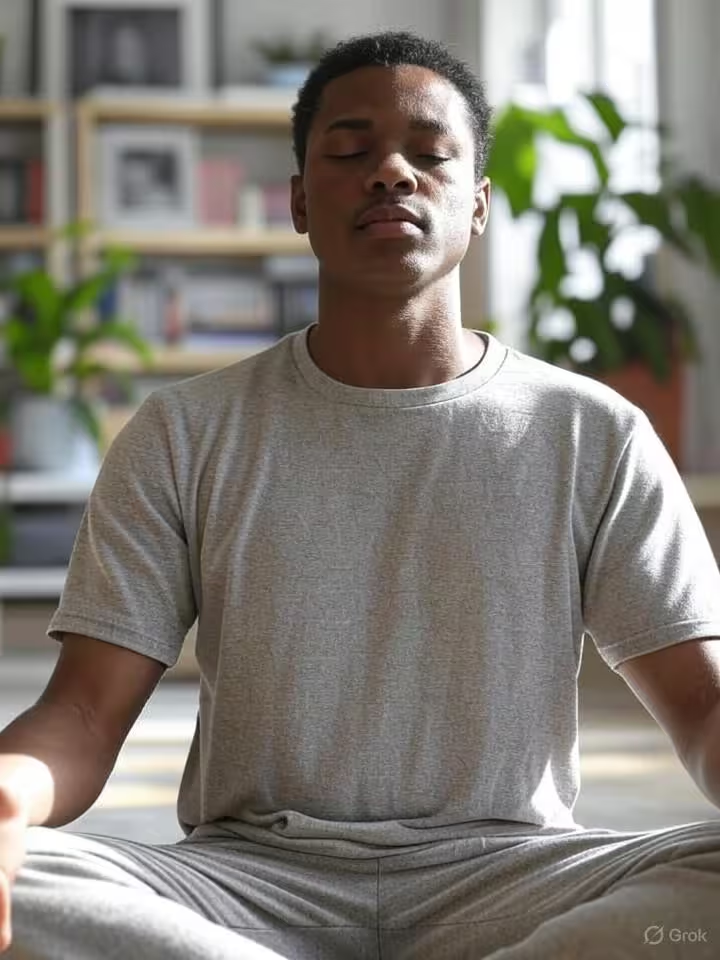
Pause. Breathe. Dating does not define your value.
You also learn how to handle benching, when someone keeps you as a backup option without actually committing. Or zombieing, when an ex reappears out of nowhere months later as if nothing happened. In the 30s, you set clear and quick boundaries in the face of these behaviors. Your peace of mind is worth more than any romantic possibility.
Balancing career, social life and digital love
Here comes the really interesting part: in your 30s, your life doesn't just revolve around dating. You have a career you care about, friends who may already have children and less availability, financial and personal responsibilities that you didn't even think about in your 20s. That changes the whole approach to apps.
I remember using Inner Circle, an app for professionals, and noticing how conversations revolved around busy schedules and shared ambitions. It's not cynical to say it, but dating becomes a skill that you integrate into your routine, not something that completely dominates it. The trick is to be honest from the start: if you're looking for something casual because of time constraints, say so clearly; if you want exclusivity and a serious relationship, don't disguise it as «let's see.».
Honestly, authenticity becomes your greatest asset.
You also consider practical factors you previously ignored: does this person live across town? Will it be feasible to maintain a relationship with someone who travels constantly for work? Do our work schedules allow us to see each other regularly? This isn't a lack of romance; it's realism informed by past experiences where logistics killed connections that seemed perfect on paper.
That said, security never takes a back seat. On apps like OurTime, aimed at the over 50s but which some in their 30s try out of curiosity looking for maturity, I always verify identities before we meet. I share my live location with a trusted friend before any first date, and if anything smells like scam romance (too-good-to-be-true profiles, requests for money, dramatic stories), I cut off immediately. Identify fake profiles is an essential skill at any age, but in your 30s you take it more seriously.
I've seen cases in Seeking Arrangement where people confuse genuine connection with economic transactions, but in the 30s you're looking for real emotional equity, not complicated dramas and unbalanced power dynamics.
Redefining expectations in an infinite sea of options
Look, not everything is easy or magically solved by turning 30. Disappointment when there's amazing chemistry over chat but zero in person still hurts, even if you handle it better emotionally. Using Feeld for more open explorations, or Christian Mingle if you're looking for shared religious values, you tailor your strategies according to what really matters to you.
I have to admit that the match rate may go down because you're infinitely more picky, but the quality of the connections goes up exponentially. Once, on Raya (app exclusively for creatives and verified people), I found someone with whom the conversation lasted months before we physically saw each other, and it was completely worth the wait. We built a solid foundation that didn't falter at the first hurdle.
Just keep your balance without becoming obsessed.
Realistic expectations are your best ally. You don't expect to find your perfect soul mate in three swipes, but you also don't settle for less than you deserve. You understand that authentic connection takes time, mutual effort and a little luck with timing. Not all matches will turn into conversations, not all conversations will lead to dates, and not all dates will evolve into relationships. And that's okay.

You also handle the paradox of choice better. Yes, there are thousands of profiles available on Badoo or Plenty of Fish, but that doesn't mean you have to evaluate them all. You establish clear criteria (non-negotiable vs. flexible preferences) and stick to them without falling into paralyzing analysis.
At its core, online dating at this stage is about constant personal growth. You've tried dozens of openers, from the witty ones on Grindr to the straightforward ones on Her, and you know that authenticity wins every time in the long run. You avoid zombieing when exes reappear out of nowhere, because you value your peace of mind more than the comfort of the familiar.
And while repetitive conversation fatigue persists («What do you do for a living?» «What do you do in your spare time?» for the umpteenth time), in the 30s you learn to inject genuine originality, asking about real passions, current projects, or that funny anecdote they mentioned in their profile.
Technological changes that affect your strategy
Well, we can't ignore that apps are constantly evolving. When you started in your 20s, Tinder was pretty much the only serious option. Now you have more complex algorithms, premium features like Tinder Platinum that supposedly prioritize your profile, or Bumble Spotlight that makes you more visible temporarily.
In your 30s, you understand these mechanics better. You know that Tinder's algorithm rewards consistent but not desperate activity, that completing your profile to 100% on Hinge improves your chances, that verification photos increase trust. It's not manipulation; it's playing smart within the rules of the game.
You also seriously consider premium versions. In your 20s, maybe it seemed like a waste of money. In your 30s, you value your time enough to invest 20-30 euros a month if it means more effective filters, seeing who liked you before you match, or having unlimited swipes. It's not cheating; it's efficiency.
Notice that you also use multiple platforms strategically. Perhaps Bumble to look for something serious, Feeld to explore less conventional connections, and Hinge because its format based on comments to photos or prompts makes it easy to start substantive conversations. You diversify without saturating yourself.
And you know when an app isn't working for you anymore. If you've been on OkCupid for months with no promising connections, try Meetic or even niche apps like JDate (if you're Jewish) or WooPlus (if you prefer people with bigger bodies). There's no shame in looking for spaces where your authenticity is valued.
Safety first, always
In your 30s, safety is no longer a suggestion but a mandatory protocol. You check profiles with reverse image searches, share your location before dating, choose public places for first encounters, and trust your intuition without hesitation. You've heard enough stories to take it seriously, protecting your physical and emotional integrity without paranoia but with intelligent caution.
Emotional energy management
You recognize dating as a marathon, not a sprint. You take breaks when you feel fatigue, close apps temporarily without guilt, and prioritize your mental well-being over the pressure to «be available» constantly. You understand that desperation drives away quality connections, while quiet confidence attracts emotionally mature and available people for healthy, balanced relationships.
Clarity of objectives
You know exactly what you are looking for and you communicate it unambiguously. If you want a serious relationship, you state it in your bio. If you prefer something casual, you are transparent. This honesty filters out incompatibilities before investing time, attracts people aligned with your intentions, and eliminates frustrating misunderstandings that waste valuable emotional energy for both parties involved.
Value of authenticity
You stop trying to be what you think others are looking for to genuinely present yourself as you are. Your photos show your real life, your bio reflects your true personality, and your conversations flow without forced scripts. This authenticity attracts deeper and more sustainable connections, though it means fewer superficial matches. You prefer quality over quantity without exception.
The transforming power of self-awareness
To close this honest talk, think about this: changes in your 30s are not frustrating obstacles, but powerful filters that lead you toward genuinely better connections. I've seen in my years of writing about dating and personal experiences how people completely transform their digital love lives with a little conscious intention and a lot of authenticity.
It's not blind luck that makes the difference. It's deliberate practice, deep self-knowledge, and a willingness to adjust strategies when something doesn't work. If you're out there browsing apps like WooPlus or JDate according to your specific preferences, always remember that you're in complete control of your experience.
The 30s bring a tremendous advantage that the 20s do not: you know who you are. Not perfectly, no one knows perfectly. But you have a solid foundation of self-knowledge that informs your decisions. You know which patterns to repeat and which to break, which red flags you ignored before and now detect immediately, which green flags you really value versus the ones you thought mattered.
In addition, according to Psychology Today, In fact, people over the age of 30 report greater satisfaction with their online relationships because they invest time in getting to know each other before making an emotional commitment.
Keep swiping with clear purpose, not desperation. Have real conversations, not transactional ones. Value your time as the limited resource it is. And above all, enjoy the process as much as the outcome. Because dating in the 30s, with all its unique challenges, also brings rewards that simply weren't possible in the previous decade.
The connections you form now have deeper roots, are built on a stronger foundation, and are much more likely to survive the inevitable challenges that every relationship faces. And that, honestly, is worth every failed match, every conversation that led to nothing, every awkward first date along the way.
Frequently asked questions about dating in the 30s
Completely normal and expected. In your 30s, you are more selective with your swipes, which naturally reduces the number of matches. Also, some app algorithms prioritize more active or newer users. However, the quality of your matches should improve significantly because you are both filtering more consciously. If you notice a drastic drop, consider updating your photos, rewriting your bio with more personality, or trying different apps that appeal to your specific demographic.
There is no magic number, but in the 30s people usually have the conversation about exclusivity sooner than in the 20s, typically between 4-8 weeks of regular dating. The important thing is that you're both on the same page about intentions from the beginning. If after a month of consistent dating you're still unclear about where the relationship is going, it's completely reasonable to start that conversation. Remember that in this decade, your time is worth too much to waste on indefinite situationships.
Absolutely yes. In the 30s, clarity is your ally, not your enemy. Many apps like Hinge or Bumble have specific options to indicate what type of relationship you're looking for. Using those features automatically filters out people with different intentions, saving you time and disappointment. You can mention it naturally in your bio without sounding desperate, something like «I'm looking for something real and worthwhile» or «At this stage in my life, I value genuine connections.» People who want the same thing will appreciate it; those who don't will move on, and that's exactly what you want.
Take a guilt-free break. In your 30s, protecting your mental well-being is a priority. Temporarily delete apps for 2-4 weeks and focus on other areas of your life: hobbies, friendships, professional or personal development. When you return, do so with renewed energy and perhaps an adjusted strategy. Also consider limiting your daily usage: set aside 20-30 specific minutes to check apps instead of being constantly available. The quality of your experience improves dramatically when you're not emotionally burned out. Dating should complement your life, not consume it.
It depends on your situation, but often it is worth the investment. In your 30s, your time is worth more than in your 20s, and premium features can significantly increase your efficiency: unlimited swipes, seeing who liked you before you match, advanced filtering by education/income/lifestyle, or increased visibility with boosts. If you are actively looking for a serious relationship, 20-30 euros per month is a reasonable investment considering how many hours you save filtering incompatibilities. Try a premium month on the app you use the most and evaluate if the results justify the cost for your specific situation.