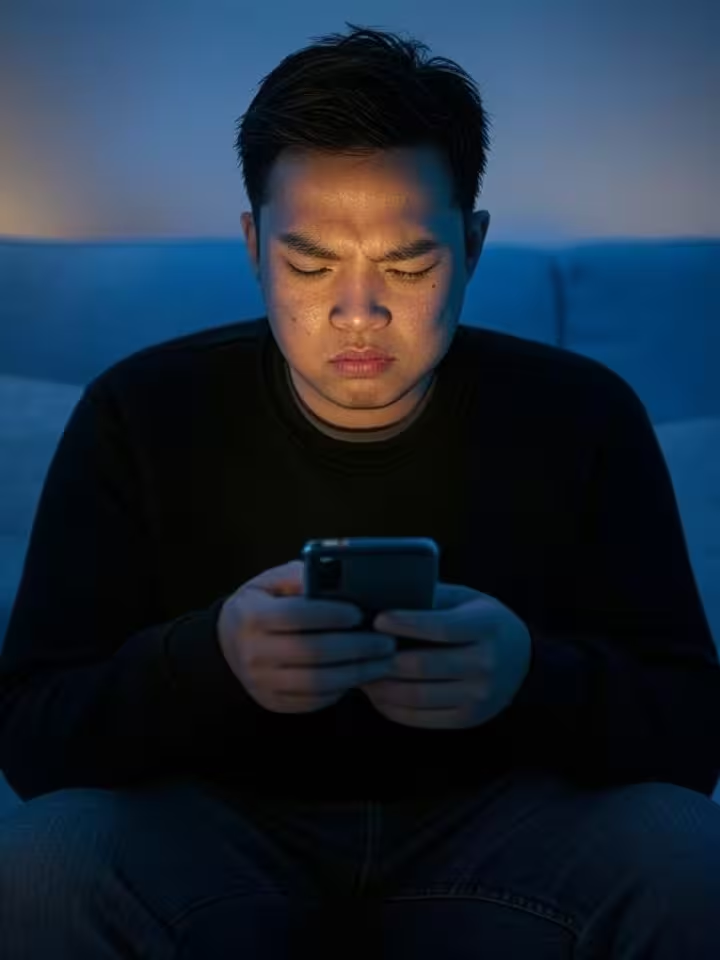
The truth is that sitting here in this café, with my third cup of coffee already cold, I remember perfectly those nights staring at the screen of my cell phone. I was choosing photos for my Tinder profile as if I was going to apply for a casting, knowing beforehand that none of them did me justice. My smile in selfies always looked forced, that unruly lock of hair never cooperated, and the lighting...let alone the lighting. For years, that feeling of competing in a beauty contest I never asked for haunted me in every app I tried.
But here's the trick I discovered after much stumbling: online dating for those of us who are not photogenic is not a losing battle, it is simply a different game.. And in that game, knowing the real rules-not the ones shown by influencers with their perfect feeds-makes all the difference. I'll confess something: I've had amazing matches, conversations that lasted until the wee hours of the morning and memorable dates without looking remotely like a runway model. How? Well, that's exactly what we're going to break down.
The visual perfection trap (and why you need to escape it)
Let's start with what we all know but few openly admit: photos are your first letter of introduction on dating apps. On platforms such as Tinder, Whether it's Bumble or Hinge, that first swipe is based almost exclusively on visuals. For those of us who don't look good in photos, this can feel like an unfair sentence. I totally get it: that feeling that your personality, your humor, your way of seeing the world... all of that is reduced to five images that don't represent you.
But here's what no one tells you: falling into the trap of obsessively editing your photos until you look like a completely different person leads you straight into kittenfishing territory. And believe me, when you get to that first date and the person across the table notices that you look noticeably different from your photos, the disappointment is mutual and the atmosphere instantly becomes awkward. I've experienced it from both sides of the table.
What is certain is that visual authenticity, paradoxical as it may sound, is your best strategy.. Look, I'm not saying upload the worst photo you have stored in your gallery. What I am suggesting is this: choose images that capture genuine moments in your life. That photo where you're laughing with friends in a park, slightly out of focus but beaming with genuine happiness, is worth more than a professional portrait where your smile looks like it came out of a stock photo.
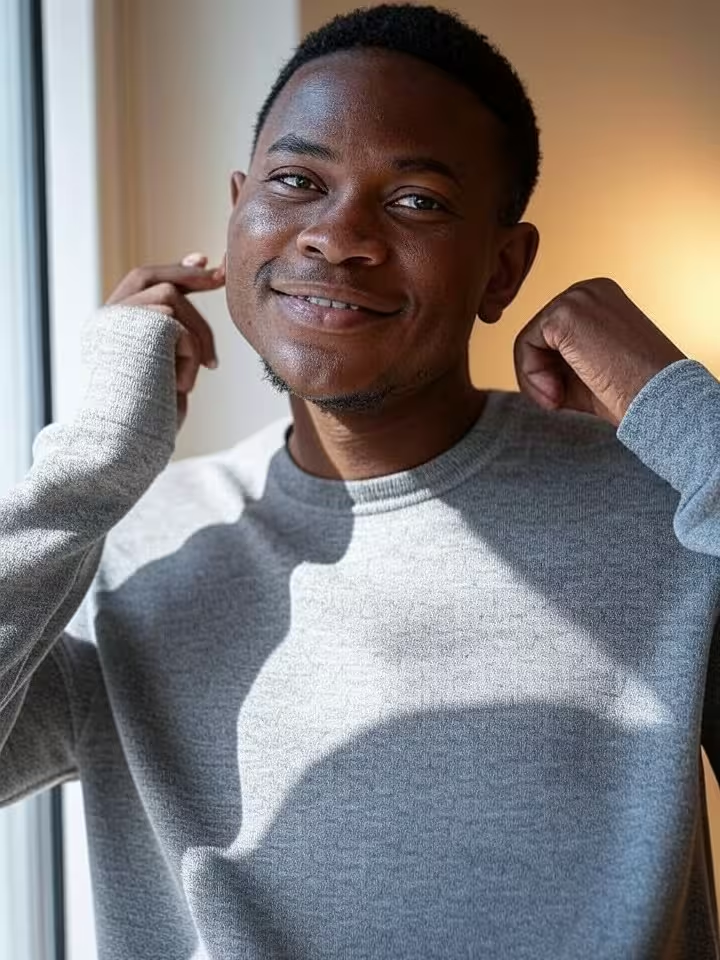
I have to admit something: once, tired of my posed selfies trying to find «my best angle», I uploaded a spontaneous photo of a hike. I was sweaty, disheveled, with a genuine smile after reaching a lookout point. That image generated more interesting conversations than any carefully edited portrait I'd used before. Why? Because it conveyed something real: someone who enjoys simple things, who doesn't take himself too seriously, who has a life beyond the screen.
Still-and here's the balance-don't completely ignore the technical basics. Natural lighting works wonders; a photo near a window during the day beats any nighttime flash. Angles matter, too: experimenting with the camera slightly above your eye level usually works better than from below. And a clean background, with no visual clutter, helps you be the focus of attention.
Honestly, the most liberating thing you can do is to stop comparing yourself with profiles that seem to be taken from magazines.. Those perfectly curated feeds often attract superficial matches that, in my experience, end up in boring conversations or in that frustrating slow fade where the other person simply stops responding without explanation.
Alternative Apps where visuals are not everything
Here is something that few people consider strategically: not all dating apps weigh photos equally in their match algorithm. While Tinder is fundamentally visual-the famous swipe based on that instant first impression-other platforms offer more favorable ground for those of us who shine more in other aspects.
For example, Coffee Meets Bagel limits the number of daily profiles you view, forcing a more careful evaluation that goes beyond the superficial «hot or not.» OkCupid, with its extensive system of compatibility questions, allows people to get to know you through your answers before focusing only on your photos. And Hinge, with its creative prompts structure, gives you multiple opportunities to show personality that compensate for a less-than-stunning photo.
Note that in Bumble, While still visually oriented, the 24-hour time limit for initiating conversation pushes people to evaluate profiles more holistically. They don't have the luxury of simply accumulating infinite matches; they need to decide quickly, and there your well-written bio can tip the balance.
Between us, I've tried just about every popular app, and I can tell you this: diversifying your presence across platforms with different approaches maximizes your chances. You may not get as many matches on Tinder as you'd like, but on Hinge, where you can comment directly on specific photos or replies, your witty openers can generate conversations you never would have had based on looks alone.
The art of strategic photographic selection
Well, since we have to play with photos anyway, let's do it intelligently. The key is not to have the best photos in the world, but to a diverse selection that tells a cohesive story about who you are.
Your main photo should meet basic requirements: genuine smile, eye contact with the camera, clearly visible face, and good lighting. It doesn't need to be perfect-in fact, a slight imperfection makes it more approachable. Avoid sunglasses in this first image; according to studies on visual perception and confidence, In this case, hiding the eyes significantly reduces the match rate because it is subconsciously interpreted as a lack of transparency.
For your secondary photos, here's the formula that worked for me and dozens of people I've mentored:
A full body photo that shows your real physique in a natural way. This is crucial: it eliminates the other person's anxiety about «what are you hiding». It doesn't need to be in a bathing suit; just a casual standing picture, in natural context.
A photo of yourself doing something you are passionate about. If you cook, show yourself in action in the kitchen (even if the result is questionable-that can be charming). If you like hiking, a photo en route. This opens up automatic conversations-«I saw you cook, what's your most memorable culinary disaster?»
A social photo, ideally where you're genuinely laughing. Pictures with friends convey that you're a sociable and well-liked person, but-and this is important-make sure you're easily identifiable. Nothing is more confusing than a group photo where I have to play visual detective.
And you know what, religiously avoid these common pitfallsmultiple selfies from the same angle (screams insecurity and lack of social life), badly cropped photos with ex-partners (giant red flag), blurry or pixelated images from five years ago, and for the love of all that is holy, no photos with extreme filters that transform you into a cartoon character. The puppy filter had its moment... three years ago.
A strategy I discovered by accident: photos with pets work surprisingly well. This is not my subjective opinion; there is data to back it up. A picture with your dog or cat not only makes you look caring and responsible, but also provides a natural opener for conversations. Mind you, making it your real pet-borrowing a friend's dog just for the photo is another type of deception that is eventually discovered.
The bio: your secret compensation weapon
Now, this is where it gets really interesting for those of us who don't depend on our photogenics. Your bio is the space where your personality can shine without visual competition., and honestly, it's where I've seen the most dramatic transformations in match rates and quality of conversations.
Think of your bio as that initial chat in a dimly lit bar, where what you say and how you say it matters infinitely more than how you look under those suspicious lights. In my experience advising profiles, I've seen complete transformations: people who went unnoticed with average photos started getting interesting matches after completely rewriting their bio.
What is certain is that generic bios are the graveyard of opportunity. You know exactly what they are: «I love traveling, food and good conversations». «Looking for my adventure partner.» «Work hard, play hard.» These phrases are so common that our brain filters them out automatically, like those ads we ignore on the internet.
On the other hand, magnetic specificity attracts. Let's compare two real bios that I helped rewrite:
Generic version: «I love music and hanging out with friends. I'm looking for something real.
Specific version: «I collect forgotten jazz vinyl and my neighbor probably hates me on Sunday mornings. If you can tolerate my obsession with finding the perfect bakery in every neighborhood, we'll probably get along fine.».
Notice the difference? The second version is not only more memorable, but offers multiple entry points for conversation starters: jazz, vinyl, bakeries, self-deprecating humor about annoying neighbors. Plus, it conveys genuine personality rather than empty aspirations.
Here is my formula for effective bios that I have refined over time:
Start with a memorable hook. It can be a slightly provocative statement, an honest admission or an intriguing question. One bio of mine that worked exceptionally well began, «Fair warning: I'm terrible at photos but excellent at three-hour conversations on absolutely any topic.» That first line humorously acknowledged my photographic weakness while repositioning my strengths.
Includes specific and concrete details. Instead of «I like to read», try «currently trying to decide whether ‘One Hundred Years of Solitude’ is brilliant or just confusing». Specificity is not only more interesting, it naturally filters by compatibility. Someone who also read Garcia Marquez has an instant opener; someone who hates reading will know that we may not be an ideal match.
Sample calculated vulnerability. I'm not suggesting you share your deepest insecurities in a bio paragraph, but a touch of imperfect honesty makes you infinitely more approachable. Phrases like «I still don't understand how TikTok works and probably never will» or «My houseplant has survived three months, which is a personal record» humanize your profile.
Honestly, vulnerability in the right dosage works because counteracts the inherent superficiality of online dating. In a sea of profiles that project impossible perfection, someone who admits specific (but slight) imperfections stands out as refreshingly real.
Hinge prompts: your personality lab
If you decide to use Hinge-and I honestly recommend it for those of us who aren't photogenic-prompts are pure gold. Unlike intimidating white space, prompts give you structure while allowing for creativity. The key is avoiding obvious or cliché answers and opting for specific stories or genuine revelations.
For example, the prompt «The strangest way we've ever connected» could be answered generically: «Sharing pizza.» Or you could go for something more memorable: «We passionately debated for twenty minutes whether hot dogs are sandwiches, ended up laughing until we cried, and three years later we still can't agree.».
Notice that on Hinge you can comment directly on prompted replies, which is a huge advantage for those of us who shine more with words. I've started fantastic conversations by commenting on witty replies that made me laugh, even when the person's photos hadn't initially struck me in a traditional Tinder swipe.
Conversations that build chemistry from scratch
Well, let's just say you've gotten some matches-congratulations! Now comes the part where you can really make up for any initial photographic disadvantages: the conversation is your playing field, and here the rules are completely different..
What no one tells you about the first messages in dating apps is that most fail not because they lack physical appeal, but because they are boring or generic. «Hello» and «How are you?» have depressingly low response rates because they require zero effort and offer nothing interesting to respond to.
My openers strategy is based on genuine customization based on something specific to your profile. Not their photos-they already saw that in the mirror-but something they said, showed, or hinted at about their personality. If they mention that they love hiking, instead of the boring «What's your favorite route?» try something like, «I saw that you like hiking. Confession: i tried an ‘easy’ route once that ended up being vertical and traumatic. do you have any stories of routes that sounded innocent but almost killed you?»
Notice the difference? The second opener shares a personal anecdote (vulnerable but light-hearted), asks a specific question that invites sharing of stories of your own, and has a touch of humor. It's infinitely easier to respond with enthusiasm than to «What's your favorite route?»
Here's something crucial that I learned after hundreds of conversations: the exchange should feel natural, not like a job interview. If you ask three questions in a row without sharing anything about yourself, the other person gets tired. If you talk only about yourself without showing genuine interest, you appear narcissistic. The ideal balance is conversational: ask, the person answers, you relate to something of your own and return the conversation.
For example:
Her: «Yes, that route in Montserrat almost killed me, but the views were totally worth it.».
You: «Montserrat is brutal but incredible. I had my ‘this was a bad idea’ moment on a climb in Picos de Europa. I literally thought my legs were going to go on strike. Do you plan everything beforehand or do you improvise on routes?»
It flows. You relate their experience to yours, add specific details that make the conversation vivid, and throw in a question that reveals personality beyond superficial facts.
That said, recognizes early signs of disinterest so as not to lose energy. If after three or four exchanges your responses are monosyllabic with no questions back, you're probably not interested or you're talking to too many people simultaneously. Don't take it personally-it's part of the numbers game-and redirect your energy toward conversations that flow naturally.
When and how to move the conversation out of the app
This is a critical moment that many mismanage: the timing to ask for the number or to propose an appointment. Do it too soon and you look desperate; wait too long and you fall into the dreaded friendzone or conversations that fade into the digital ether.
In my experience, the optimal time comes when you've established rapport-usually after about 10-15 message exchanges where you're both laughing, sharing anecdotes and showing genuine interest. The signs are clear: responses come quickly, are long and substantive, include emojis or laughter, and you're both asking questions.
My preferred approach is natural and under pressure: «Hey, this has been a great conversation and I honestly hate writing paragraphs in apps. Do you want to continue this on WhatsApp or Instagram?» Or if you prefer to go straight to the date: «You know, I think we'd have a much better conversation over coffee than writing here. How about meeting up this weekend?»
Notice that you're not insecurely asking permission («Maybe possibly if it's not too much trouble...?»), but you're also not being presumptuous or aggressive. It's a direct but respectful proposal that assumes mutual interest based on the quality of the conversation up to that point.
Still, be completely respectful if the person prefers to get to know you more first. Some dating app users, especially women who have had negative experiences, are understandably cautious. If she suggests talking some more in the app, it's not rejection-it's prudence. Give her that space without pressuring.
The first date: where reality exceeds (or not) digital expectation
Between us, the first date when you're not photogenic can generate anticipatory anxiety. You wonder if there will be that split second of disappointment on their face when they see you in person, if your photos created unrealistic expectations (even if they are honest), if digital chemistry will translate to real chemistry.
Breathe. Here is the liberating truth: if you have had genuine and substantive conversations prior to the date, they have already connected with your real personality. The photos were just the gateway; what kept them talking was who you are. And honestly, in my experience both personally and from people I've mentored, I've heard infinitely more «You're more attractive in person» than the opposite.
Why? Because static photos do not capture energy, body language, dynamic expressions, the sparkle in your eyes when you talk about something you are passionate about, or how your face lights up when you laugh genuinely.. All those things-things that really create attraction beyond the superficial «he/she is hot»-only exist in person.
To maximize your chances of success, choose places that encourage genuine, no-pressure conversation. A daytime coffee is classic for valid reasons: casual, public (important for safety), easy to extend if it goes well or shorten if there is no chemistry, and the atmosphere naturally invites chatting. Walks through parks or interesting neighborhoods work surprisingly well because the movement reduces tension and there are always things in the environment to comment on if the conversation stalls momentarily.
Avoid formal dinners on first dates-too much pressure, too much time commitment, and the logistics of eating while trying to impress someone are socially complex. Also avoid movie theaters or other places where you can't talk; they would completely defeat the purpose of getting to know each other better.
Here is something that no one mentions but is crucial: body language matters as much, if not more, than words. Maintain eye contact when speaking and listening (no disturbing stares, obviously). Smile genuinely. Orient your body toward the person. These small gestures convey interest and openness that offset any insecurities about your physical appearance.
And I'll confess something personal: my first successful date after years of frustration on apps was with someone whose photos hadn't particularly struck me, but whose bio made me laugh and whose conversations completely hooked me. In person, I discovered he had this way of laughing that lit up the whole room, expressive gestures when he told stories, and an energy that no photo had ever captured. We ended up dating for several months, and it all started because we both gave connection beyond the visual a chance.
Handling rejection without destroying your self-esteem
Well, let's be honest about something uncomfortable but unavoidable: in online dating you are going to experience rejection, and a lot of it.. Matches who never respond, conversations that die without explanation, people ghosting after seemingly successful dates, or just the frustrating silence when you send thoughtful messages.
For those of us who are not photogenic, it is tempting to attribute every rejection to our appearance. «I'm not attractive enough.» «If I had a better face, this would be different.» This thought pattern is a devastating psychological trap that I've seen destroy the confidence of people who, objectively, have so much to offer.
The reality is more complex and, honestly, less personal than we imagine. Rejection on dating apps is rarely about you specifically; is about incompatibility, timing, the other person's personal circumstances, or simply the overload of options that the other person has. characterizes modern apps.
Think about it this way: that person who didn't respond to your message is probably talking to ten other people simultaneously, suffers from app burnout, just got out of a complicated relationship, or just had a horrible week at work and has no emotional energy to meet new people. None of that has anything to do with you.
The truth is that developing emotional resilience is a critical skill to survive online dating without destroying your mental health. Some mechanisms that worked for me:
Diversify your emotional investment. Don't put all your hopes on one match or one conversation. Keep multiple chats active, not as manipulation but as psychological protection. If one fails, you don't feel like you missed your only chance.
Set time limits on apps. Compulsively checking every notification, every match, every message perpetuates anxiety. Designate specific times to check apps-say, twice a day for 20 minutes-and focus on the rest of your life between those times.
Take strategic breaks. If you feel that online dating is becoming a source of stress rather than possibilities, temporarily deactivate your profiles. A week or two of digital love detox can completely recharge your outlook and energy. I've done this several times, and each time I came back with renewed optimism and clarity.
Celebrate small victories. Got a match with someone interesting? Great, it's progress. Had a conversation that made you laugh? That counts. A first date that didn't lead to a second but was enjoyable? You gained experience and confirmed that you can connect with people live. Recalibrate your definition of success beyond the end result of «committed relationship.».
And you know what, if you need professional support to handle the emotional impact of repeated rejection, seek it without shame. Overcoming rejection on dating apps is a real psychological challenge that therapists specializing in modern relationships understand perfectly well.
Building real trust beyond digital validation
At bottom, after all we've explored-photographic strategies, clever bios, effective conversations, successful first dates-there is a fundamental truth that transcends any specific technique: your value as a person does not depend on how many matches you get or how good you look in photos..
Genuine confidence-that magnetic quality that attracts quality people-doesn't come from receiving constant external validation. It comes from knowing yourself, accepting your strengths and weaknesses, and living a life that fulfills you regardless of your romantic status. Sounds like a self-help book cliché, I know, but after years of navigating online dating from a position of supposed photographic disadvantage, I've proven it time and time again.
The most successful online dating people I know-measuring success by quality of connections, not quantity of matches-have something in common: are genuinely comfortable with themselves. They don't fake perfection, they don't apologize for existing, they don't desperately need the approval of strangers on the internet. That quiet authenticity is perceptible even through a screen, and it's incredibly appealing.
So, beyond perfecting your profile, work on building a life that excites you. Develop hobbies that you are genuinely passionate about, not because they «look good on apps». Cultivate meaningful friendships that nurture you emotionally. Pursue professional or personal goals that make you feel fulfilled. When your life is interesting and fulfilling regardless of dating, you automatically have more to offer in conversations and connections..
Moreover, that personal fulfillment creates a powerful psychological dynamic: you don't desperately need every match to work out, because your happiness doesn't depend on it. That absence of need-that ability to be selective about who you invest your time and energy with-is paradoxically what makes you more attractive.
True stories: when photographic «disadvantage» turns into unexpected advantage
Let me share with you something a reader told me a few months ago that perfectly illustrates this principle. David (name changed) described himself as «objectively average» in looks-neither particularly attractive nor ugly, just... average. His photos on Tinder didn't generate many matches, and when he did get them, he felt the conversations died fast.
Frustrated, he almost gave up online dating. But before he did, he decided to try a radically different approach. He completely rewrote his bio focusing on specific stories and honest vulnerability. His first line was, «I'm not going to lie: my photos don't do me justice because I look uncomfortable on camera... because I am. But put me in an interesting conversation and I transform.».
That honest bio, combined with witty responses to prompts from Hinge, completely changed his experience. Yes, he still wasn't getting massive matches. But the matches I was getting were qualitatively different-people who valued authenticity, humor and depth over superficial appearance. His conversations improved dramatically because he had naturally filtered for compatibility.
Three months later, he met someone he has been dating ever since. On their first date, she confessed to him, «Honestly, your photos didn't particularly catch my eye. But your bio made me laugh, and our conversations were so good that I thought ‘I need to meet this person live.’ And now that I'm here, you're much more attractive than your photos suggested.».
That's the pattern I've seen repeated: when you stop fighting your supposed photographic disadvantage and integrate it honestly into your presentation, you attract people who value what really matters.. And those connections, built on deeper foundations than instant visual attraction, tend to be more lasting and satisfying.
The future of online dating: beyond the tyranny of visuals
Here's something hopeful: the online dating industry is gradually evolving towards valuing compatibility and personality over mere looks.. Not fast, and not uniformly, but the direction is promising.
Apps like Hinge have already demonstrated that structures that prioritize conversation over superficial swipes can be commercially successful. The success of niche platforms focused on specific compatibility-whether religious, political, lifestyle or interests-shows that there is real demand for more sophisticated matching than «hot or not».
Even Tinder, the poster child of visual dating, has introduced features like Vibes and video prompts that attempt to capture personality beyond static photos. The integration of Instagram and Spotify into profiles allows people to show aspects of their life and tastes that complement the images.
And with the advance of technologies such as virtual and augmented reality, the near future of online dating could include entirely new forms of interaction that transcend the two-dimensional profile picture. Imagine first «dates» in virtual environments where conversation and interaction matter as much or more than avatarized appearance.
Meanwhile, platforms like Thursday, which only works one day a week and eliminates the entire weekend, try to combat the paradox of choice and burnout that favors superficial evaluations. The idea: less available time forces people to be more intentional and less capricious in their matching decisions.
The point is this: if online dating in its current form feels daunting to those of us who are not photogenic, there is reason for optimism about how it will be in the years to come. And while those changes are coming, the strategies we've explored here allow you to navigate the current system successfully.
Visual authenticity over edited perfection
Kittenfishing-using overly edited or old photos-breeds disappointment on first dates. Authentic images that capture genuine moments (laughing with friends, in real activities) attract more compatible matches who are looking for real connection, not superficial perfection. Photographic honesty filters naturally for people who value substance over polished appearance.
Specific bios that compensate for average photos
A generic bio like «I love to travel and food» gets lost in the noise. Effective bios for those of us who are not photogenic include specific details («I collect forgotten jazz vinyl»), calculated vulnerability («terrible in photos, excellent in conversation») and concrete points of connection that invite natural openers beyond superficial comments about appearance.
Personalized conversations that build chemistry
Generic openers like «Hi» have low response rates. Personalized messages based on specific profile details (not comments on photos), sharing one's own anecdotes with humor and light vulnerability, transform mediocre visual matches into substantive conversations that lead to dates where actual personality exceeds initial photographic expectations.
Final thoughts: redefining success in online dating
Well, we've come to the end of this honest exploration of navigating online dating without being photogenic. If there's one thing I hope you've taken away from all of this, it's that your alleged photographic «disadvantage» is not a sentence of digital loneliness. It's just a different filter, and honestly, one that can work in your favor if you embrace it strategically.
Think about it: while others are competing in the superficial game of «who has the best photos,» you're playing a completely different game-one based on genuine personality, emotional connection and real compatibility. Yes, you may get fewer total matches. But the matches you do get, if you apply the strategies we've explored, have much greater potential to turn into something meaningful.
Remember that online dating is just a tool, not a verdict on your worthiness. Your experiences in apps-the matches, the conversations, the successful or disastrous dates-are data, not definitions of who you are. Every interaction is an opportunity to learn, refine your approach and get a little closer to connections that truly satisfy you.
And if after honestly trying these strategies for a reasonable amount of time you're still feeling frustrated, remember that apps aren't the only way. Meeting people in real contexts-classes, hobby groups, social events, even at that coffee shop where you work on Saturdays-is still completely valid and often more favorable for those of us who shine in in-person interactions rather than two-dimensional profiles.
Between us, after years of both using apps personally and helping hundreds of people improve their online dating strategy, what I have found time and time again is this: authenticity, intelligent persistence and emotional resilience surpass photographic perfection every time.. The best success stories I know are not of people who are objectively «attractive» by conventional standards, but of people who are genuinely comfortable with themselves and who knew how to communicate their unique value.
So yes, keep trying. Adjust your photos based on what we've discussed. Rewrite your bio with specificity and honest vulnerability. Hone your openers and conversations. Choose apps that play to your strengths. Manage your expectations and protect your mental health. And above all, never forget that your value doesn't depend on app algorithms or swipes from strangers.
The perfect match for you-someone who values who you are beyond what you look like in static photos-may be an honest message away. And when you finally connect, in person, you'll discover that real chemistry trumps any digital first impressions. Because in the end, that's what really matters.
The rule of thumb is to edit just enough to improve technical quality without changing your actual appearance. Adjustments to lighting, contrast and sharpness are fine. Removing temporary imperfections like a pimple is fine too. But avoid filters that change facial features, applications that slim your body, or edits that make you look significantly different. The goal is to look like your best natural self, not someone else. If you go on a date and the person notices an obvious discrepancy between your photos and reality, that creates immediate distrust. Visual authenticity attracts more compatible matches who are looking for real connection.
Hinge is excellent because the creative prompts and the option to comment directly on specific answers allow you to show personality before looks. OkCupid, with its extensive system of compatibility questions, helps matches based on values and personality. Coffee Meets Bagel limits daily profiles, forcing more careful evaluation. Bumble, though visual, gives an advantage to those who write witty bios because the 24-hour limit puts less pressure on superficial decisions. Avoid purely visual apps like Tinder unless your bio and secondary photos really stand out. Diversifying among various platforms maximizes opportunities.
Avoid generic phrases like «I love to travel and good food»-everyone uses them. Instead, be specific: mention your current favorite book, a particular hobby, a funny personal anecdote. Include calculated vulnerability with humor, such as «I'm not the king of selfies, but I'm great at deep conversations.» This repositions your weakness into strength. Offer multiple concrete connection points to make it easy to initiate conversation. An effective bio offsets average photos by conveying vivid personality and authenticity that generates genuine curiosity to get to know you beyond the visual.
Avoid generic messages like «Hi» or «How are you?»-they have very low response rates. Instead, personalize based on something specific in their profile: a response to a prompt, a hobby mentioned, a detail in their bio. Combine a question with a light-hearted personal anecdote and humor. For example: «I saw you like hiking. Confession: i tried an ‘easy’ route that turned out vertical and traumatic. do you have stories of routes that sounded innocent but almost killed you?» This approach shows effort, shares vulnerability with humor, and makes it easy to respond with a story of your own, initiating genuine conversation that offsets any mediocre visual first impressions.
Remember that if they had substantial conversations before the date, they already connected with your real personality-the photos were just the initial gateway. Most people report that others are more attractive in person because static photos don't capture energy, body language, dynamic expressions or the sparkle when you talk about something you're passionate about. Choose casual, public places (coffee shop, walk) that encourage conversation without undue pressure. Focus on positive body language: eye contact, genuine smile, body orientation toward the person. These signals convey interest and confidence that offset insecurities about appearance. And breathe: real chemistry transcends the first photographic impression altogether.