Fake profiles on Badoo: how to detect them and not waste time
January 27, 2026
Badoo is great for connecting with people from all over the Spanish-speaking world., from Spain to Mexico or Argentina, but it is also a magnet for fake profiles. The truth is that, with my experience in hundreds of chats and dates, I have learned to sniff them out from afar. It's not luck, it's practice. And here I'm going to tell you how to do it, as if we were in a cafe chatting about my worst mistakes.
Detecting fakes on Badoo is not just about protecting your time-although believe me, that's reason enough. It's also about taking care of your emotional and financial security. Scammers prey on the genuine search for connection, and knowing how to spot them puts you one step ahead in the online dating game.
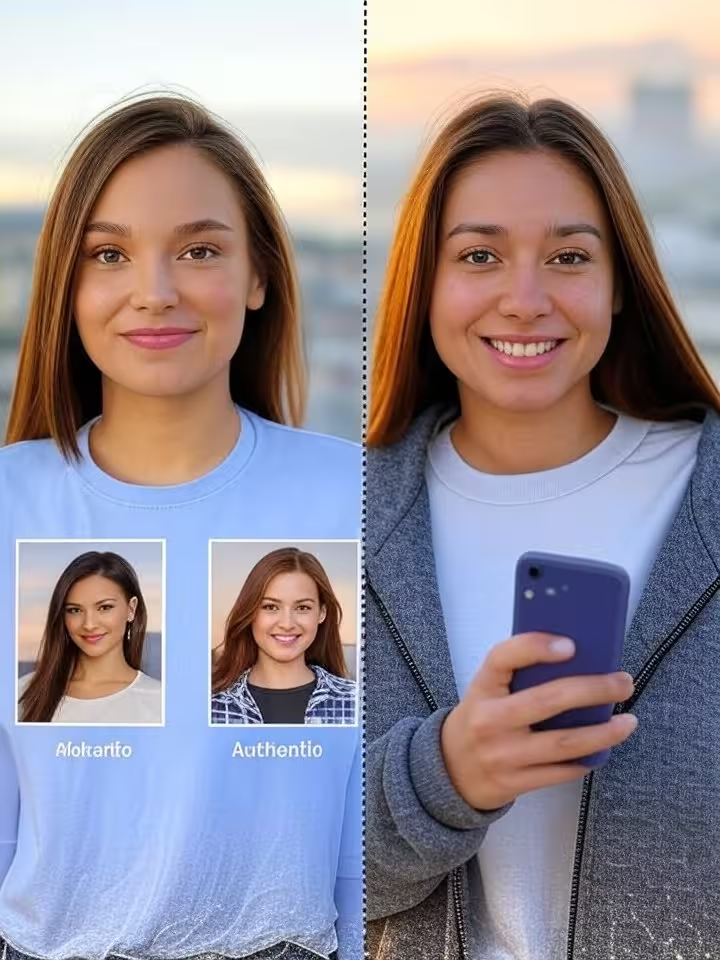
Well, let's start with the obvious, but which we sometimes ignore because we want to believe. The profile pictures on Badoo can be the first big indicator of a fake. Notice if all the pictures look like they're straight out of a professional model's catalog. Don't get me wrong, there are beautiful people out there, but if every picture is impeccable, with magazine poses and exotic backgrounds that don't match the bio (like someone who claims to live in Bogota but appears on beaches in Thailand without explanation), something smells fishy.
I have seen profiles where the photos have no variety: always the same angle, or worse, inconsistencies such as drastic changes in hairstyle or weight from one image to another. What no one tells you is that many fakes use photos stolen from influencers or social media profiles. I once spent time in a chat room only to find out that the «girl» was a famous Russian model; what a waste of time.
Try a reverse image search. It is simple and effective. Take a screenshot of the profile picture, upload it to Google Images, and see if the same image appears on other websites, social media profiles or photo banks. If you discover that the photo belongs to someone completely different or is posted on multiple profiles, you have just detected catfish.
Now, not all profiles with professional photos are fake-some users invest in sessions to stand out, especially on most exclusive apps like The League or Raya. But on Badoo, which is more casual like Tinder or Happn, if there are no casual selfies or photos with friends, be wary. Look at the details: are there erased watermarks? Does the quality vary a lot between photos? Honestly, after so many swipes, I've developed an eye for this. Remember, a real profile usually shows everyday facets, not just perfection.
Also, look at temporal consistency. If someone has photos that clearly span different seasons (winter clothes in one, swimsuit in another) but all look like they were taken on the same day based on metadata or style, they were probably stolen from different sources. Details matter when you're hunting fakes.
Inconsistencies in the story they tell
Let's move on to the bio and basic info. The truth is that fake profiles often make silly mistakes because they are created en masse. For example, someone who claims to be from Madrid but mentions «going to the mall» instead of «mall», or uses expressions that don't match their supposed location. On Badoo, where you can verify location with GPS, see if the profile magically changes city. I've chatted with «people» who swore they lived nearby, but their stories didn't fit - like saying they work in an office in Lima but describe snowy weather.
And you know what, ages and professions also give away. A profile that claims to be 25 years old but mentions experiences of a 40 year old, or glamorous professions without credible details. I confess I once «met» a «successful entrepreneur» who couldn't explain what his company did; obvious catfish.
On the other hand, compare to apps like OkCupid, where the bios are more detailed and it's easier to detect lies. On Badoo, with its short prompts, it's key to read between the lines. Avoid generalizing, but if the bio is generic, like «looking for true love» with nothing personal, it could be a bot or a scammer.. Still, not all lazy profiles are fake; some are just lazy. The trick is to ask specific questions in the chat to verify.
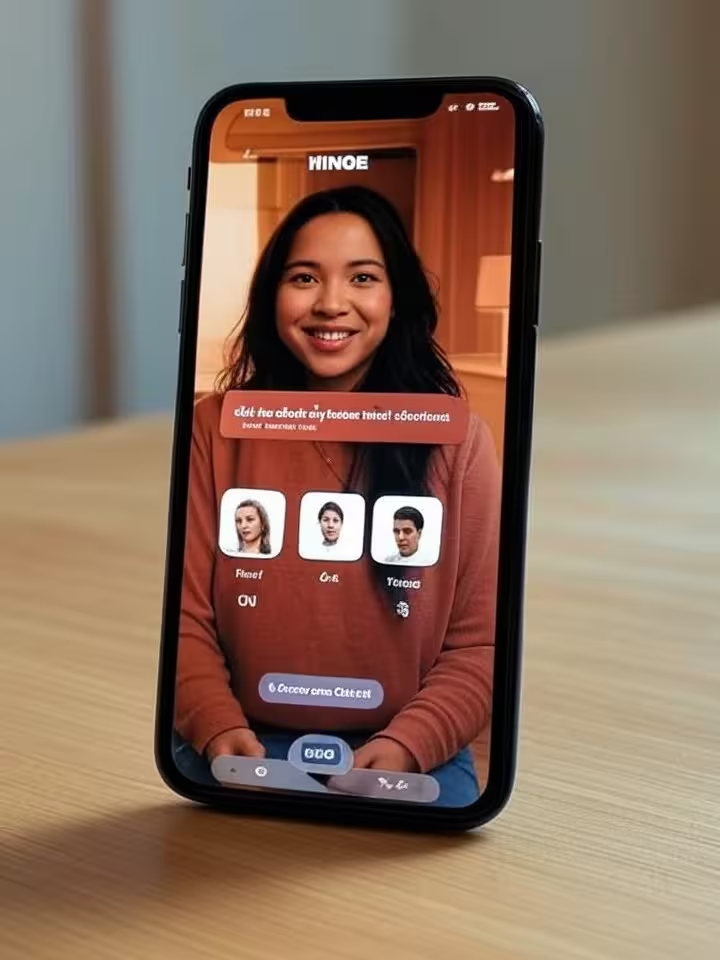
One more detail: look at the verification. Badoo has options to verify photos or identity, as in Bumble. If you're not verified and evade questions about that, red flag. Badoo's blue verification indicates that the person has gone through the identity confirmation process-it's not foolproof, but it significantly reduces the odds that you're talking to a fake. If someone refuses to share a verified photo or makes bizarre excuses for not doing so, you probably have reason to doubt.
Also pay attention to profile information that contradicts your own claims. If someone claims to work as a doctor but their educational level indicates «high school,» or claims to travel constantly for work but can never explain basic details of the places they «visit,» you are looking at clear signs of a fabricated profile.
Reverse image search on Badoo
Using Google Reverse Image Search or tools like TinEye can instantly reveal if the photos on a Badoo profile were stolen from the internet. This technique is especially effective because many scammers don't bother to modify the original images, allowing you to find out if that «girl from Madrid» is actually a Brazilian influencer or a stock image bank.
Badoo verification as an initial filter
Badoo's blue verification seal does not guarantee total authenticity, but it drastically reduces the chances of talking to a fake. Verified profiles have gone through a real-time selfie identity confirmation process. If someone flatly refuses to verify themselves or makes bizarre excuses, it's a clear sign that something doesn't match their claimed identity.
Geographical inconsistencies in Badoo
Badoo uses GPS to display approximate locations, which makes it easier to spot fake profiles that magically change cities or use vocabulary that doesn't match their stated region. A «Buenos Aires» profile that uses expressions typical of Spain, or someone who claims to live in Barcelona but describes impossible weather experiences for that area, are clear indicators of a fake created without attention to cultural detail.
Chat behavior: the signs that don't go wrong
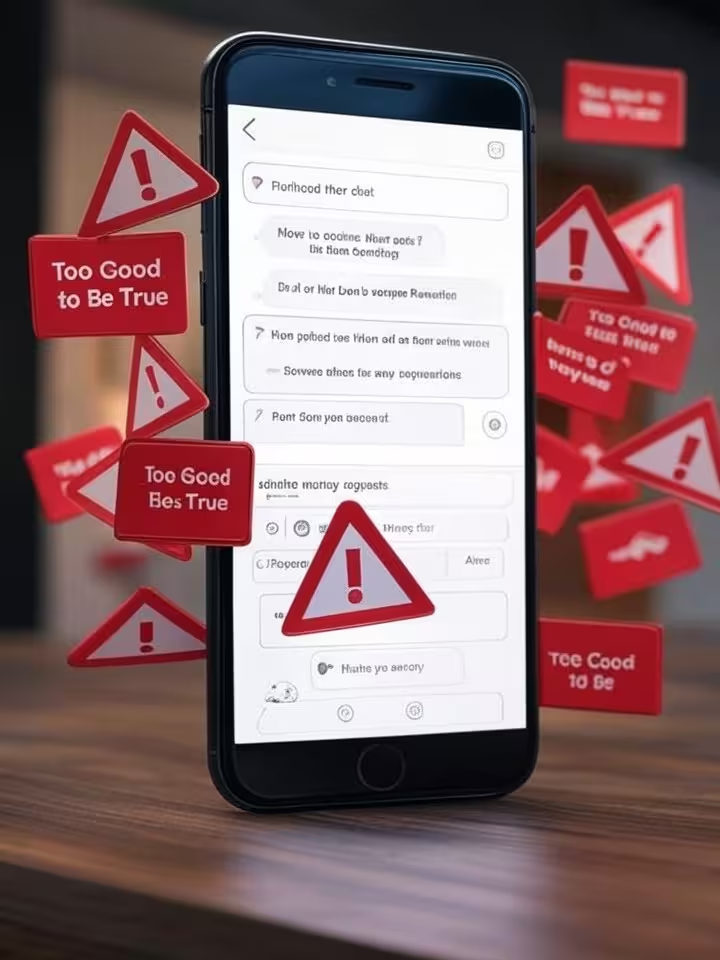
Here comes the interesting part, because the photos and bio can be deceiving, but the chat is where the masks come off. Fakes tend to rush: they bombard you with compliments from the opener, which smacks of love bombing, a common trick in romance scams. In my years of dating, I've noticed that real profiles take time to build chemistry, while the fake ones are quick to ask for money, personal data or move the conversation to WhatsApp. Notice that on Badoo, as on Grindr or Scruff for specific communities, scammers adapt their tactics, but the pattern is similar.
Language, of course. If they respond with copied sentences, weird grammatical errors or evade direct questions, be suspicious. A match once told me a tragic story about needing financial help in the second conversation-classic scam. Between us, it's frustrating, but learning to spot it saves heart and time.
Also, watch the timing. Instant responses at any time, or long silences followed by identical messages. It's not like a normal chat, where there is a natural flow, pauses for work or life. Compare with apps where prompts encourage genuine conversations; I have to admit that the app burnout comes partly from dealing with this, but hey, it's part of the game. I have to admit that app burnout comes in part from dealing with this, but hey, it's part of the game.
Extra red flags: they ask for intimate photos soon, or insist on external links. Beware. Professional scammers also avoid video calls with elaborate excuses-broken camera, perpetually bad connection, impossible-to-coordinate schedules. If after several weeks someone still refuses a simple video call, they're probably not who they say they are.
Another telltale pattern is inconsistency in details. Ask specific questions about things they mentioned before-their job, their city, their hobbies-and see if the answers match. Fakes operate multiple profiles simultaneously and often forget which story they told to whom. If they claim to be an engineer in one message and three days later mention working as a chef without explanation, you're talking to someone who can't keep their lies organized.
Why does Badoo attract so many fake profiles?
The truth is that Badoo is no more riddled with fakes than other massive apps like Tinder or POF, but its international popularity makes it an attractive target for scammers. With millions of active users in Spanish-speaking countries and a relatively low barrier to entry (creating a profile is free and fast), scammers can launch multiple fake accounts without much effort.
In addition, Badoo's Matches feature-similar to Tinder's swipe-allows quick, superficial interactions that favor fakes. Less evaluation time means more chances that someone desperate for connection will take the bait before analyzing the red flags.
That said, Badoo has implemented measures such as photo verification and reporting systems that help, although no app can completely eliminate the problem. It's a constant race between platforms and scammers, and we as users must remain vigilant.
Tools and precautions to verify
Look, it's not all intuition; there are tools that help. Use Google Reverse Image Search to check photos-I've done it dozens of times and saved from disappointment. Apps like Social Catfish or sites to verify phone numbers are also helpful. On Badoo, report suspicious profiles; the app has systems to ban them, similar to how POF or Match handle complaints.
For safety, always date in public places if you get to that point, and share location with friends. What no one tells you is that fakes not only steal time, but can also lead to risky situations., as in cases of orbiting or zombieing where they reappear. But be empowered: check before investing emotions.
At the same time, don't get paranoid. Most users on Badoo are real, looking for connections just like on Meetic or eDarming. Balance caution with openness-that's the key to not burning yourself out with the dating fatigue that affects so much to those of us who have been doing this for a long time.
Other handy tools include browser extensions that automatically detect bots, although their effectiveness varies. Personally, I trust my finely tuned instincts more than external technology, but combining both approaches maximizes your protection. You can also use Badoo Credits strategically-premium verified profiles tend to be more legitimate, though it's not an absolute guarantee.
The psychology behind falling for fake profiles
Here's the trick no one mentions: falling for a fake profile doesn't make you dumb. Scammers are professionals who exploit basic human vulnerabilities-need for connection, loneliness, romantic hope. In my experience, the smartest people also fall because. want to believe in the connection they feel.
The phenomenon of emotional investment plays a huge role. After exchanging messages for weeks, you develop a mental narrative about that person, you invest time imagining a future together. Admitting it was all fake means accepting that you wasted that time and those emotions-something psychologically difficult. That's why many people ignore obvious red flags.
In addition, scammers exploit reciprocity. They bombard you with attention and flattery, creating an implicit emotional debt. When they finally ask for something (money, photos, information), you feel obligated to reciprocate. It's classic manipulation, and recognizing the pattern is the first step to immunizing yourself.
What to do if you have already fallen or are suspicious
If you are already entangled, stop. Block and report. I've helped friends who fell for kittenfishing-little lies that escalate-and the best advice is to nip it in the bud. Reflect on patterns: do you repeat matches with similar red flags? It's like attachment styles; sometimes we attract what we don't want by not paying attention.
If you sent money, immediately contact your bank and report the fraud. If you shared sensitive personal information, consider changing passwords and monitoring your identity. Badoo has a support system where you can report serious cases, and although recovery of funds is rare, documenting the incident helps protect other users.
Most importantly, don't blame yourself. The shame associated with being a victim of catfishing prevents many people from seeking help or reporting. Remember that scammers invest significant resources in appearing credible-you are neither the first nor the last to fall for it. Learn from the experience and move on with greater knowledge.
That said, online dating gets better with practice. Use this to sharpen your radar on Badoo and beyond. Each mistake teaches you to recognize more subtle signals next time. It's like developing a sixth sense for authenticity-the more profiles you critically evaluate, the more instinctive the detection becomes.
Specific cases: types of fakes you will find on Badoo
Not all fake profiles have the same objective. Understanding the categories helps you identify them faster. The automated bots are usually the most obvious-generic responses, external link promotion, robotic conversation patterns. Their goal is to direct you to phishing sites or paid webcams.
The romance scammers are more sophisticated. They spend weeks building emotional rapport before inventing emergencies that require financial assistance. They usually operate from countries with weak economies and handle dozens of victims simultaneously. Their profiles look real because they steal full identities, not just photos.
The recreational catfishing is different-people who lie about their appearance or identity out of insecurity, not for money. They are emotionally dangerous but rarely criminals. However, discovering that someone lied for months about basic aspects of their identity is devastating.
Finally, the revenge or harassment profiles created by ex-partners or stalkers. These are often targeted and can be the most difficult to detect because they know real personal information that they use to gain credibility.
The reality of Badoo: balancing caution and openness
At its core, spotting fake profiles is a skill that makes you stronger in the digital dating world. I've been through the frustration of chats that go nowhere, but also real victories that pay off. Keep swiping with eyes open, and you'll see how your experience transforms. It's not luck, it's knowing what to look for. And if you ask me, it's worth the effort for that authentic connection that does come.
The key is not to let the fear of fakes paralyze you completely. Yes, they exist, and yes, you will run into some. But there are also genuine people looking for the same thing you are-real connection, authentic chemistry, possibility of something meaningful. Protecting your safety does not mean closing yourself off completely to possibilities.
Develop a personal verification system-some non-negotiable points that all your matches must meet before you invest real emotional time. For me, it's video call before meeting, profile verification, and consistency for at least two weeks of conversation. Find what works for you and maintain those guilt-free standards.
Badoo, like any massive dating platform, is what you make of it. With the right tools and knowledge, you can navigate its waters while avoiding the sharks and enjoying the genuine connections it offers. It's not perfect, no app is, but it's also not the Wild West that some paint it to be. It's simply a space that requires intelligent navigation.
Does reverse image search really work to detect fakes on Badoo?
Yes, absolutely. Google Reverse Image Search and tools like TinEye are incredibly effective at uncovering stolen photos. Most scammers don't modify the images they steal, so if the profile picture exists elsewhere on the internet-especially on someone else's social media profiles or stock image banks-Reverse Image Search will reveal it immediately. I've personally used it dozens of times and it has saved me valuable time by detecting fakes before I get emotionally invested in the conversation.
Why does someone refuse to make a video call on Badoo if we have already been talking for weeks?
This is a huge network flag. After weeks of conversation, a simple video call is a reasonable step before investing more time or planning a face-to-face meeting. If someone constantly makes excuses-perpetual broken camera, magic bad connection, impossible-to-coordinate schedules-they are probably hiding their true identity. Catfishers avoid video calls because it would instantly reveal that they are not who they say they are. Insist on this as a non-negotiable requirement before proceeding.
What does it mean if a Badoo profile does not have blue verification?
It doesn't necessarily mean it's fake-many legitimate users simply don't bother to verify themselves because they don't know about the feature or don't give it a second thought. However, the absence of verification combined with other red flags (perfect professional photos, vague bio, inconsistent location) increases the likelihood that it's a fake profile. Use the lack of verification as one more factor in your overall assessment, not as definitive evidence on its own. If in doubt, you can politely ask them to verify themselves-a real user generally won't have a problem with this.
Is it normal for someone to ask to switch to WhatsApp immediately on Badoo?
It is a flag network, especially if it happens in the first few messages. Scammers prefer to move conversations off the platform because it avoids Badoo's automatic detection systems and makes it harder to report them. A genuine person is usually willing to chat within the app for a few days before sharing personal contact information. If someone aggressively insists on moving to WhatsApp without having built minimal trust, be suspicious. The natural transition occurs when you both feel chemistry after several substantial conversations, not in the opener.
How do I differentiate between romance scam and kittenfishing on Badoo?
The main difference is in the end goal. Romance scammers are looking for money directly-they'll eventually invent emergencies, family problems or desperate situations that require financial assistance. They are professionals who handle multiple victims simultaneously from overseas. Kittenfishing, on the other hand, involves smaller lies about appearance, age, profession or personal situation to appear more attractive, but without criminal intent. A kittenfish might use 10-year-old photos or exaggerate his profession, but eventually he will want to meet you in person. If you detect constant pressure for money, it's scamming; if there are only minor inconsistencies in their presentation, it's probably kittenfishing (which also deserves cutting).