Benching on dating apps: how to spot when you're being benched (and what to do)
February 18, 2026
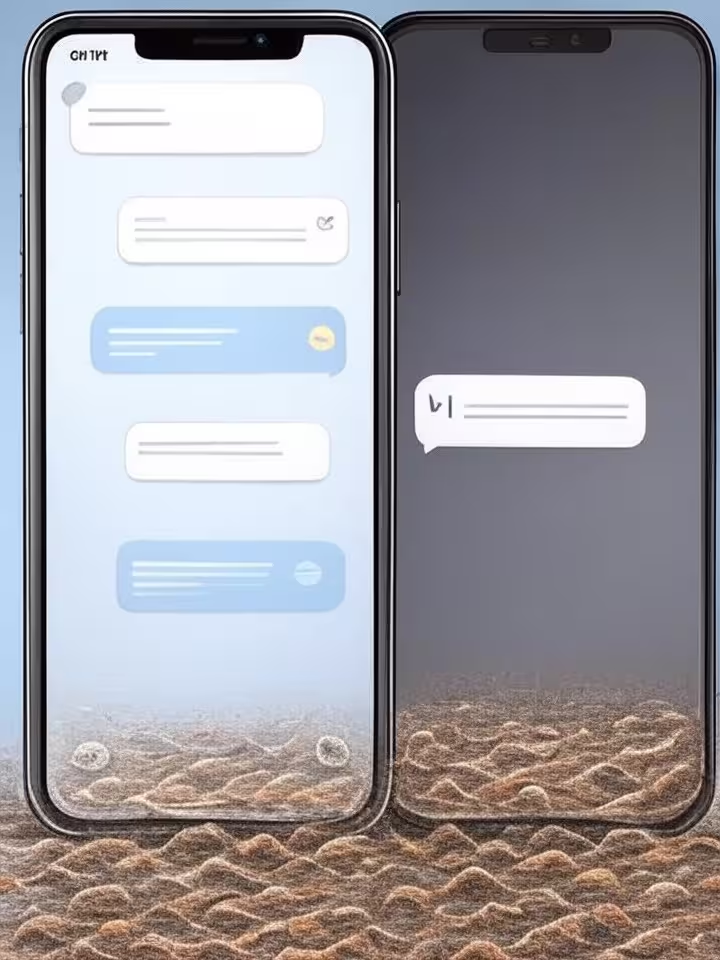
Imagine this: you're chatting with someone on Bumble, things are going well, there's laughter, tentative plans for a date, and suddenly... silence. It's not total ghosting, because every now and then he sends you a little message, a meme or a «how was your day». But he never moves on. Welcome to benching, that in-between state where you are left on the bench, like a reserve player waiting for his turn.. The truth is, I've experienced it more times than I care to admit, and believe me, it's frustrating.
It's that feeling of being almost there, but never quite there. You check your cell phone hoping that this time something will actually happen, but only another empty message arrives that keeps you hooked without getting anywhere. If it sounds familiar, read on.
Benching is basically when someone keeps you in a kind of romantic limbo. They don't rule you out completely, but they don't give you priority either.. It's like you're a backup option, in case their main plans fail. I've seen it a lot in apps like Hinge or OkCupid, where people accumulate matches like stickers.
It is not as direct as a zombieing, where they reappear out of nowhere after months, nor as cruel as a slow fade, which is that gradual fading away until they disappear. Benching is more subtle, keeps you hooked with crumbs of attention. Honestly, in my years testing everything from Meetic to Feeld, I've noticed that it comes up when the person is exploring multiple options, thanks to the paradox of choice that these platforms offer.
And you know what, it's not just a male or female thing; everyone does it. I've seen busy professionals do it with no ill intent, simply because they're in over their heads. I remember one time I was on the receiving end with someone on Happn; he would text me every few days, just enough so he wouldn't lose the thread, but he never nailed down a date. Eventually, I realized I was his plan B while he was pursuing someone else.
The truth is that it hurts the ego, but it also teaches you to recognize patterns that you previously overlooked.
The unmistakable signs that you are on the bench
Here's the interesting thing: benching is not always obvious at first. It starts subtly, almost imperceptibly, until one day you realize that you've been in the same place for weeks. These are the signs you can't ignore:
Spaced responses and erratic patterns
Notice that the person responds, but always hours or days apart. It's not that she's busy occasionally; it's a constant pattern. In niche apps like Grindr or Her, where the dynamics are more direct, you see it in promises of meetings that are postponed indefinitely. They tell you «this week is complicated, but next week for sure,» and next week never comes.
I have seen it in Meetic, where someone may be genuinely looking for something serious but keep three or four options in parallel. The problem is that you don't know it, and in the meantime you invest emotional energy waiting your turn.
Vague excuses without concrete alternatives
When someone tells you «I'm super busy this week, but I'll meet you soon» without offering a specific alternative date, that's the key. A genuinely interested person will say, «I can't this week, but how about next Saturday?». The difference is abysmal.
I have to admit that I have done it myself without realizing it, benching someone on Badoo because I wasn't sure of my feelings. Nobody is perfect in this online dating thing, but recognizing it is the first step to not repeating it.
Night or convenience contacts
Also, pay attention to whether they only contact you late at night or when they seem bored. That's a giant flag network. You're not their priority; you're their last-minute entertainment. Between us, if you feel that constant anxiety of waiting for messages, you're probably on the bench.
Don't confuse benching with genuine orbiting, where they follow you in networks but don't interact; here there is contact, just enough to keep you interested. In my experience helping friends with profiles in The League or Inner Circle, I have seen how this progressively erodes self-esteem. It makes you question your value, it generates FOMO because you think that maybe there is someone better occupying the incumbent position.
Spaced responses without progress
The pattern of benching is recognized by intermittent messages that never lead to concrete plans. They reply just enough to keep you interested, but days apart and show no real intention to meet. It is the perfect tactic to keep you as a fallback option while they explore other alternatives in their active matches.
Vague excuses without alternative dates
The difference between someone genuinely busy and someone who has you on the sidelines is in the details. An interested person proposes concrete alternatives when they can't meet: «No chance this week, but how about next Thursday? A bencher only offers vague »we'll meet soon« with no real commitment or specific dates.
Emotional impact of romantic limbo
Being on the bench generates constant anxiety and progressively undermines your self-esteem. You find yourself checking your cell phone every two minutes, questioning your worth and wondering what you did wrong. This emotional limbo is more damaging than a direct rejection, because you never have closure and keep investing energy into something that is not moving forward.
Why do people do benching?
Well, before demonizing whoever has you in the hot seat, it's worth understanding the reasons. It's not always pure malice; sometimes it's simple inability to manage multiple connections.
The paradox of choice in dating apps
With apps like Tinder offering hundreds of available profiles just a swipe away, many people suffer from decisional paralysis. They have three or four promising conversations and don't know how to prioritize them. Instead of choosing, they keep all of them active «just in case». I have seen this especially in professionals who use specific apps for your industry, where they want to be sure before committing to a single person.
Yet, at the same time, it is an opportunity to reflect on your own attachment styles. Are you one of those who cling to the minimum, or do you learn to let go? According to studies on attachment styles, In the case of anxious attachment, those with anxious attachment tend to tolerate benching longer than those with secure attachment.
Fear of commitment or simple selfishness
In other cases, the person simply enjoys the attention without wanting to give anything in return. It is selfishness disguised as «exploring options». The truth is that this often reflects emotional immaturity or genuine fear of committing to someone. They would rather maintain control by having several options available than take a chance on one person.
That said, some people do it without being aware of it. They are so used to the dynamics of apps that they don't realize they are playing with another person's expectations. The lack of immediate feedback (as opposed to a face-to-face conversation) facilitates this behavior.
Getting off the bench: practical strategies
Look, online dating is not a game of luck; it's a skill, and part of it is knowing when to back off. If you suspect benching, here's your plan of action.
Communicate your expectations directly
If you have been chatting for weeks without making any progress, ask him directly, «Do you want to meet up or does this stay in eternal chats?». I've tried it at Coffee Meets Bagel and sometimes it works; other times, it confirms that it was just a hobby. The key is to do it non-aggressively, but firmly. A simple «I'd like to meet you in person, do you have any days off this week?» puts the cards on the table.
On platforms like Scruff or Taimi, where the community is more open about intentions, honesty is often welcomed. And if they don't respond clearly, delete the match. I confess that after an app burnout, I started to apply a strict rule: if there is no progress after two weeks of conversation, page turn.
Set clear limits on your time
Protect your energy. Don't be available 24/7 for someone who only contacts you when it's convenient for them. If they write to you only in the wee hours of the morning or when they are bored, don't respond immediately. Show with actions that you value your time. This isn't playing games; it's self-respect.
On the other hand, diversify your matches. Don't put all your eggs in one basket, especially if that basket has obvious holes in it. Keep several conversations going until someone shows genuine interest. This is not cynicism; it's realism in the world of modern dating.
Recognize when it is time to let go
If after communicating your expectations there is no change, accept reality. That person is not really interested, And try as you might, you can't force genuine interest. I've seen it time and time again: people who want to be with you find a way; people who don't, find excuses.
And you know what, letting go hurts less than you think. The feeling of relief when you stop waiting for messages is immediate. I remember when I finally deleted someone who had me on the bench on Hinge; the next day I started a conversation with someone else who did set up a date for the weekend. The contrast was brutal.
How not to benching others (yes, you can fall into this too).
Well, at this point, touch the mirror. To avoid benching others, be aware of your intentions from the beginning. If you are in an exploration phase on Match or POF, don't give false hope. Better a clean rejection than a prolonged emotional limbo.
Be honest about your real availability
If you have three active conversations and can't manage them all, prioritize. Don't have conversations that you know are going nowhere just out of ego or boredom.. What no one tells you is that benching often reflects more on you (immaturity, fear of commitment, need for validation) than on the other person.
In real situations, like that repetitive conversation fatigue on WooPlus or Christian Mingle, it's common to fall into this out of sheer exhaustion. But if you don't have the energy to meet someone, tell them. A simple «I'm not at the best time to meet new people right now, but I appreciate the conversations» is infinitely better than intermittent silence.
If there is no chemistry, report it
Sometimes you start chatting with someone and after a few days you realize there is no chemistry. Instead of letting the conversation die a slow death, be direct.. «I enjoyed meeting you, but I don't feel the connection I'm looking for. I wish you the best of luck» is a difficult but respectful message to send.
The truth is that we have all been on both sides of benching at one time or another. The difference is recognizing it and correcting it. Empower yourself: improve your bio with authentic prompts, use boosts wisely to increase your visibility, and focus on genuine connections instead of accumulating matches like trophies.
Alternatives to benching: finding more authentic connections
Also, consider apps like OurTime or SilverSingles if you're looking for something more mature, where benching is less frequent because people value time. At platforms oriented to serious relationships, users tend to be more direct about their intentions.
Prioritizes quality over quantity of matches
Instead of compulsively swiping for hundreds of matches, focus on quality conversations with a small number of people. This drastically reduces the chances of falling into benching dynamics, both giving and receiving. When you only have two or three active conversations, it is easier to manage them with respect and real attention.
In the end, dating is about vulnerability, not stockpiling options. (And boy, have I learned that the hard way on hundreds of first dates). Authentic connection requires presence, not romantic multitasking.
Use apps that encourage early engagement
Apps like Bumble, with its 24-hour limit on responses, or Hinge, with its daily match limit, are designed to reduce benching. They force you to make quicker and more committed decisions. If you want to avoid limbo, these platforms can help structurally.
The positive side: what you learn after benching
Well, it's not all negative to have experienced benching. Sometimes, it forces you to confront your own patterns and improve your dating strategy.
Recognize network flags faster
After living benching a couple of times, you develop a radar. You start to detect patterns in the first days of conversation., not after weeks of wasted time. That person who responds only when it suits him, who never proposes concrete plans, who always has vague excuses... now you see it coming for miles.
In my career writing about dating and advising readers, I've seen how getting out of a benching leads to better matches, with more real chemistry. You become more selective, and that's not a bad thing; it's smart protection of your emotional energy.
You value direct communication more
Notice that in alternative apps like Feeld, where expectations are clear from the start, benching is rare because everyone knows where they are going. This teaches you the value of transparency. Having been benched, when you find someone who communicates their intentions clearly, you appreciate it a thousand times more.
You know what, benching has made me more selective and less tolerant of half measures. I no longer accept crumbs of attention like before. Either you are genuinely interested, or I turn the page without rancor. This mental clarity is a gift that only comes after frustrating experiences.
Improve your own match management
At its core, this modern phenomenon highlights the importance of authentic connection over superficial connection. Don't fall into love bombing to compensate; be genuine. I've helped friends overcome this by adjusting their profiles on JDate or Muzz, focusing on green flags like consistency and respect for other people's time.
Even so, remember that dating fatigue is real; Take breaks if you feel burnout. Return with renewed energy always yields better results than forcing connections when you're exhausted. The truth is that, with patience and strategy, you can turn limbo into a springboard to something better.
Your next step: from the bench to the protagonist of your story
And there you have it. If you're on that bench right now, get up and play your own game. Online dating can be chaotic, but it can also be a path to unexpected victories.. The key is to recognize your value, communicate your expectations without fear, and let go of what doesn't serve you with dignity.
Benching only works if you allow it to work. You decide how long you wait on that bench before you get into the game with someone who really wants to play with you. And believe me, when you find that person who responds with enthusiasm, proposes concrete plans and delivers what they say, you'll understand why it was worth it not to settle for less. Keep swiping with your head, but above all with self-respect. Your match is out there, you just have to stop warming the bench with those who don't value you.
How long should I wait before concluding that I am being benched?
There is no exact time frame, but a good rule of thumb is two weeks of conversation with no concrete progress toward a date. If after proposing to meet two or three times you receive only vague excuses with no alternative dates, it's benching. The key is the pattern: intermittent responses that keep you interested but never move forward. If you've been chatting for more than a month without having seen each other in person and with no concrete plans on the calendar, you're definitely benching.
Should I directly confront someone I think is benching me?
Yes, it definitely pays to communicate your expectations directly but not aggressively. A message like «I'd like to meet you in person, do you have a free day this week for a drink?» lays your cards on the table. If he responds with another vague excuse without proposing a concrete alternative, you have your answer. The confrontation need not be dramatic; you are simply clarifying intentions. If after clearly expressing your interest in meeting there is no change in her behavior, it's time to let go of that conversation and focus your energy on matches that demonstrate reciprocal interest.
What is the difference between benching and someone genuinely busy?
The difference is in the details and consistency. A genuinely busy person will explain with specific context («I have an important presentation this week») and propose a concrete alternative date («How about next Saturday afternoon?»). Benching uses vague excuses without details or alternatives. In addition, someone who is really interested will find times for meaningful conversation, however brief, not just sporadic «howdy» messages. The time pattern also matters: if they've been making the same excuse for weeks, they're probably not as busy as they say they are; you're just not their priority.
How do I avoid inadvertently benching my matches?
The key is to be honest with yourself about your intentions and real capacity. If you have three or four active conversations and can't manage them all with genuine attention, prioritize or communicate your situation. Don't have conversations that you know are going nowhere just out of ego or boredom. If you don't feel interested enough to meet someone after a week of conversation, it's better to say so clearly than to maintain intermittent contact. A simple «I liked meeting you, but I don't feel the connection I'm looking for» is infinitely more respectful than benching limbo. Limit your active conversations to a number that you can manage with real presence, not on autopilot.
Is benching more common in certain dating apps than in others?
Yes, benching tends to be more frequent in apps with large volumes of users and unlimited swipes such as Tinder or Badoo, where the paradox of choice is more intense. In contrast, apps like Hinge (with a daily limit of likes) or Bumble (with its 24-hour limit to respond) structurally reduce the chances of benching by forcing quicker decisions. Serious relationship-oriented apps like eharmony or EliteSingles also have less benching because users generally have clearer intentions and value their time more. On niche platforms like Feeld, where expectations are set from the profile, benching is less common because there is more honesty from the start about what each person is looking for.