Imagine this: you've been chatting on Hinge for a week, everything is flowing great, laughter over messages and even memes shared that make you think there might be something real there. Finally, they agree to meet in person, in a little bar downtown, and suddenly, in the first ten minutes, a comment about politics comes up that makes everything tense. Well, the truth is that it's happened to me more times than I'd like to admit, and after years of swiping on apps like Bumble or Happn, I've learned that conflicts on first dates are not the end of the world, but opportunities to see if you really connect. It's not just luck, it's a matter of handling those situations with a cool head and a little empathy.
Online dating prepares you for a lot of things: writing witty bios, choosing photos that don't look too edited, having conversations without dying trying. But no one tells you how to deal when that person you hit it off with by text turns out to be completely different in person, or worse, when in the middle of the first date an issue comes up that makes you rethink everything. Early conflicts aren't a sign of failure-they're tests of real compatibility. And knowing how to navigate them makes the difference between going home frustrated or discovering there's potential there.
When reality does not match the profile pictures
The first date always brings that mix of excitement and nerves, right? Think about when you arrive and the person doesn't look so much like their photos on OkCupid-maybe it's the angle or the filter, but there you are, trying not to show surprise. The truth is, these visual mismatches can create an immediate internal conflict, where you're debating whether to move on or look for a quick way out. I've been there, sitting across from someone who in the app looked like a Meetic model, but live was rather... normal. And you know what, that's not a bad thing, but the trick is not to let the disappointment cloud the rest of the conversation.
Instead of focusing on the superficial, try to redirect to what matters: do you share interests? Is there chemistry in words? Sometimes, a little conflict like this reveals whether you're looking for something genuine or just a perfect illusion created by carefully selected photos. On the other hand, if the mismatch is extreme, such as a clear case of catfishing, then clear limits must be set-I always recommend check profiles before meeting to avoid major surprises.
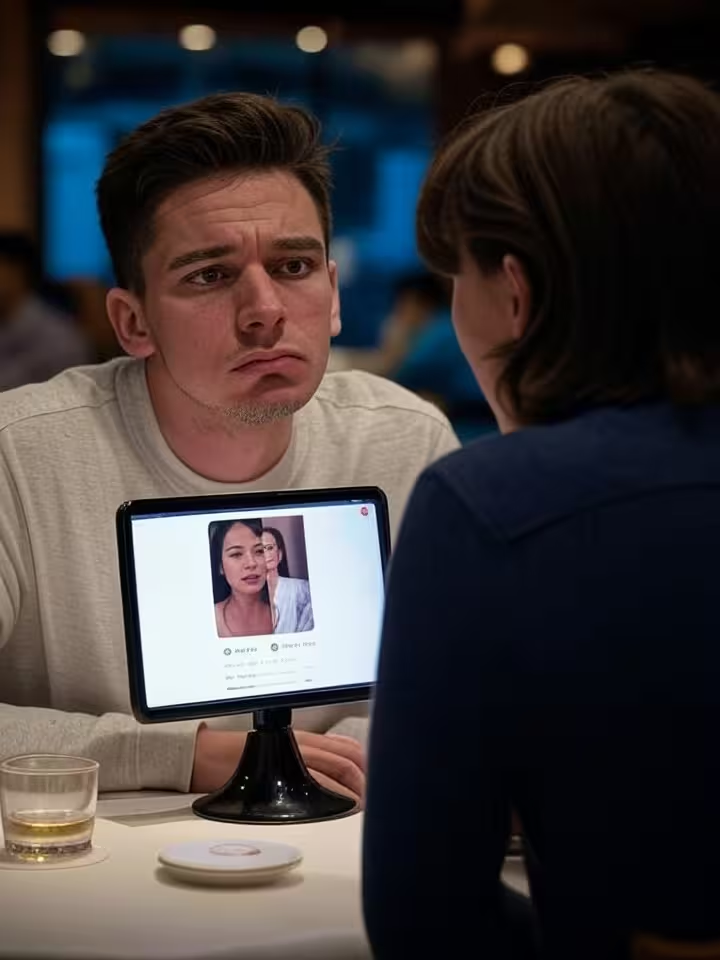
But not everything is visual. The discrepancy between digital expectations and physical reality goes beyond appearance. Maybe you were expecting someone outgoing and fun, and they turn out to be shy and quiet. Or the other way around: someone who seemed quiet on message turns out to be an intensely energetic person who can't stop talking. These personality mismatches generate emotional micro-conflicts that you need to process in real time as you try to keep the conversation going.
My honest advice: give it a 20-30 minute window before you judge. First date jitters transform people, for better or worse. That same guy who can now barely articulate a coherent sentence may relax after the first coffee and become the witty person you met over chat. Or not. But he deserves that adjustment time before you decide if this has a future.
The clash of unspoken expectations
Now, there are conflicts that arise from unspoken expectations, such as when one assumes the date will be casual and the other arrives with flowers and plans for a second round. In my experiences with apps like Badoo, I've seen how this can quickly escalate into misunderstandings. I remember once a Coffee Meets Bagel match started talking about exclusivity in the first hour-too soon, right? That kind of love bombing can be overwhelming, and it's best to communicate it directly, without beating around the bush.
That said, don't judge right away; maybe it's just nerves or cultural differences in how dating works. Balance is key: express what you feel calmly, and watch how the other person responds. If there is mutual respect, the conflict dissolves; if not, it's an early red flag that saves you time. Honestly, I'd much rather discover incompatibility on the first date than three months later when there's already emotional investment.
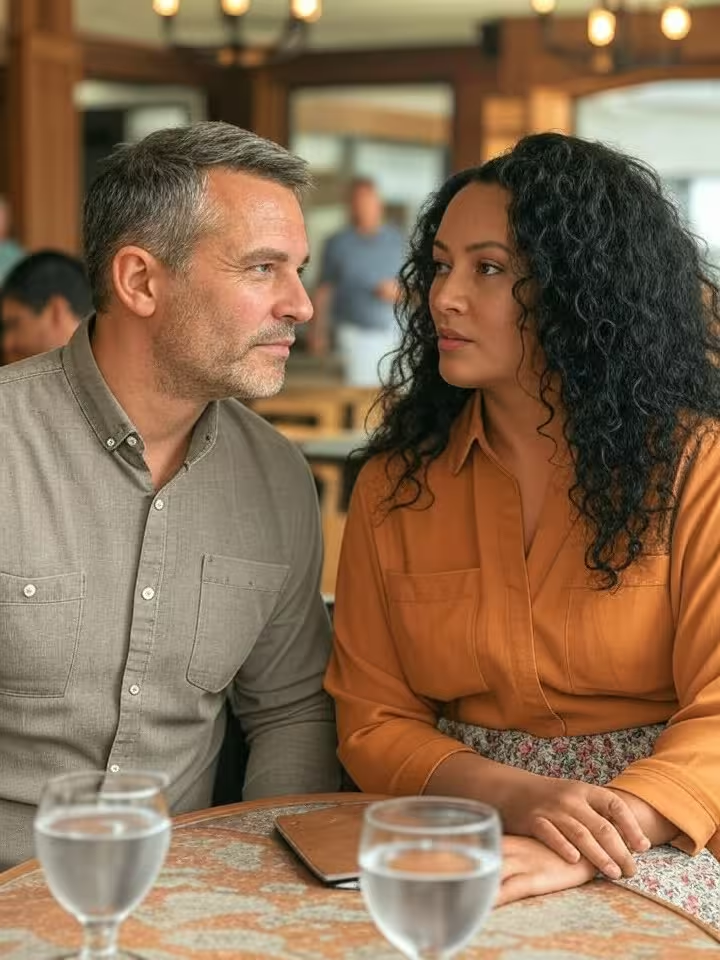
Another classic conflict of expectations: the rhythm of physical connection. One expects a greeting hug, the other extends a hand. One seeks a kiss goodbye, the other waves goodbye from afar. These small mismatches over physical boundaries can create discomfort if not handled naturally. What few people mention is that there are no universal rules-each person has his or her own rhythm, and it's okay to communicate verbally if you notice tension. A simple «I'd rather get to know each other slowly» can avoid awkward misunderstandings.
Management of physical and emotional expectations
First dates generate conflict over boundaries of physical contact, appropriate emotional intensity and the pace of personal openness. Clearly communicating your boundaries without apology avoids misunderstandings and establishes a foundation of respect from the start.
Discrepancy between digital and in-person personality
Conflicts arise when the personality we project by message does not match our face-to-face behavior. Shyness, nerves or differences in communication styles create mismatches that require time and patience to assess fairly.
Identifying early red flags vs. normal nerves
Distinguishing between genuine signs of incompatibility and behaviors caused by nerves is key. Love bombing, disrespect or controlling attitudes are serious red flags, while social awkwardness or shyness deserve a second chance.
Conversations that become minefields
Notice that touchy subjects are a minefield on first dates. Politics, religion, ex-partners-any of these can take the talk from light to tense in seconds. I have to admit, after hundreds of interactions on platforms like The League or Inner Circle, I've developed a kind of radar for detecting when a topic is about to explode. For example, if something controversial comes up, such as opinions on climate change during a post-match dinner on Match.com, don't try to win the debate.
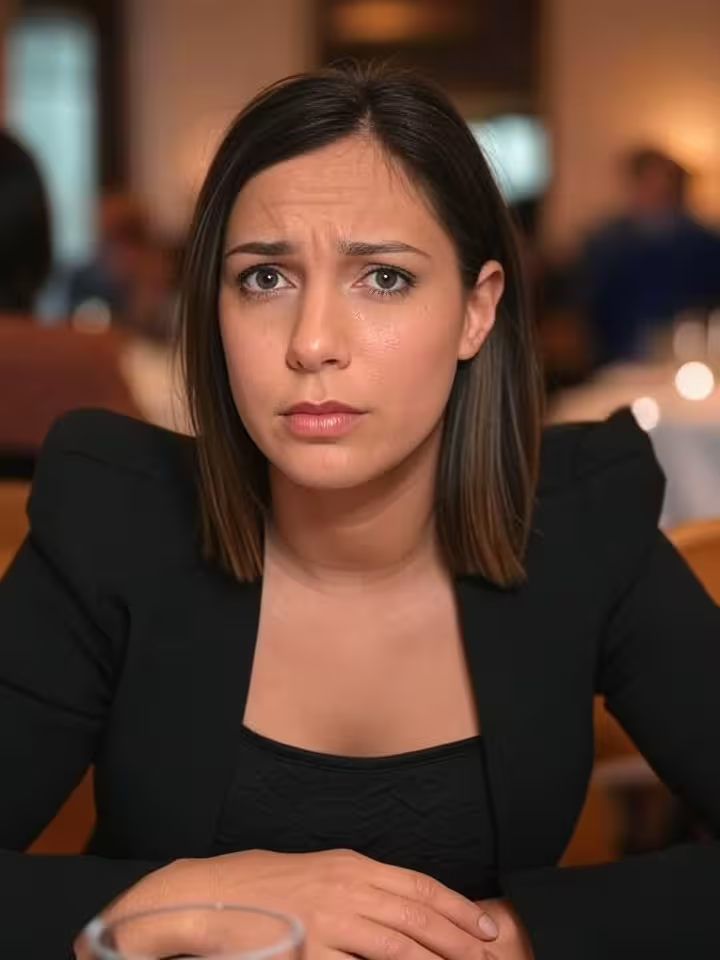
Instead, redirect with a neutral question, «And what are you passionate about outside of that?» Here's the interesting thing: these conflicts aren't always negative; sometimes they reveal incompatible values early on, which is a victory in disguise. I confess to you that I once dated someone from Feeld who had opposing views to mine about open relationships, and while the conflict was uncomfortable, it helped me clarify what I wanted. Still, if you feel the tension rising too high, it's valid to change the subject or even shorten the date-your comfort first.
Honestly, ignore the unnecessary drama. Not every contentious conversation is worthy of your energy. If someone actively seeks to provoke debate on sensitive topics to «test» your critical thinking or to demonstrate intellectual superiority, that's a sign that the person enjoys conflict more than connection. I've seen this especially in more «intellectual» app profiles where some matches confuse first dates with panel discussions.
On the other hand, if the controversial topic comes up naturally-say, comments on some news story of the moment-and you can both maintain respect while differing, that's actually a positive. The ability to disagree without hurting each other is critical to any long-term relationship. Watch how the other person handles opposing opinions: does he or she actively listen or just wait his or her turn to rebut? Does he or she ask genuine questions or just make assertions? These signs tell you more about future compatibility than the content of the disagreement itself.
The unhurried rhythm of the conversation
Between us, another common conflict is that of different rhythms in conversation. Imagine you're on a Happn date, and while you talk about travels and dreams, the other person only responds with monosyllables or, worse, checks the phone constantly. That generates a subtle frustration, like live orbiting, where you feel like you're investing more energy. What no one tells you is that you don't have to force chemistry; if there's an imbalance, ask yourself if it's worth a second chance.
In my years helping friends with their eDarling profiles, I've seen how recognizing these patterns prevents dating burnout. Also, consider the context: maybe it's shyness, not disinterest. Try open-ended questions to rekindle the flow, but if it persists, it's time to accept that not every match leads to something more. Sometimes awkward silence isn't shyness-it's simply lack of interest poorly disguised as politeness.
Here's the trick: there's a huge difference between someone who is an introvert who needs time to open up and someone who just doesn't feel like being there. Introverts actively participate but in a more restrained way-they ask questions, maintain eye contact, show open body language. Disinterested people show clear signs: automatic responses, constantly looking around, not following up on what you say. If after 30 minutes you feel like you're doing a one-sided interview, you probably are.
The truth is, there's also the reverse problem: when one of you completely dominates the conversation. If your date goes on and on about herself without showing curiosity about you, that imbalance creates its own kind of conflict-a silent one where you start to wonder if she's really interested in you or just needed an audience. The conversational balance that works via chat must be translated into real life.
When expectations clash with emotional reality
What happens is that first dates often come loaded with accumulated expectations from chats on apps like POF or OurTime, where everything seems perfect by text. But in person, reality sets in: maybe there's no spark, or worse, an unexpected ick shows up, like habits that annoy you right away. I've experienced that on SilverSingles dating, where age doesn't guarantee maturity, and a casual comment about splitting the bill turns into a debate about equality.
The dilemma is real-do you press your point or let it go? My advice, based on dozens of first dates, is to prioritize authentic connection over scoring points. If the conflict is minor, use it to dig deeper: «Interesting, why do you think that?» At the same time, don't ignore serious red flags, like controlling attitudes or obvious lies. (And parenthetically, I once avoided disaster by noting how a Christian Mingle guy manipulated the conversation to avoid personal questions-clear sign of situationship in the making.).
That hurts, but it teaches. Every mishandled conflict is a lesson in what to look for-or avoid-in the future. Over time, you develop the intuition to spot patterns: the guy who always blames his exes, the person who badmouths the waiter, the one who doesn't respect your time by showing up late without warning. These first-date micro-conflicts are actually windows into much larger future behaviors.
On the other hand, emotional conflicts, such as rejection anxiety or the FOMO of knowing there are more profiles out there, can sabotage everything. In the world of Grindr or Her, where the options seem endless, it's easy to fall into the paradox of choice and magnify a small disagreement. I confess I've felt that burnout myself after a contentious date, wondering if I should keep swiping or take a break.
The important thing to remember is that online dating is a skillLearn from each conflict, adjust your approach. For example, if you notice repetitive patterns, such as always clashing on attachment styles, reflect on your own habits. Also, consider niche apps like Taimi for more aligned matches, reducing conflicts from the start. The key is not to take each conflict as a personal failure but as valuable information about compatibility.
Emotional and physical safety first and foremost
Look, not every conflict is romantic; some involve safety, and there are no half measures there. On Seeking Arrangement or Ashley Madison dates, where the dynamics can be more intense, I've learned to be on the lookout for scammers or romance scams disguised as genuine interest. If a request for money or personal details comes up on the first date, that's a red flag-get out of there and report on the app.
I always choose public places, share my location with a friend, and verify identities first. Notice that, in my experiences with WooPlus, a conflict such as uncomfortable pressures is best handled with assertiveness: «I'm not comfortable with that.» In the end, prioritizing your well-being transforms a potential danger into a lesson in empowerment. Safety is not paranoia-it's self-respect.
Boundary conflicts also include situations where someone tries to push physical intimacy too fast. If on the first date they pressure you to go somewhere private, or show frustration when you set clear boundaries, that's non-negotiable-it's time to end the date. I've seen how many people, especially women, feel obligated to «not make a scene» or be «polite» even when they feel uncomfortable. Your safety is worth more than the social comfort of not confronting.
According to data from Pew Research on online dating, A significant portion of users report uncomfortable or even threatening experiences. Being prepared to handle these security conflicts firmly is essential. Always have an exit plan: money for your own transportation, a charged cell phone battery, and never feel bad about ending an appointment early if something feels wrong.
Also, watch for early signs of controlling behavior: someone who excessively insists on knowing where you live, who gets annoyed that you are slow to respond to messages even during the date, or who makes possessive comments about your dress or behavior. These micro-conflicts are predictors of future toxic dynamics. Trust your intuition-if something feels weird, it probably is.
Turning conflict into valuable information
Simple and straightforward: not all conflict means terminal incompatibility. In fact, how the two of you handle a minor disagreement can reveal more about your potential together than a perfectly smooth conversation. Can your date acknowledge his or her mistake? Does he or she make the effort to understand your perspective? Do you find middle ground together? These conflict resolution skills are what sustain long-term relationships.
At their core, first date conflicts are part of the modern dating package, but they don't define your success. After years in this arena, from JDate to Muzz, I've seen how handling them with grace can lead to real connections. It's not about avoiding them all-that's impossible-but about growing through them. The best relationships I've seen start on apps weren't the ones that had perfect dates, but the ones that navigated early conflicts with honesty and mutual respect.
And you know what, some of the best matches I've ever had started with small stumbles: an awkward initial conversation, a misunderstanding about expectations, even a disagreement about where to have dinner. What made the difference was the willingness of both people to communicate openly instead of running away at the first sign of friction. Rejection and conflict are unavoidable., but your response to them defines your experience.
So, the next time a disagreement arises, take a deep breath, communicate, and remember: every date is a story, not a final verdict. Some conflicts will reveal genuine incompatibility-and that's okay, they save you time. Others will show you that this person knows how to handle tension with maturity-and that's worth gold. Move on, adjust, and who knows, maybe the next match will be the one that flows smoothly. Or better yet, one that knows how to navigate the stumbles right along with you.
Real red flags involve disrespect, controlling behavior, blatant lies or pressure on your boundaries. Nerves manifest as social awkwardness, awkward pauses or difficulty maintaining eye contact, but not crossing lines of respect. Give the person 20-30 minutes to relax before making a final judgment. If the problematic behavior persists or worsens, trust your intuition-it's probably a genuine sign of incompatibility or even danger.
Don't try to win the debate or convince the other person of your position-the first date is not the time for ideological conversions. Gently redirect: «Interesting perspective, what other things are you passionate about?» or «I see we have different views there, tell me about your work.» If the tension is excessive or the person is actively seeking conflict, it's okay to change the subject directly or even shorten the appointment. Respectful disagreements reveal maturity; personal attacks or contempt reveal fundamental incompatibility.
If you find yourself asking all the questions while receiving only short answers, try more open-ended questions and wait-sometimes people need more time to process. Differentiate between shyness (open body language, eye contact, albeit short answers) and disinterest (looking around, checking the phone, zero follow-up). If after 30 minutes you still feel like you're doing a one-sided interview, there's probably no chemistry. On the other hand, if your date monopolizes the conversation without asking about you, that reveals narcissism or lack of genuine curiosity-both red flags for future relationships.
Absolutely valid and necessary. Your comfort and safety are priority over social education. If you detect controlling behavior, aggressive behavior, obvious lies, or simply feel very uncomfortable for no clear reason (trust your intuition), you can end the date. A polite way out: «Excuse me, I just remembered an engagement I forgot about. Thank you for your time.» You don't need to give lengthy explanations or feel guilty. Always have an exit plan: own transportation, battery charged, shared location with someone you trust. Prioritizing your well-being is not rude-it's essential self-care in modern dating.
Give second chances if: the conflict arose from obvious nerves, clarifiable misunderstandings, or minor differences handled with mutual respect. Also if you both showed an ability to listen, recognize mistakes and find middle ground-these skills predict healthy relationships. Don't give a second chance if: there was disrespect, controlling behavior, lies, rejection of your boundaries, or if your intuition tells you something is wrong. Conflicts that reveal incompatible core values (opposing views on children, relationships, lifestyle) also don't deserve a second round-you're just prolonging the inevitable. Trust your instincts about which conflicts are salvageable and which are signs of real incompatibility.