The impostor syndrome in online dating: how to overcome that voice that tells you that you are not enough
February 1, 2026
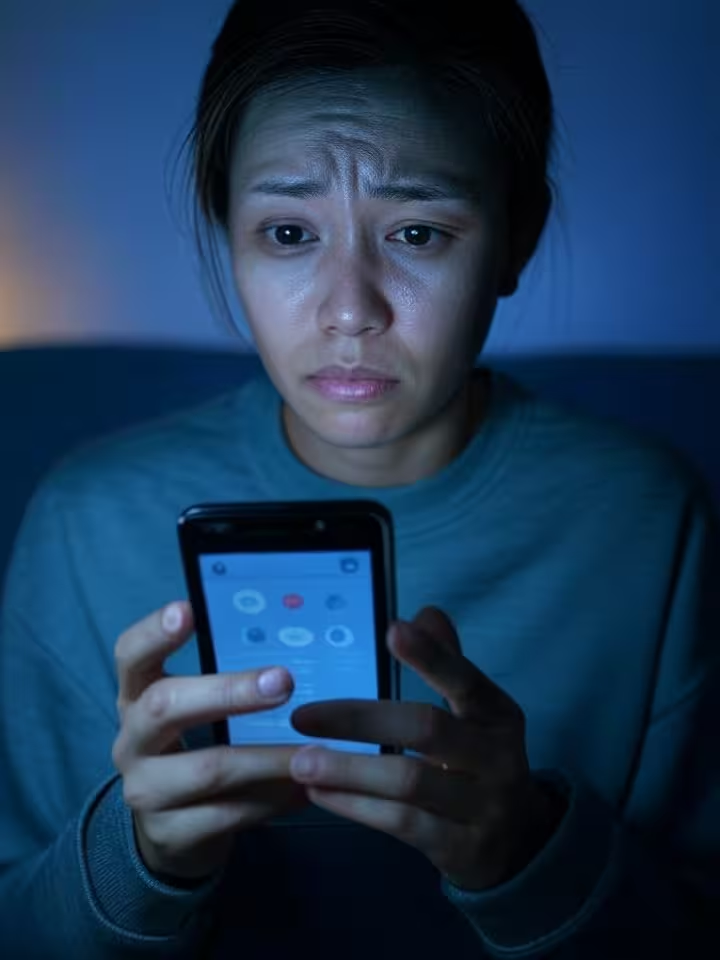
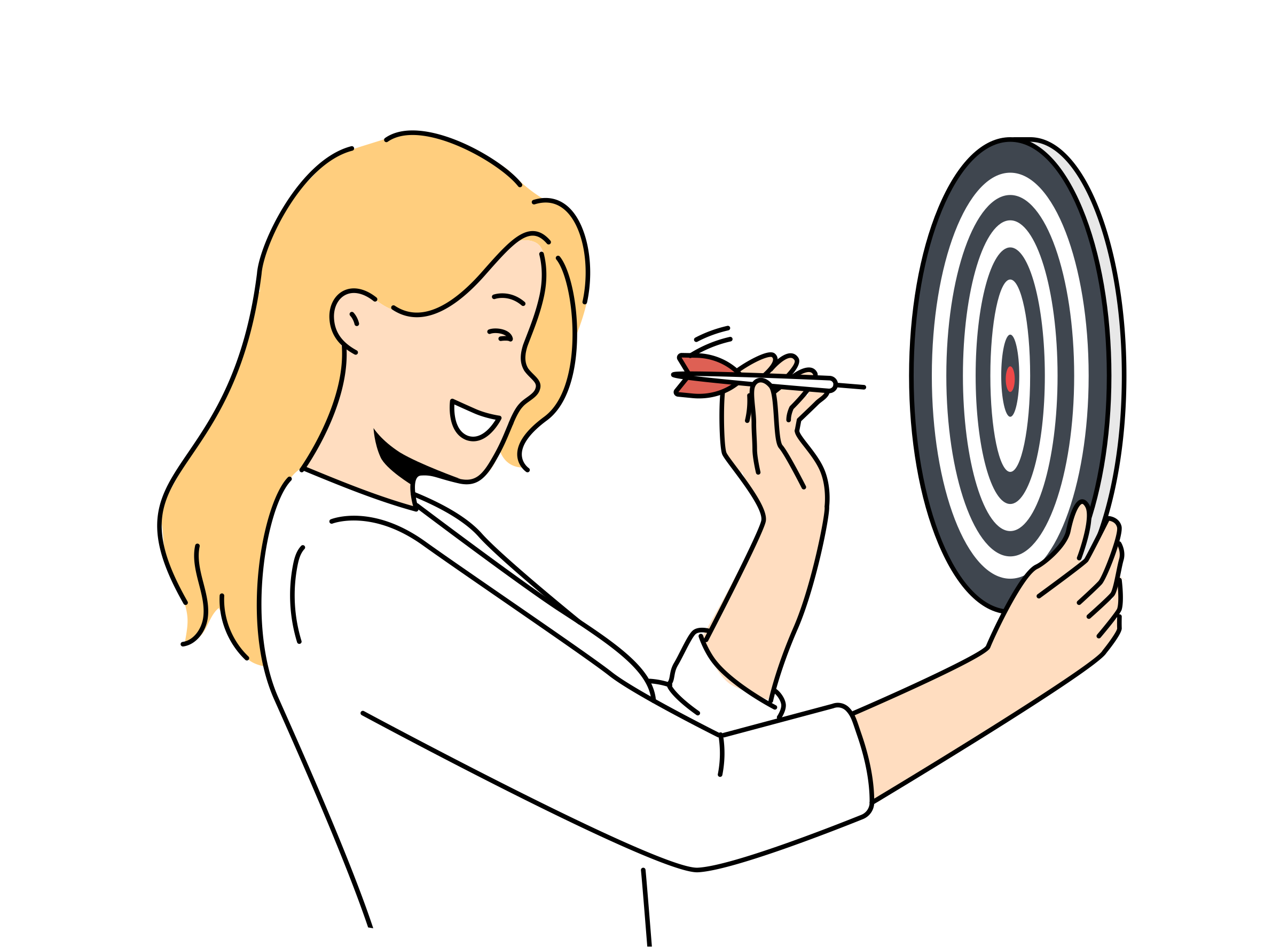
Imagine this: you've just made a match with someone who seems great, the conversation is flowing, and suddenly, you think, «Why would this person want to talk to me? Surely I'm a fraud and they'll figure it out soon enough.» Well, if something like this has happened to you, you're not alone. I've been into online dating for years, trying everything from Tinder to more niche apps like Feeld or The League, and I confess I've felt that way more times than I'd like to admit. It's like a shadow that creeps into your swipes and chats, making you doubt everything. Today I want to talk to you about the impostor syndrome in the digital dating world, because I think recognizing it is the first step to sending it away and really enjoying the process.
Where does this insecurity that sabotages you come from?
The truth is that imposter syndrome is not unique to dating; it's that irrational belief that you don't deserve your accomplishments, that you're an imposter about to be discovered. In apps, it's amplified because everything is so visual and fast. Think about how you curate your profile on Bumble or Hinge: you choose photos that show your best side, write a witty bio, and still, you feel like you're not «interesting enough» to compete with profiles that look like they're straight out of a magazine.
I have to admit that, in my early experiences with OkCupid, I would spend hours checking my responses to prompts, convinced that any mistakes would give me away as someone boring or unattractive. And you know what, it's worse when you see others with infinite matches. It's as if everyone else has the secret code cracked but you.
On the other hand, this syndrome is fueled by the paradox of choice on platforms like Happn or Meetic. There are so many options that you start to question yourself, «Am I the problem if I don't connect with anyone?». In my case, after a couple of situationships that led to nothing, I started to doubt my ability to form real connections. It's not just about rejection; it's about internalizing that rejection confirms that you are not worthy.
Note that this can come from past experiences, such as an ugly breakup or even from how we grew up, with attachment styles that make us feel vulnerable when we expose ourselves in an app. If we already carry insecurities from past relationships, apps can become an amplifier of those fears. Breaking negative patterns first requires identifying where those internal voices are coming from.
The psychological roots that feed the digital impostor
The truth is that dating imposter syndrome has deeper roots than it seems. Deep down, many of us internalize messages about our worth from childhood: «you're not good enough», «you have to try harder to be loved», «if you get rejected it's because something is wrong with you». Honestly, when you take those scripts to dating apps, every swipe left becomes confirmation of those limiting beliefs.
Also, the gamified nature of the apps doesn't help. The system of matches and likes turns the search for connection into a numbers game where it's easy to feel like you're losing. The gamification of dating generates a constant feeling of competition that perfectly feeds the internal impostor: «Others get more matches, so I must be inferior».
Here's the trick: our mind tends to bias information negatively when we are already insecure. If you already think you're not enough, you'll interpret every ambiguous signal as rejection. A late message isn't that the person is busy; it's that they've already figured out you're not worth it. A conversation that dies down isn't that there simply wasn't chemistry; it's that you failed to be interesting.
And you know what happens with that confirmation bias: you start behaving in ways that reinforce it. You become more cautious in your messages, less authentic, more calculating. Paradoxically, by trying to avoid being «found out» as an imposter, you move away from the spontaneity that generates real connections.
Signs that the impostor is winning you over in your chats
Here's the interesting part: in online dating, this syndrome manifests itself in subtle but destructive ways. For example, you avoid sending that bold opener on Grindr because you think you're not witty enough, or you put off asking for the number in a conversation on Her, fearing that the other person will realize that «you're not as cool as you look.» The truth is, I've seen this in friends I mentor: one, after a match on Coffee Meets Bagel, was obsessing over every message, analyzing whether he sounded «authentic» or if he was pretending to be someone he was not.
It is exhausting.
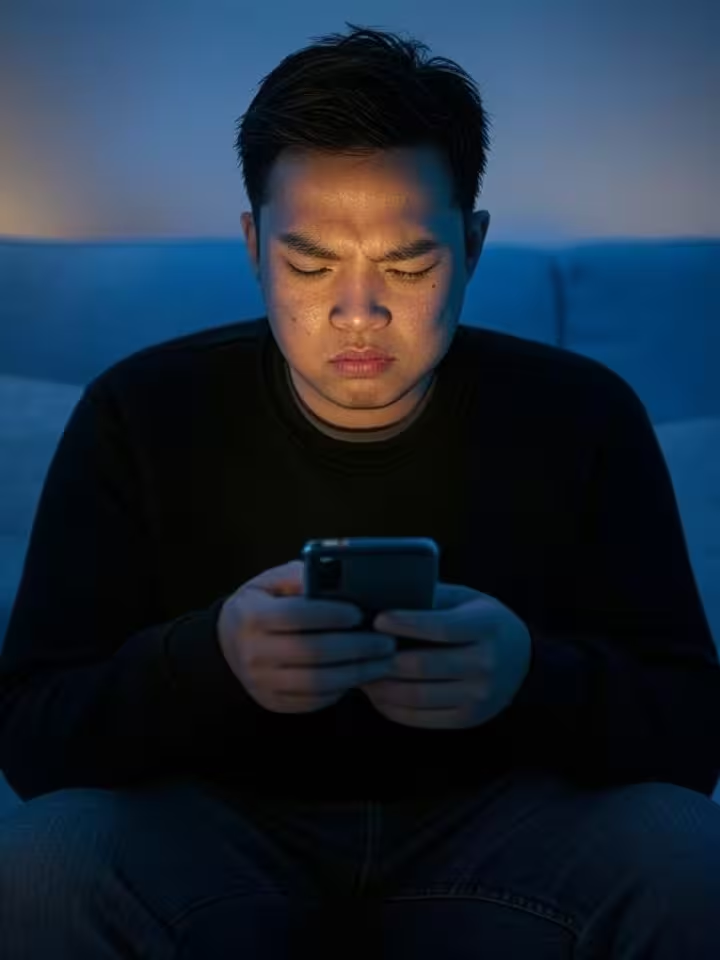
Other clear signs include procrastination in responding to messages. When you have imposter syndrome, every response becomes a test of authenticity. You compose, delete, retype, hoping to find the perfect words that make you sound interesting without sounding too tried and true. Result: you take hours to respond to something that should be natural, and when you finally send it, you've already lost the momentum of the conversation.
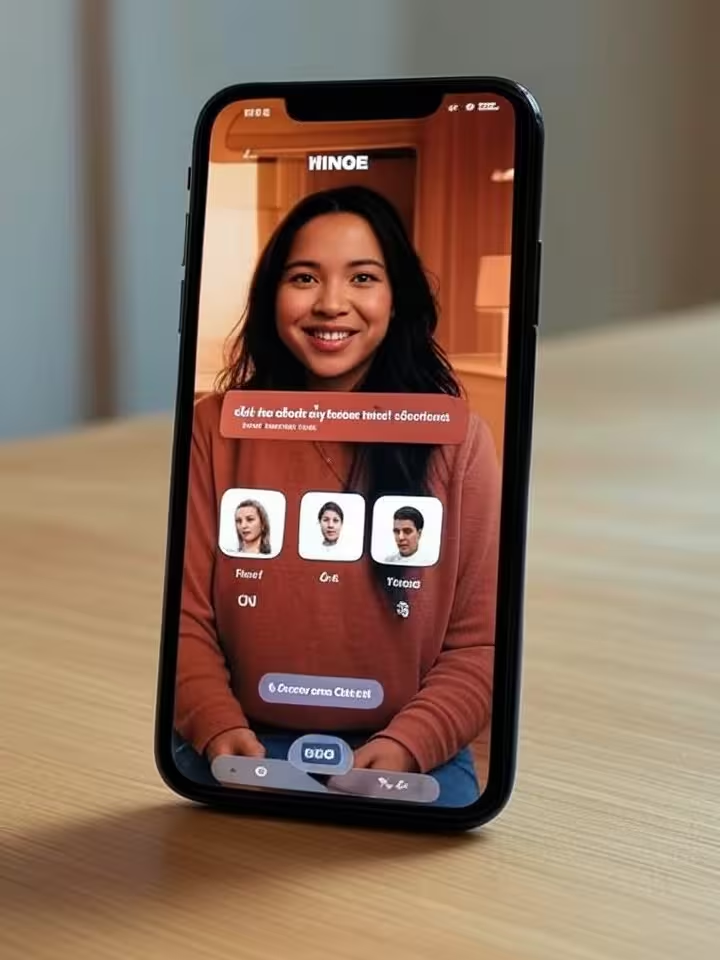
Then there is the emotional fatigue it causes. Imagine swiping on Badoo and feeling that every like is a lie, because deep down you think you don't deserve attention. Or worse, when a spark arises in a first virtual date via Zoom -yes, those that became fashionable-, and suddenly you are overcome with the fear of being «discovered» in person. Between us, I've cancelled dates because of this; once, with someone from Inner Circle, I convinced myself that my anecdotes weren't impressive enough.
It's also seen in behaviors like orbiting: you keep looking at an ex-match's profile, wondering why they ignored you, and concluding it was because you're not enough. It's not just insecurity; it's a pattern that keeps you in a cycle of self-sabotage, avoiding the vulnerability that actually builds connections. See, when you're afraid of being vulnerable, you never show the real you, and so you never know if they're rejecting you or the edited version you presented.
What no one tells you is that this affects everyone from newbies on POF to veterans on Raya. Even on demographic apps like OurTime, where age plays a role, I've heard stories of people feeling like imposters because they don't fit the «ideal» of maturity or success. The imposter doesn't discriminate by experience or demographic; it's a universal voice that whispers doubt no matter your background.
Another common manifestation is crippling perfectionism in the profile. If you've gone weeks without posting your profile because «it's not perfect yet,» the imposter is probably in charge. Or when you finally post, but use photos from three years ago because «you don't look as good now.». Insecurity about your appearance is premium fuel for imposter syndrome.
Negative internal dialogue in every message
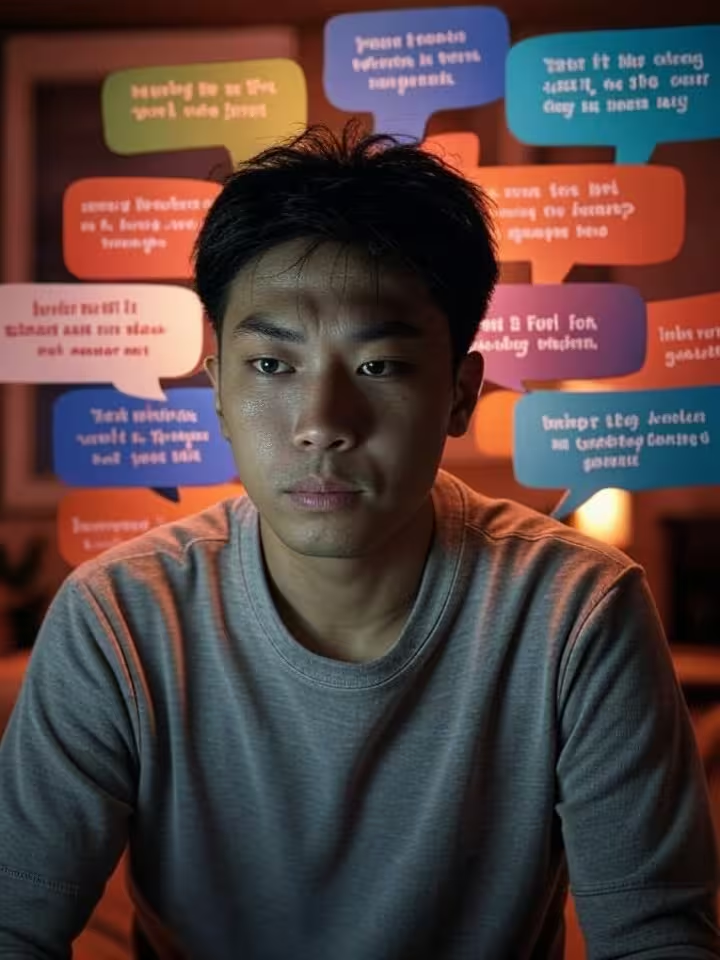
When imposter syndrome dominates your app conversations, every opener becomes a minefield of self-criticism. Before sending any message, your mind generates a destructive monologue: «This sounds too tried and true», «They'll think I'm boring», «I'd better not risk it and say something generic». Result: your messages lose personality just when you need it most to stand out among dozens of other chats.
The digital mask that hides the real you
The fear of being discovered as «not interesting enough» leads you to create an edited version of yourself in apps. You exaggerate achievements, filter your interests to appear cooler, avoid mentioning hobbies you consider «boring». But this mask comes at a high cost: even when you do get matches, the connection feels superficial because the person is meeting a character, not you.
Self-sabotage before the first date
One of the most destructive symptoms of the dating impostor is to cancel dates or avoid proposing them. You rationalize that «it's not the time yet», that «you need to get to know them better by chatting», but the truth is that you dread the moment when they see you in person and confirm your fears. This pattern keeps you trapped in endless conversations that never move forward, missing connections that could have worked.
Why benchmarking yourself against other profiles is a fatal mistake
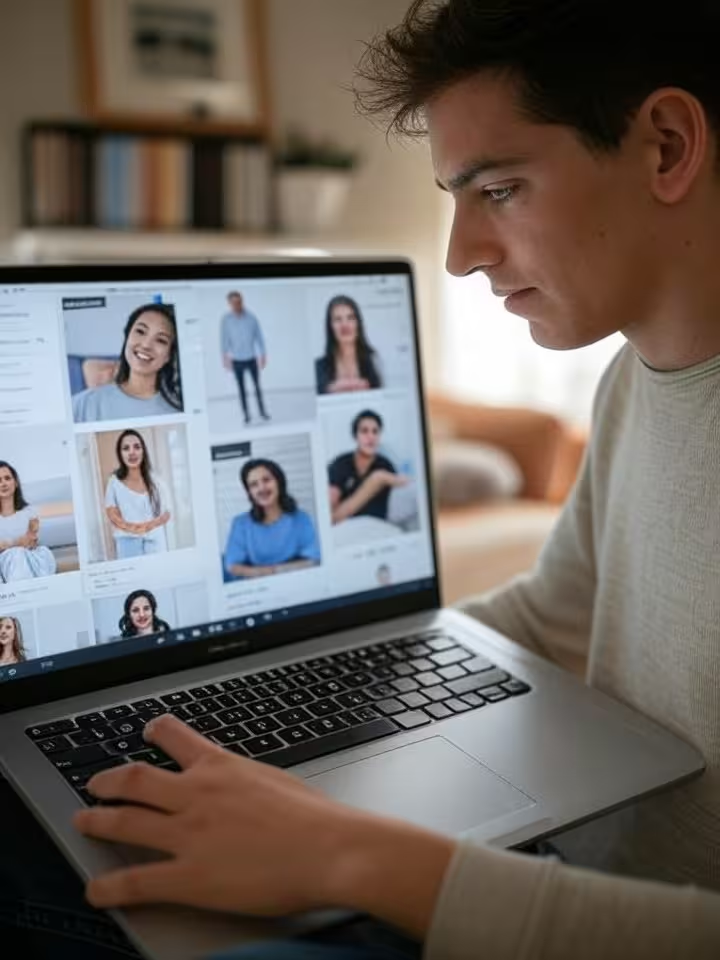
Well, here comes one of the most common traps of app imposter syndrome: constant comparison. You spend hours analyzing other users« profiles, convinced that their lives are more interesting, their photos more attractive, their bios more witty. It's like a downward spiral where you always find someone »better" than you.
What few people mention is that you are comparing your full reality with the edited highlights of others. You see someone's best photos in Santorini and compare them to your Saturday selfie on the couch. You read a bio full of impressive accomplishments and forget that it probably took weeks to perfect. You are playing an unwinnable game.
Moreover, this comparison ignores a crucial factor: compatibility is not objective. Someone can have a «perfect» profile by superficial standards and still not connect with anyone because it shows no real personality. Meanwhile, more authentic, «imperfect» profiles generate deeper connections because they allow real people to identify.
I confess I've seen this repeated constantly: people with «average» profiles get amazing relationships because they dared to be genuine, while «perfect» profiles accumulate empty matches that never lead to anything. Authenticity beats perfectionism in the long game of dating.
Practical strategies to quiet that inner voice and get back to enjoying the experience.
Look, online dating is a skill, not a verdict on your worth, and overcoming imposter syndrome takes intentional practice. Start with your profile: instead of honing it ad nauseam, focus on being genuine. In my years of writing about this, I've learned that an honest bio on Match attracts people who vibe with you, not an idealized version.
I confess that when I changed my Tinder photos to more everyday ones -no gym poses-, my matches were more authentic, although at first I doubted if it was «enough». Honestly, give it a try. A bio that stands out for its authenticity will always outperform one that tries to forcefully impress.
Rewrite the script of your internal dialogue
Now, for chats, the trick is to challenge those negative thoughts. When you feel like you don't deserve a response, remind yourself of past accomplishments: that time a conversation in Scruff led to a memorable date, or how you overcame a slow fade in Taimi without breaking down. Practice self-compassion; it is key to dealing with app burnout.
That said, incorporate routines like weekly swiping breaks to recharge, or journaling about what makes you unique. I've helped readers identify green flags in themselves, such as their humor or empathy, and use it to counteract the FOMO that fuels the impostor. An effective exercise: every time you think «I'm not X enough,» write down three concrete evidences of times when you were. Your brain needs data to counteract cognitive distortions.
Establish healthy emotional boundaries
As for emotional security, always check - a reverse image search on dubious photos can save you from catfishing - but also protect your self-esteem by setting boundaries. For example, if a match on WooPlus makes you doubt yourself, block and move on. Not everyone deserves access to your emotional energy, especially if it leaves you feeling worse about yourself.
Yet, at the same time, celebrate the small victories: a good exchange at Christian Mingle that leads to nothing but makes you feel seen. These micro-victories are fuel for your long-term confidence. I have to admit that therapy has been my ally; understanding my attachment patterns helped me not to see every non-response as a personal failure. Research on impostor syndrome show that recognizing these patterns is the first step to breaking them.
Creates a real support system
And one more: surround yourself with friends who remind you of your worth. Sharing dating fatigue stories in a group has saved me from negative spirals more than once. When you can laugh about that disastrous date with friends who value you, rejection loses power. Also consider online communities where others are navigating the same challenges; sometimes knowing you're not alone dismantles the imposter faster than anything else.
Experiment without attachment to the result
Here's another strategy that works: treat apps as a social experiment, not a test of your value. Send that creative opener without expecting a response. Propose that quote without assuming they'll say yes. When you reduce the emotional attachment to the specific outcome, you also reduce the power of the imposter to paralyze you. It's like optimize your OkCupid strategyIt's all about testing, adjusting and moving on without dramatizing each interaction.
The vulnerability paradox: showing your real self makes you more attractive
Note this irony: when you try to hide your «imperfections» to appear more attractive, you actually become less interesting. People don't connect with perfection; they connect with real humanity. Those little quirks you try to hide-your obsession with sci-fi series, your clumsiness in the kitchen, your passion for collecting plants-are exactly what make someone feel like they really know you.
Calculated vulnerability is one of the most powerful tools in online dating. It's not about throwing up all your traumas in the first message, but allowing yourself to share genuine aspects of yourself without apologizing for them. Mention that «weird» hobby, admit you don't have all the answers, show humor about your limitations. You'll see how this filters out the wrong people and attracts the right ones.
The truth is that when you dare to be vulnerable, you give the other person permission to do the same. And that's where the magic of real connections happens. Those deep conversations you remember months later almost always started with someone letting their guard down and being real.
Redefines what «success» means in online dating
See, part of the problem with imposter syndrome in apps is that we measure success with the wrong metrics. We count matches as if they were points, compare ourselves to stories of friends who found «the love of their life on the first swipe», and torture ourselves for not getting enough responses. But what if we completely redefined what it means to be successful in this area?
Success isn't having a thousand matches; it's having conversations that make you feel good about yourself. Success isn't getting a relationship in two weeks; it's learning more about what you really want in a connection. Success isn't about liking everyone; it's about attracting the right people to you, even if they are few.
In the end, when you stop seeing dating as a competition you have to win and start seeing it as a process of self-discovery, the impostor loses territory. Every conversation teaches you something. Every date, even if it doesn't work out, brings you closer to knowing what you do want. Even complicated appointments have value if you learn from them.
And you know what's liberating: realizing that you don't need to impress everyone. You just need to genuinely connect with a few people. That takes so much pressure off that the imposter has almost no room to operate.
When to seek professional help for impostor syndrome
However, there are times when dating imposter syndrome is a symptom of something deeper that requires professional attention. If your doubts about your worth are affecting not only your love life but also your work, friendships and general well-being, it's time to consider therapy. There's nothing wrong with asking for help; in fact, it's one of the bravest and most self-care acts you can do.
Search for professionals specialized in self-esteem and mental health, particularly those familiar with modern dating dynamics. Cognitive behavioral therapy has been shown to be especially effective in dismantling the distorted thought patterns that feed the impostor. A therapist can help you identify where those limiting beliefs come from and replace them with healthier narratives.
Also consider therapy if you experience crippling anxiety before dating, if you avoid dating altogether for fear of rejection, or if every negative experience confirms deep-seated beliefs about not being worthy of love. These are signs that the imposter has gained too much ground and you need professional reinforcement to regain your emotional well-being.
When the imposter leaves, what's left? Truer connections
In the end, dealing with imposter syndrome in online dating is not about eliminating all doubt - that would be impossible - but about not letting it paralyze you. After hundreds of conversations on apps like Muzz or SilverSingles, and yes, some disappointments as online chemistry evaporates in reality, I've found that authenticity wins out. It is empowering to realize that you deserve connections, not in spite of your «flaws,» but with them included.
Of course, if you feel overwhelmed, seek professional help; it's not weakness, it's emotional intelligence. In the end, dating is a mirror of how we see ourselves. Overcome that impostor, and you will see how apps stop being a minefield and become a playground of possibilities.
What you'll discover is that when you stop pretending, when you allow yourself to be genuinely you-with your quirks, your odd passions, your particular sense of humor, your vulnerabilities-the connections that emerge are infinitely more satisfying. You may have fewer matches, but you'll have more real conversations. It may take longer to find someone, but when you do, you'll know they like you for who you really are, not an edited version you created to impress.
Keep swiping with confidence; who knows what match awaits you on the other side. And remember: your value is not measured in matches, likes or replies. It's measured in your ability to remain authentic in a digital world that constantly pressures you to be something else.
How do I know if what I feel is imposter syndrome or just normal dating insecurity?
Impostor syndrome goes beyond the typical pre-date jitters. It's characterized by feeling like you're «pretending» to be someone you're not, even when presenting your true self. If you constantly worry that you'll be «found out» as a fraud, if you minimize your accomplishments in conversations because you think they're not impressive enough, or if you attribute your matches to «luck» rather than your actual attractiveness, you're probably dealing with imposter syndrome. Normal insecurity is feeling butterflies; imposter syndrome is feeling like you don't deserve to have someone interested in getting to know you.
Why does impostor syndrome worsen after several failed matches?
Imposter syndrome feeds on confirmation bias. When you experience several ghostings, slow fades or conversations that die, your brain looks for patterns to explain the outcome. If you're already prone to imposter bias, you'll interpret these failures as evidence that «you're not enough,» rather than attributing them to normal incompatibility or the random chaos of online dating. Each additional negative experience reinforces the narrative that you're a fraud, creating a downward spiral where each new match generates more anxiety because «this time they'll find out I'm not worth it».
Is it possible that my «perfect» profile is making my imposter syndrome worse?
Absolutely. When you build an overly curated or idealized profile on apps like Bumble or Hinge, you create a gap between your real self and your digital self. This intensifies imposter syndrome because you know you're showing your edited best version, not your authentic day-to-day self. Every match becomes a source of anxiety: «What will happen when they see me in person and find out I'm not as interesting as my profile?» Paradoxically, a more authentic profile - one that includes your quirks and everyday hobbies - reduces this anxiety because you know that whoever connects with you is connecting with the real you, not an inflated version.
How can I distinguish between being authentic and sabotaging myself in app conversations?
The line is fine but identifiable. Being authentic means sharing your real interests, opinions and personality without apology for them, but with appropriate timing. Self-sabotage is sharing unnecessary negative information or preemptively excusing yourself for who you are. For example, casually mentioning that you love anime is authentic; starting with «I know this is weird but...» is impostor-driven sabotage. Ask yourself: am I sharing this to genuinely connect, or to «warn» the person before they reject me? If it's the latter, the imposter is controlling the conversation. Authenticity comes from a place of confidence in your worth; sabotage comes from a fear of being found out as «not enough.».
How long does it take to overcome the impostor syndrome in online dating?
There is no fixed timeline because it depends on how ingrained those limiting beliefs are and how much active work you do to challenge them. Some people notice improvements within weeks by implementing self-compassion and cognitive restructuring strategies. For others, especially if the syndrome is rooted in trauma or insecure attachment patterns, it can take months of therapeutic work. The important thing is that progress is not linear: you will have days where the impostor whispers louder, especially after rejections. The key is to accumulate positive experiences that contradict the impostor's narrative. Every authentic conversation you enjoy, every date where you felt comfortable being you, every match that appreciates your weirdness is evidence against the impostor's voice. With consistency, that evidence eventually overcomes the weight of negative beliefs.